The Cancer That Hides
Some cancer cells have a terrifying trick: they can enter a dormant, sleep-like state that helps them survive chemotherapy and other treatments. Instead of growing and dividing, these cells become largely inactive — effectively hiding from drugs designed to kill them. When treatment stops, they can wake up and resume their deadly growth.
Now, scientists at ETH Zurich have developed a clever solution: a light-controlled molecular switch that rouses sleeping cancer cells and makes them vulnerable again.
The research, led by Professor Katharina Gapp's group at ETH Zurich's Department of Epigenetics and Neuroendocrinology, tackles one of the most frustrating problems in oncology: cellular dormancy driven by stress hormones.
How Cancer Cells 'Hibernate'
In certain cancers — including some types of lung cancer — stress hormones can trigger a survival response. Specialized proteins called glucocorticoid receptors detect these hormones inside tumor cells. Once activated, the receptors push the cells into a dormant state where cell division slows dramatically.
This is why some patients respond well initially, only for their cancer to return months or years later. The dormant cells survived the first assault and re-emerged.
The Light-Activated Solution
The problem with simply blocking glucocorticoid receptors is that they are found throughout the body, not just in cancer cells. They play essential roles in controlling inflammation and supporting immune function. Eliminating them everywhere would cause devastating side effects.
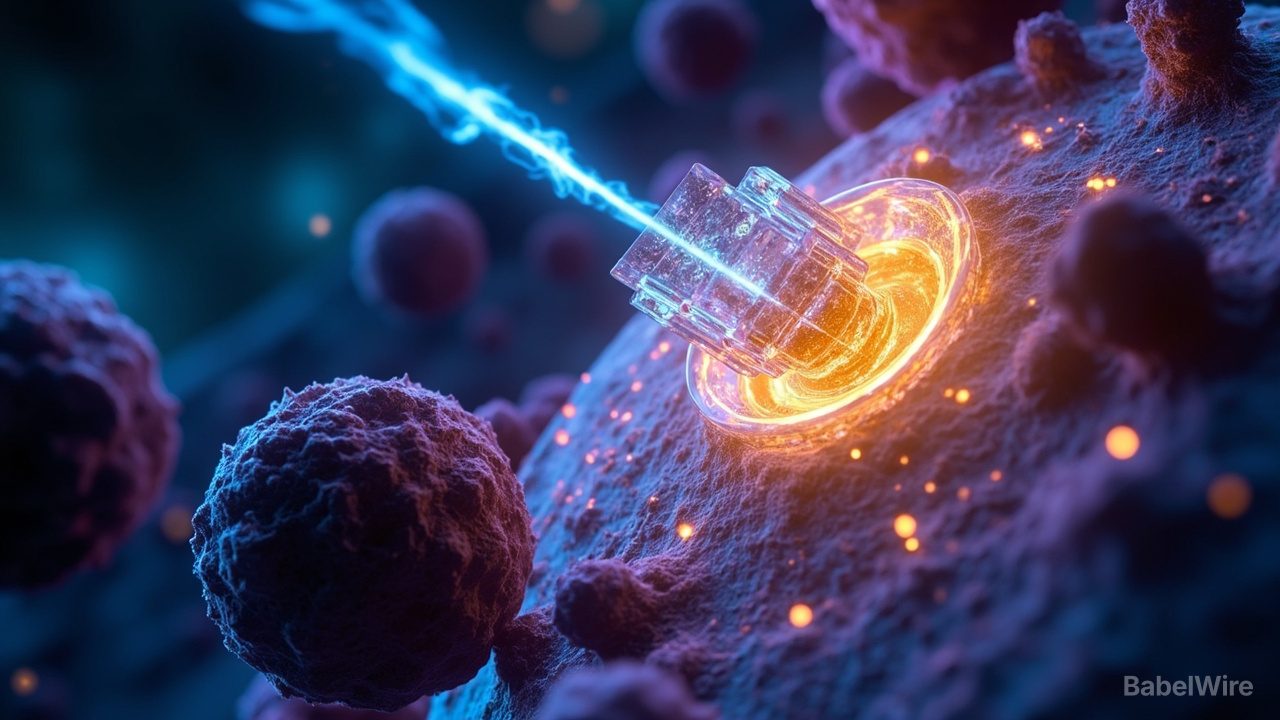
The ETH Zurich team's breakthrough: a three-part molecular switch that destroys glucocorticoid receptors specifically inside tumor cells — but can be turned off by light in healthy tissue.
- Part 1 attaches to the glucocorticoid receptor - Part 2 attaches to the enzyme that marks proteins for disposal - Part 3 is a flexible connector between them
Under normal conditions, the connector stays extended, bringing the enzyme close enough to tag the receptor for destruction. The cell then breaks down and removes the receptor, waking the cancer cell from its sleep.
But when exposed to light of a specific wavelength, the connector bends, preventing the enzyme and receptor from aligning. The receptor survives, and healthy tissue remains unharmed.
Precision Medicine With Light
The goal is dramatic: inject the molecular switch directly into a tumor, then shine light on the area to deactivate any molecules that drift into surrounding healthy tissue.
"Activity can therefore be strictly limited to the tumor core, preserving the surrounding tissue and causing significantly fewer side effects," explains Robin Scheuplein, joint first author of the study. "The effect is reversible and can be controlled precisely."
In laboratory cultures of lung cancer cells, the treatment rapidly broke down glucocorticoid receptors and the cells emerged from their dormant state.
Beyond Lung Cancer
The modular system could be adapted to target other receptors too — including the estrogen receptor in hormone-dependent breast cancer and the androgen receptor in advanced prostate cancer.
One current limitation: light penetrates only a few millimeters into tissue. For lung cancer, an endoscope could deliver the light source close to the tumor. For deeper tumors, the team is developing versions that respond to near-infrared light, which travels farther through tissue.
"Of course, this will now need to be verified in living organisms as well," cautions Scheuplein. But the approach, built on existing medical technology, offers a realistic path toward highly precise, light-guided cancer therapies.