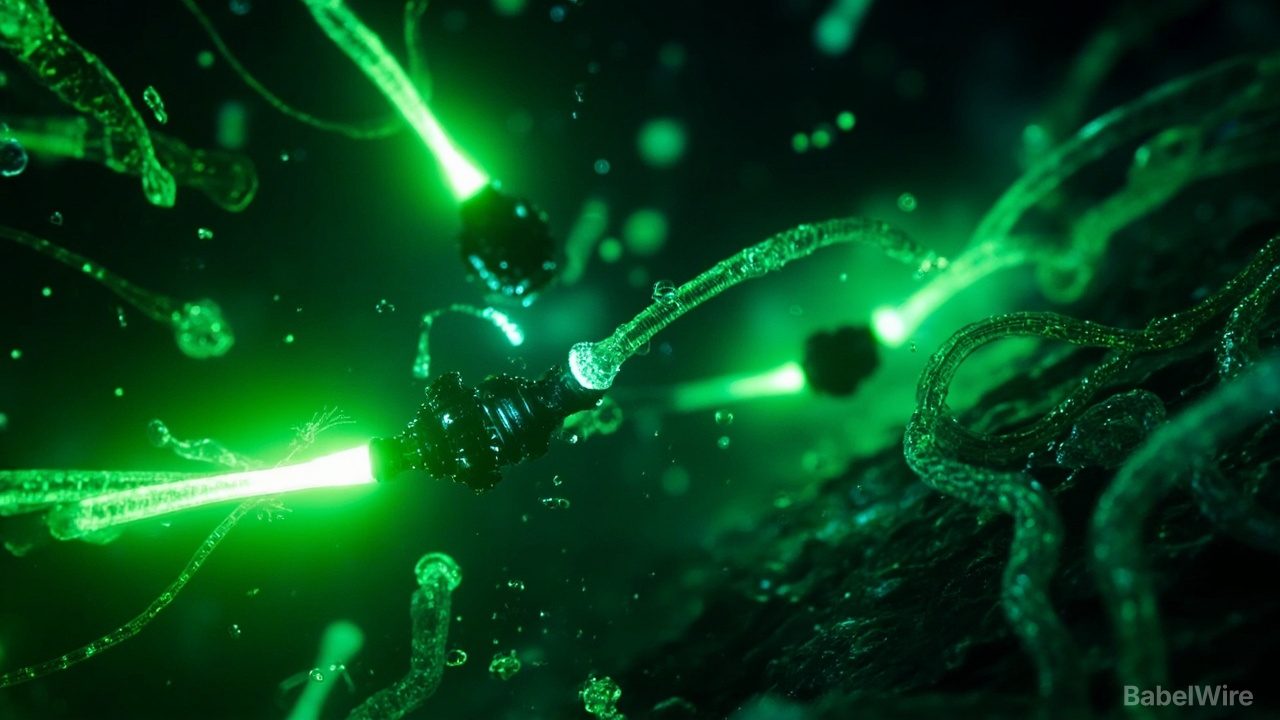
Physicists at the University of Würzburg in Germany have developed microscopic robots — smaller than a human hair — that can be steered entirely by light to hunt down, capture, and relocate bacteria in liquids.\n The biohybrid robots, described in a study published this week, use genetically engineered E. coli bacteria embedded within a flexible gripper structure. When illuminated with specific wavelengths of light, the robots can navigate through liquid environments, detect target bacteria, and physically grab and move them to different locations.
The research represents a significant advance in the field of micro-robotics, demonstrating that light-driven propulsion and control can achieve precise manipulation at the microscopic scale. Unlike previous micro-robots that relied on magnetic fields or chemical fuels, these devices are controlled entirely by optical signals.
Potential applications include water purification systems that could hunt down and remove harmful bacteria, targeted drug delivery in medical settings, and environmental monitoring. The team notes that significant engineering challenges remain before clinical or industrial applications become practical, but the fundamental demonstration of light-controlled bacterial manipulation opens new possibilities for micro-scale robotics.