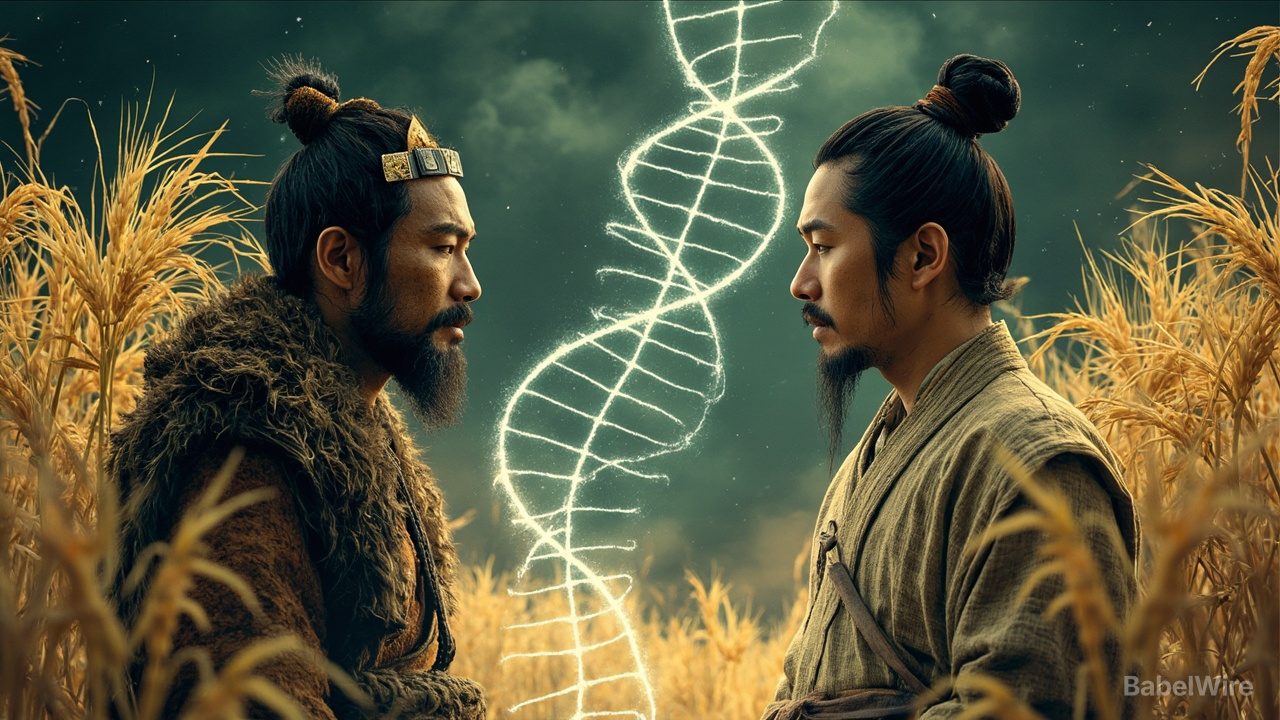
Modern Japanese people are a genetic mosaic, the product of at least two great prehistoric migrations: the Jomon hunter-gatherers, who inhabited the archipelago for thousands of years, and the Yayoi farmers, who arrived from the Asian continent roughly 3,000 years ago bringing wet-rice agriculture. Just how those lineages mixed — and how they adapted — has long been debated. A new study published in PNAS brings high-quality evidence to the question.
Researchers sequenced two high-coverage ancient genomes from mainland Japan: an Initial Jomon individual with more than 67-fold coverage, and a Middle Yayoi individual. These are among the most complete ancient genomes ever recovered from the archipelago, allowing far more confident inferences than typical low-coverage samples.
The genomes reveal contrasting population histories that align with the two cultures' distinct lifeways. The Yayoi genome carries clear continental ancestry, consistent with farmers migrating from the Asian mainland. The Jomon lineage, by contrast, traces deep roots within the archipelago — and both streams left their mark on the present-day Japanese gene pool.
The study also uncovered a striking dietary signal: prehistoric starch-related genetic variation. Copy-number differences in genes involved in digesting starch, such as AMY1, suggest that the shift to rice-based agriculture drove genetic adaptation to a high-starch diet — a biological echo of the culinary revolution that defined the Yayoi period.
Together with previous work, the findings support a picture in which modern Japanese ancestry is a tripartite blend: indigenous Jomon hunter-gatherers, Yayoi rice farmers, and later migrants — each contributing distinctive genetics shaped by very different ways of life.
Sources
- pnas.orgPNAS — High-coverage ancient genomes reveal divergent population histories and prehistoric starch-related genetic variation in Japan
- phys.orgPhys.org — High-coverage ancient genomes reveal prehistoric population histories of Japan
- archaeologymag.comArchaeology Magazine — Ancient genomes reveal how migration and diet shaped Japan