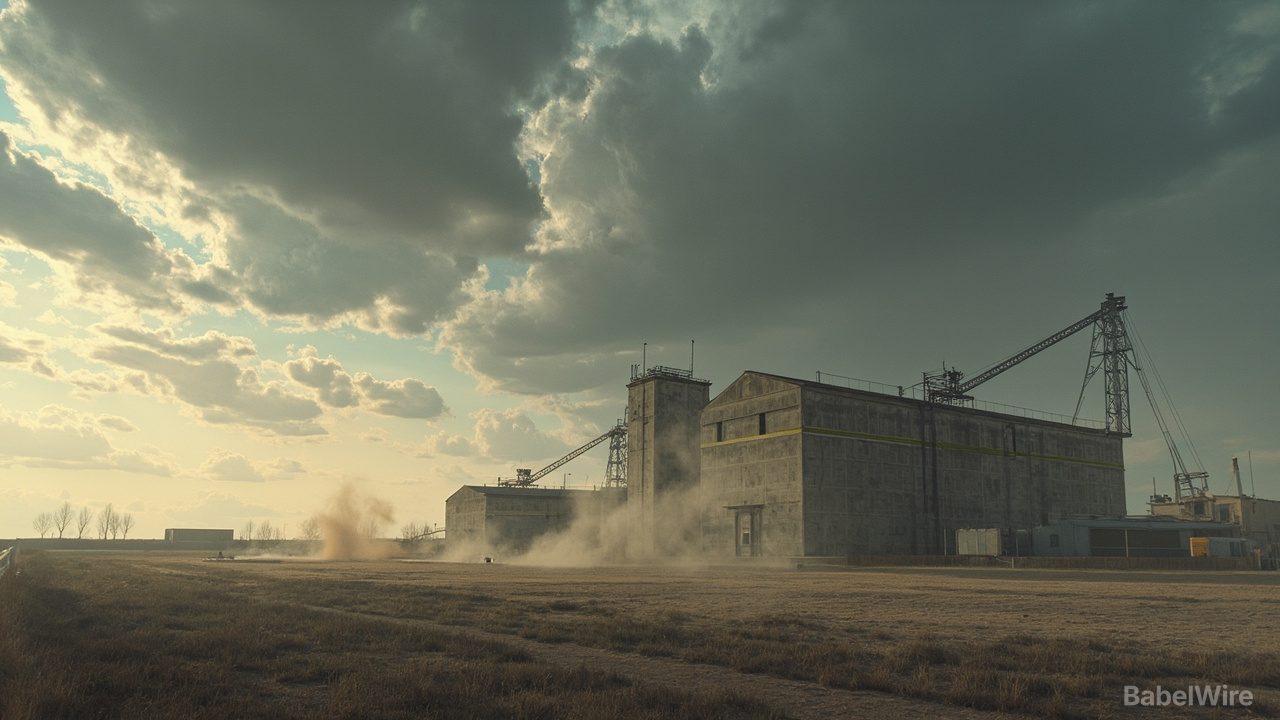
The US Army plans to detonate the nation's stockpile of lead azide on Wednesday at 9:00 AM CST at the Iowa Army Ammunition Plant in Middletown — 68 drums holding roughly 9,700 pounds of a primary explosive the US moved away from about 15 years ago because it is so hard to store safely.
Why now: A March inspection found "significant crystallization on the exterior of the barrels," ATF director Robert Cekada said at a Tuesday briefing. The material had become too unstable to even open the drums to add antifreeze — and opening a lid might set it off. A contractor's attempt to dissolve the chemicals with a neutralization agent was scrapped as unsafe. "It's not a matter of if, it's a matter of when," Cekada said. Some of the stockpile is more than 60 years old.
The risk: Controlled detonation is meant to limit lead dust, but modeling suggests the plume could reach as far as 100 miles. The Army has built walls of four 16,000-gallon water tanks, tarped the 80-year-old earth-covered magazines with lead-containment screen, and plans to flood them with two feet of foam. The last comparable disposal was in 1977, when 7,000 pounds were detonated in open air in Colorado.
Legal fight and precautions: The Iowa Environmental Council and Sierra Club sought a court order to stop the blast; a federal appeals court denied their emergency motion on Monday, clearing the way. The president had publicly called for a pause beforehand. FEMA is assisting a voluntary 5-mile evacuation, and pregnant people, children, and those with chronic illness are advised to leave. Nearby residents are told to stay indoors with windows shut for 24 to 48 hours and shut off HVAC systems. Experts consider acute health effects unlikely but stress there is no safe level of lead and that long-term monitoring will be needed.