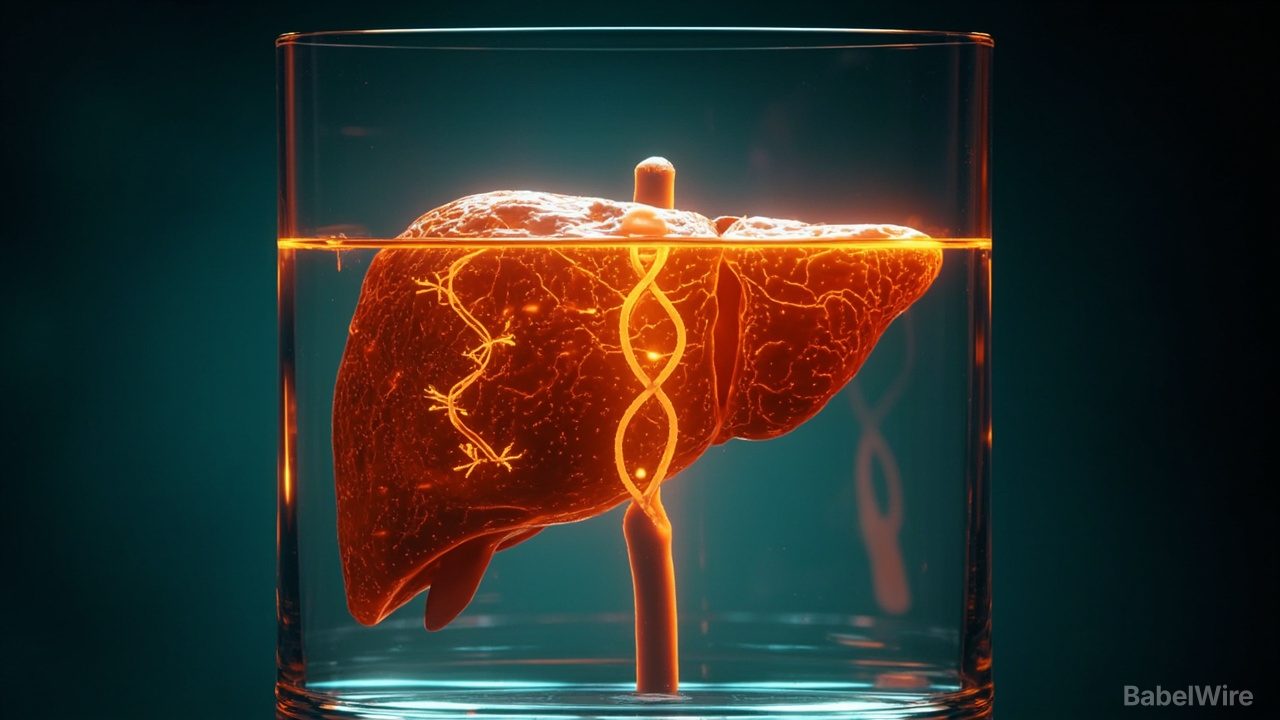
Two lesser-studied "forever chemicals" are linked to substantially higher odds of liver cancer – and the association interacts with inherited risk. The study, published in Environmental Health Perspectives by the Keck School of Medicine of the University of Southern California, measured 12 PFAS compounds in blood samples from 223 people who later developed hepatocellular carcinoma, plus 223 matched controls; the samples had been collected an average of 7.8 years before diagnosis.
Two compounds showed statistically significant associations: PFHpA and PFNA. People whose exposure ranked in the top quarter had two to two-and-a-half times the odds of liver cancer compared with the lowest group. PFHpA was introduced as a substitute for the older compounds PFOA and PFOS, which were phased out over concerns about how long they stay in the body – those two had drawn the bulk of scientific and regulatory attention.
"The most concerning associations were not in the most studied legacy PFAS," said lead author Jesse Goodrich. "They are among the newer PFAS, and we don't have much information about their effect on human health." For PFHpA, the work independently confirms findings from a National Cancer Institute study published just two months earlier.
New is the gene–environment analysis: the team calculated a polygenic risk score for inherited susceptibility to fatty liver disease (MASLD). Among people with high genetic predisposition, the PFHpA–liver cancer association was considerably stronger; among those with low susceptibility it was not statistically significant. "You have this one-two hit: first, your genes and then PFAS impacting this pathway," Goodrich said.
About 99% of the global population has measurable PFAS concentrations in their blood, and contamination has been detected in drinking water across roughly half of U.S. water systems. Hepatocellular carcinoma has a five-year survival rate below 20%, and fatty liver disease is now its fastest-growing underlying cause. The researchers stress the observational design does not prove causation, but point to actionable steps: diet and lifestyle changes, water filters, and – where genetic susceptibility is known – earlier screening. It is the first published research from a $3.4 million NCI- and NIEHS-funded program at the USC Norris Comprehensive Cancer Center.
Sources
- sciencedaily.comTwo overlooked "forever chemicals" linked to up to 2.5 times the odds of liver cancer — ScienceDaily
- keck.usc.eduUSC researchers find two understudied "forever chemicals" raise liver cancer risk — Keck School of Medicine of USC
- pubs.acs.orgPer- and Polyfluoroalkyl Substances, Hepatic Lipid Metabolism Genes, and Hepatocellular Carcinoma — Environmental Health Perspectives
- scitechdaily.comTwo Overlooked "Forever Chemicals" Linked To More Than Double the Risk of Liver Cancer — SciTechDaily