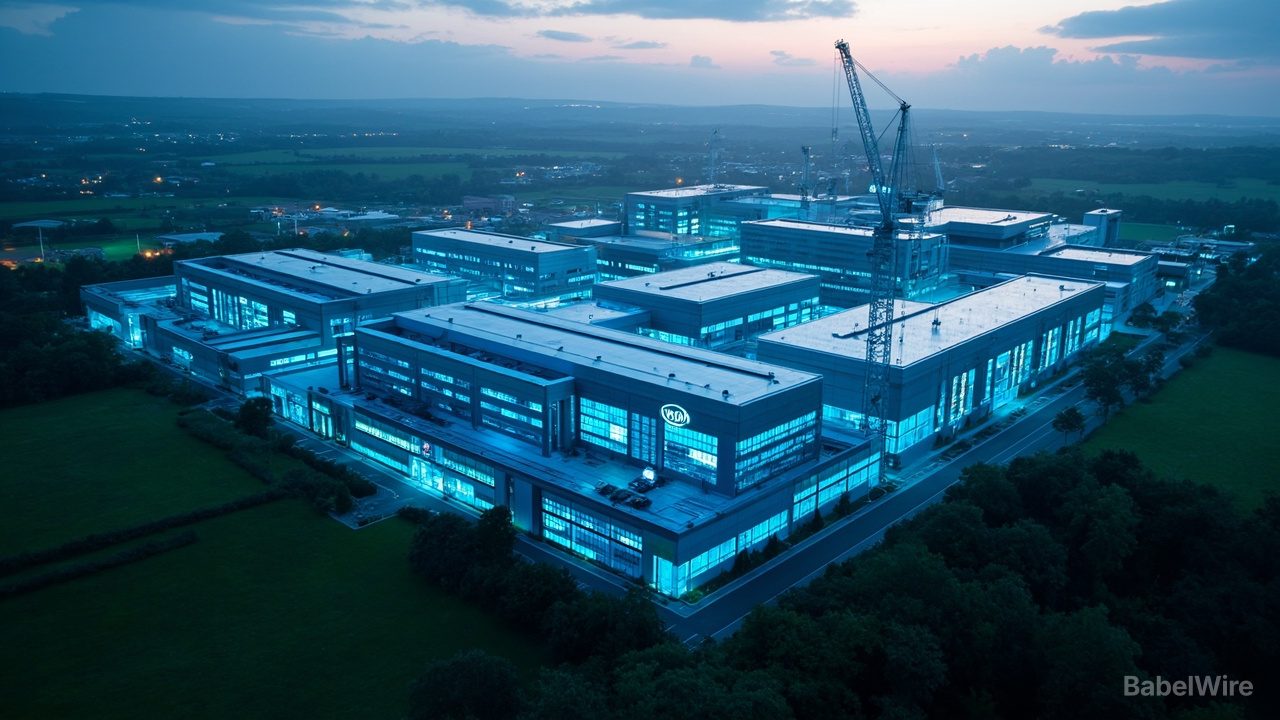
Intel has announced a massive €5 billion ($5.7 billion) capital investment at its Leixlip campus in Ireland, marking the next phase of expansion at one of Europe's most important semiconductor manufacturing sites.
Announced on July 13, 2026, the investment will expand manufacturing output to meet surging demand for artificial intelligence and high-performance computing (HPC) chips. The company said the expansion will create several hundred permanent high-skilled jobs and thousands of construction positions over the build period.
Leixlip, located west of Dublin, is Intel's primary European manufacturing hub. The site has been operational for decades and produces advanced logic chips using Intel's latest process technologies. This expansion will add significant cleanroom space and upgrade existing production lines to support Intel's most advanced chipmaking nodes.
"Global demand for AI and high-performance computing is driving an unprecedented need for advanced semiconductors," an Intel spokesperson said. "This investment ensures our Irish operations remain at the heart of Europe's digital infrastructure."
The announcement comes as Intel works to regain its manufacturing leadership position. The company has been investing heavily across its global footprint, including major expansions in the United States under the CHIPS Act and in Europe. Intel's foundry business, Intel Foundry, has been securing contracts from external customers who need advanced chip manufacturing outside of Asia.
The Irish expansion is part of a broader European strategy. Intel previously announced plans for a megafab in Germany, though that project has faced delays. The Leixlip expansion allows Intel to add capacity faster at an existing, fully permitted site with an experienced workforce.
The investment is a major vote of confidence in Ireland as a technology manufacturing hub. Ireland is already home to European headquarters for many of the world's largest tech companies, drawn by its corporate tax rate, skilled workforce, and EU membership.
Industry analysts noted that the timing is critical: AI chip demand is outstripping supply, and Intel needs additional capacity to compete with TSMC and Samsung in the foundry market. "This is Intel placing a big bet on its turnaround," said a semiconductor analyst. "They need to show customers they can deliver scale."
Sources
- newsroom.intel.comIntel Newsroom — Intel Invests €5 Billion to Expand Manufacturing in Europe
- reuters.comReuters — Intel announces $5.7 billion AI-driven capital investment in Ireland
- wsj.comWSJ — Intel to Invest €5 Billion for Expanded Manufacturing in Ireland
- ft.comFinancial Times — Intel to invest €5bn in Irish plant as AI chip demand surges