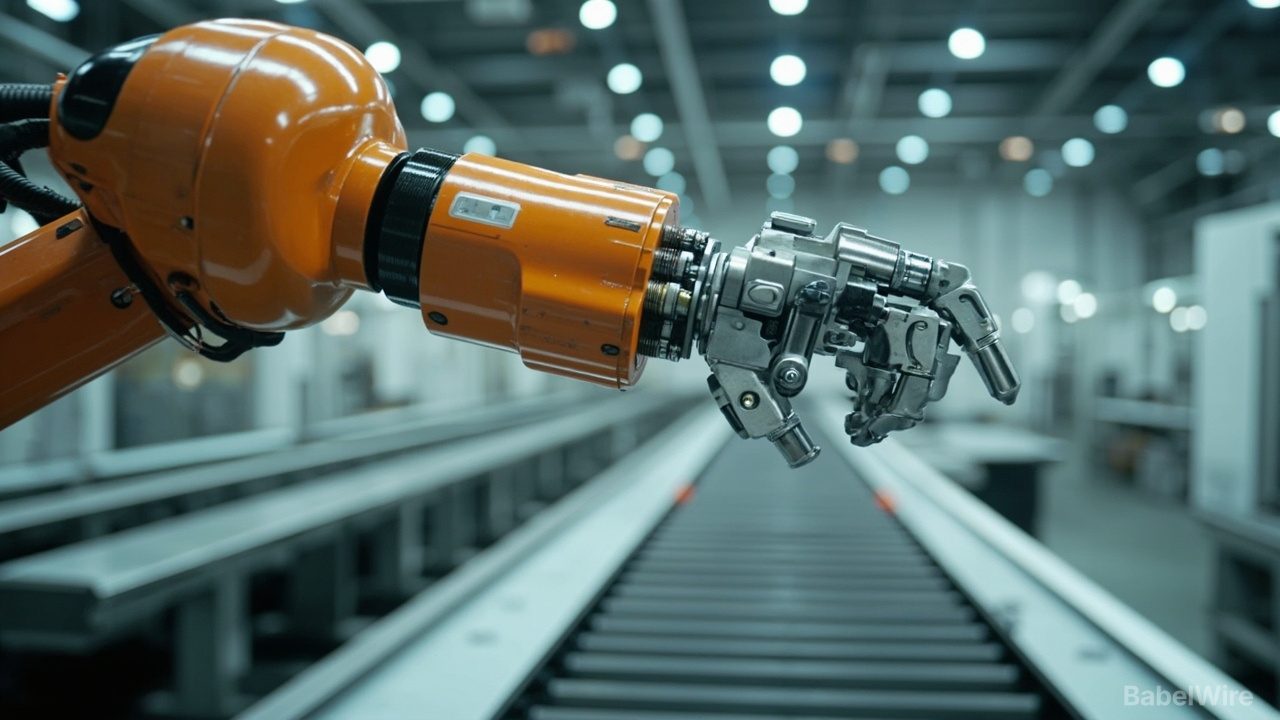
Retooling an industrial robot for a new job is usually a project, not a setting: engineers, integrators, new fixtures, fresh safety validation, and a production line that sits idle for weeks. Industrial Next says it is building toward the opposite — robots that switch tasks in minutes, according to TechCrunch.
The economics behind that pitch are well established. Factory automation pays off only at volume, precisely because changeover is so expensive; the moment a line has to make many different things, in small batches, it becomes cheaper to hire people. If retasking really can be measured in minutes, the same arms could handle short runs, mixed batches and seasonal products — the niches where cheap human labour has kept its edge against robots.
That is the promise of so-called software-defined robotics: keep the physical arm flexible and let software do the work of reconfiguration, rather than rebuilding the cell around a single motion. It is also a crowded field, with established industrial-automation vendors and a wave of startups all chasing flexibility claims.
The hard part is rarely the demo. Real factories demand repeatability, certified safety, cycle times that hold up over millions of cycles, and integration with machinery that was never designed to be reprogrammed. Whether the company has customers running this in production — and on what scale — was not detailed in the initial report.
Why it matters: manufacturing flexibility is one of the last big barriers keeping robotics out of small and mid-sized factories. Anything that genuinely lowers changeover cost would widen the market for automation well beyond the automotive-scale plants that dominate robot installations today.