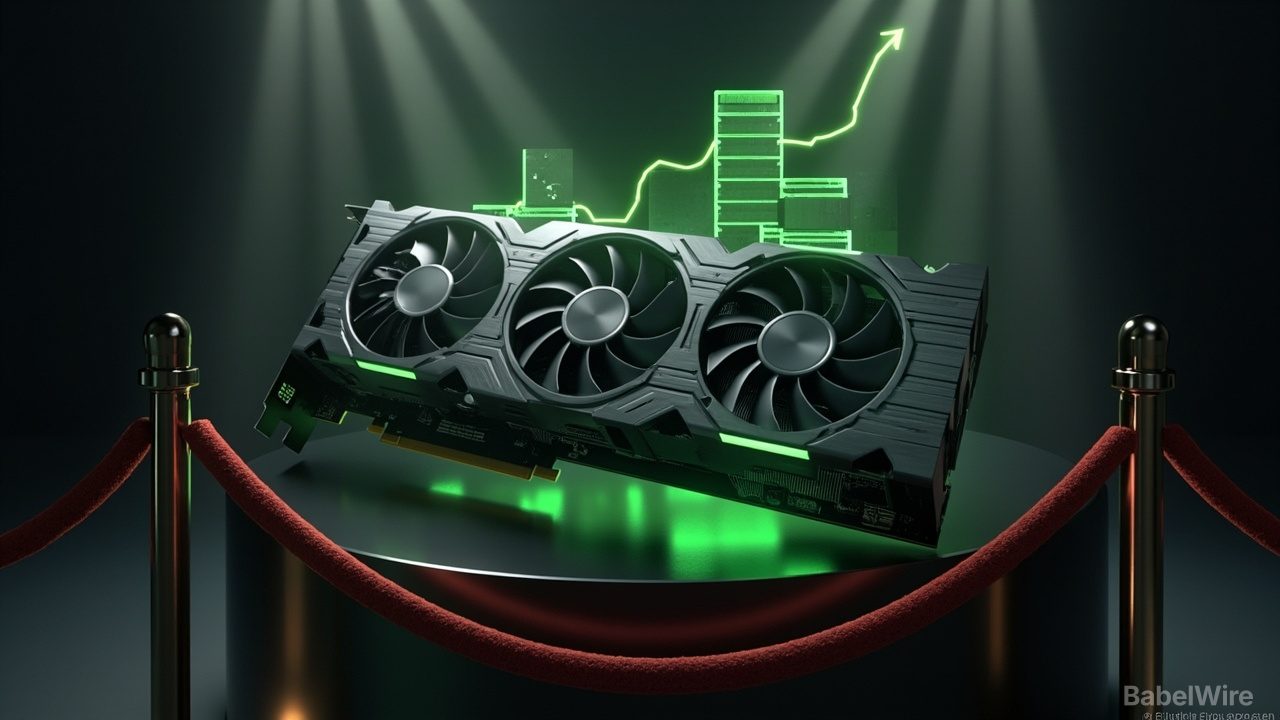
The GeForce RTX 5090, Nvidia's flagship consumer GPU, has crossed the €6,000 mark in European retail and is reportedly set to disappear from the market, according to heise's 13 October 2026 report on circulating rumours. The same report says a refreshed GeForce RTX 5080 with 24 GB of memory is being prepared.
Treat the specifics as rumours until Nvidia confirms them — the report itself frames them that way. But the shape of the story is not speculative. Graphics-card prices have been driven for two years by a collision between AI demand and constrained supply: memory makers have shifted capacity toward high-bandwidth products for data centres, and the same GDDR7 and wafer capacity a gaming flagship needs is being competed for by accelerators that sell for tens of thousands of dollars each.
European prices add their own layer. Retail pricing varies widely with VAT and the euro-dollar rate, and a street price above €6,000 for a consumer card would put the flagship well outside the reach of the audience it was nominally designed for — turning it into a halo product and a collector's item rather than a component.
The 24 GB RTX 5080 rumour is the more interesting half for anyone running models locally. For local inference and fine-tuning, memory capacity is usually the binding constraint, not raw compute: a card with more VRAM can hold larger quantised models and longer contexts, and a mid-tier card with enough memory often beats a faster card without it. If such a card does arrive, it would be aimed squarely at the desktop AI crowd.
What to watch: Nvidia's next product communication, supply of GDDR7, and whether any 24 GB variant ships at a price that undercuts used 3090/4090 boards, which remain the default workaround for hobbyist AI workloads.