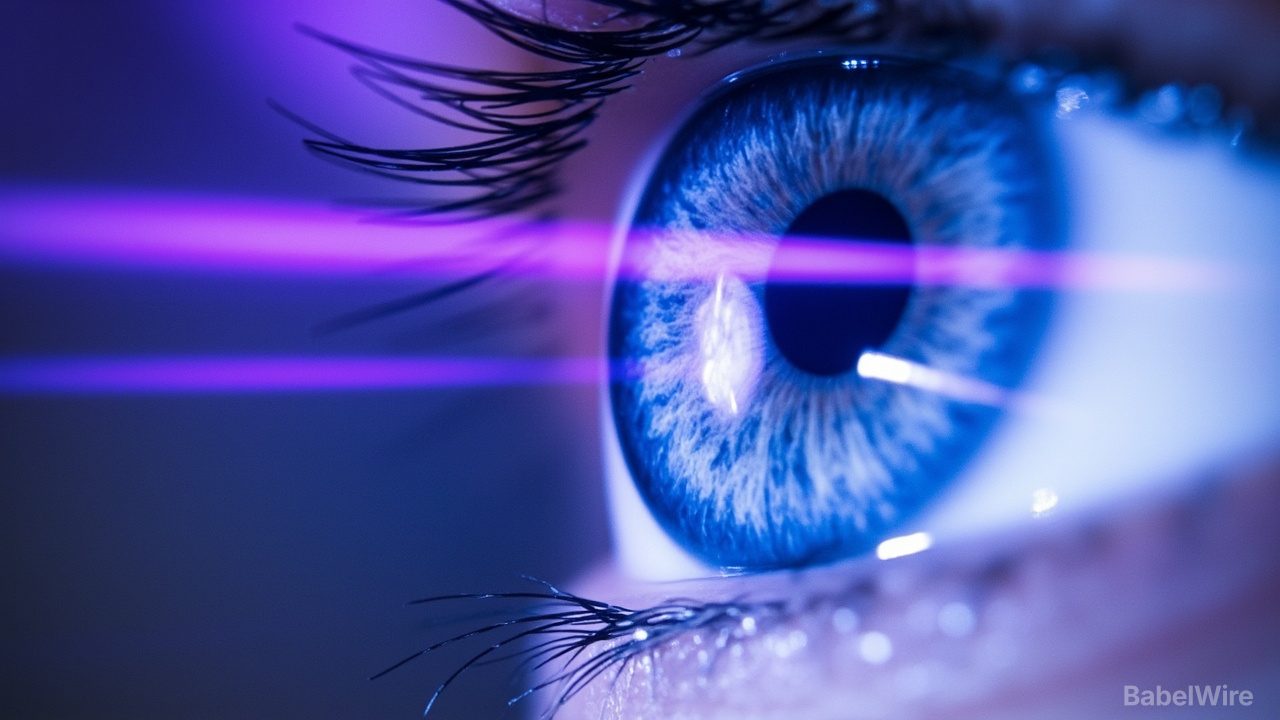
A new study published in Cell Reports Medicine suggests that a missing slice of the light spectrum — indigo light between 419 and 446 nanometers — may be a key factor in the global epidemic of childhood nearsightedness.
Researchers at Cincinnati Children's Hospital found that tree shrews raised under indoor lighting developed myopia, but those exposed to supplemental indigo light did not — even when researchers actively tried to induce the condition. The study was highlighted by Science on Monday.
The findings offer a compelling explanation for why myopia rates have soared worldwide as children spend more time indoors under artificial lighting that lacks the full solar spectrum. Standard LED and fluorescent lights used in homes, schools, and offices omit the indigo wavelengths that appear naturally in sunlight.
"You can cause a tree shrew to get myopia, but if you have indigo light present, you can prevent it, even though you are attempting to produce it," the researchers said.
Tree shrews are among its closest living relatives to primates, making them a strong model for human eye development. The study builds on years of research suggesting that outdoor time protects children's vision — but until now, scientists had not isolated which specific wavelengths of light were most protective.
The discovery could lead to practical interventions: modified indoor lighting that includes indigo wavelengths, or specialized eyewear that filters in the protective spectrum. With myopia affecting an estimated 30-40% of children in Western countries and up to 80-90% in parts of East Asia, the public health implications are significant.
The researchers noted that while outdoor time remains beneficial for many reasons, the indigo light finding opens a path to protecting children who cannot spend extended periods outside — whether due to urban density, climate, or academic schedules.