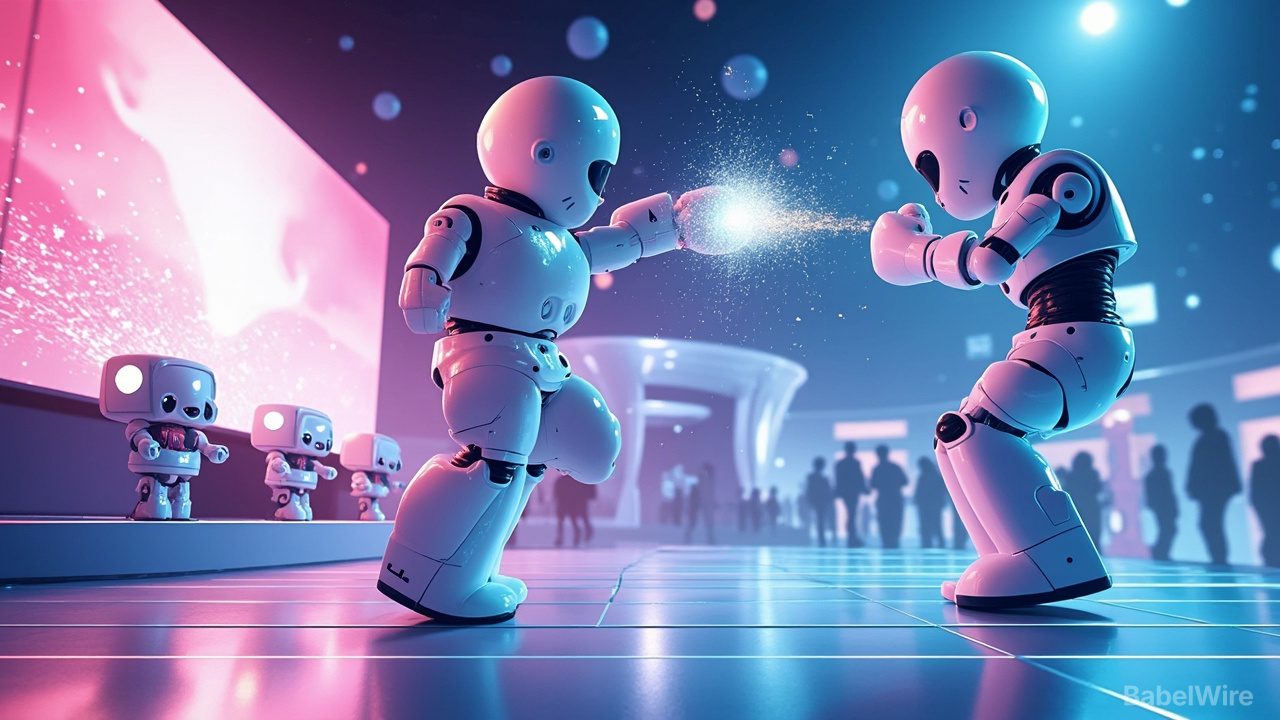
Robots are everywhere at IFA 2026 — but a tour of the Berlin show floor by heise online's Ulrike Kuhlmann suggests the intelligence has not quite arrived. Chinese robotics maker Unitree entertained crowds with boxing humanoids that, mid-fight, kept swinging and kicking at spots where their opponent no longer stood: impressive body control, but mostly pre-programmed routines interrupted by brief orientation sequences.
The rest of the floor splits between heavy-duty helpers and 'companions'. Startup Zeroth showed a sturdy roughly 70-centimeter humanoid designed to teach hobbyists how to program servo-driven motion — and to recognize books that children hold out for it to read aloud. Cuddlier companions with big display-eyes promise to soothe children with ADHD or autism; each condition reportedly runs its own program, with unclear scientific backing.
Privacy is the sore spot. Companions come with cameras and microphones, yet the large-language-model voices they speak with are processed in the cloud. Most vendors — predominantly Chinese — insist data never leaves the device, which heise notes is technically impossible without on-device AI servers. Rolling care robots demonstrated by software maker Tuya can call for help after detecting a fall, but the concepts stumble on closed doors and limited battery life.
Why it matters: IFA shows consumer robotics maturing physically while the 'smart' part stays shallow — and a children's-room robot that phones home raises questions the industry has yet to answer.