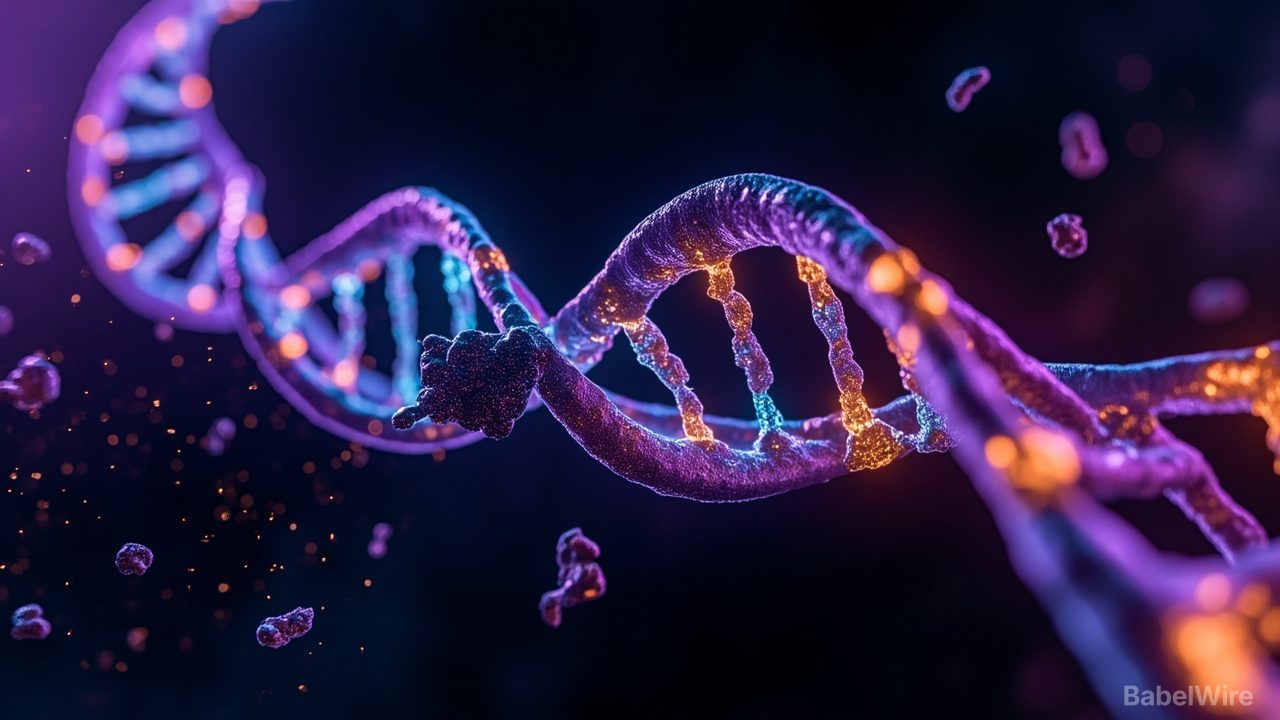
All known life writes its genetic instructions with four letters. In a study published Sept. 2 in Nature Communications, researchers at UC San Diego showed that RNA polymerase from E. coli - the enzyme that reads DNA and writes RNA, the first step in gene expression - can accurately transcribe an expanded, eight-letter alphabet known as hachimoji, incorporating two synthetic base pairs not found in nature.
Using biochemical experiments and high-resolution cryo-electron microscopy, the team captured structural snapshots showing that the enzyme recognises the synthetic DNA letters through the same biochemical and structural signals it uses for natural base pairs. That helps explain how expanded genetic information can be faithfully transcribed by ordinary cellular machinery rather than bespoke enzymes.
A companion study led by the same group, published Aug. 12 in PNAS, reported that RNA polymerase can also recognise another synthetic base pair held together without hydrogen bonds. Together the two papers point toward a future in which cells process synthetic genetic information using their natural molecular machinery.
The practical stakes are long-term: previous work has used expanded genetic alphabets to build synthetic DNA molecules that recognise liver cancer cells, and the authors argue that a clearer picture of how RNA polymerase reads non-natural letters provides a molecular foundation for new diagnostics, therapeutics and engineered biological systems that make compounds nature cannot.
Sources
- today.ucsd.eduBreakthrough Helps Expand Genetic Alphabet — UC San Diego Today
- sciencedaily.comLife uses 4 DNA letters. Scientists just made 8 work — ScienceDaily
- timesofindia.indiatimes.comAll known life uses 4 DNA letters; UC San Diego showed an existing enzyme can read 8 — Times of India
- thebrighterside.newsBiology's four-letter DNA alphabet just expanded to eight — The Brighter Side