Action-camera pioneer GoPro is becoming part of the defense and AI supply industry. As announced in early September, GoPro is merging with Starman Optical, a specialist in optical systems for defense, government, robotics and aerospace. The deal is worth about $285 million, or $1.14 per share, paid in cash to GoPro shareholders. Upon closing, Starman will hold roughly 90 percent of the combined company; GoPro will remain publicly traded. Closing is expected by the end of 2026.
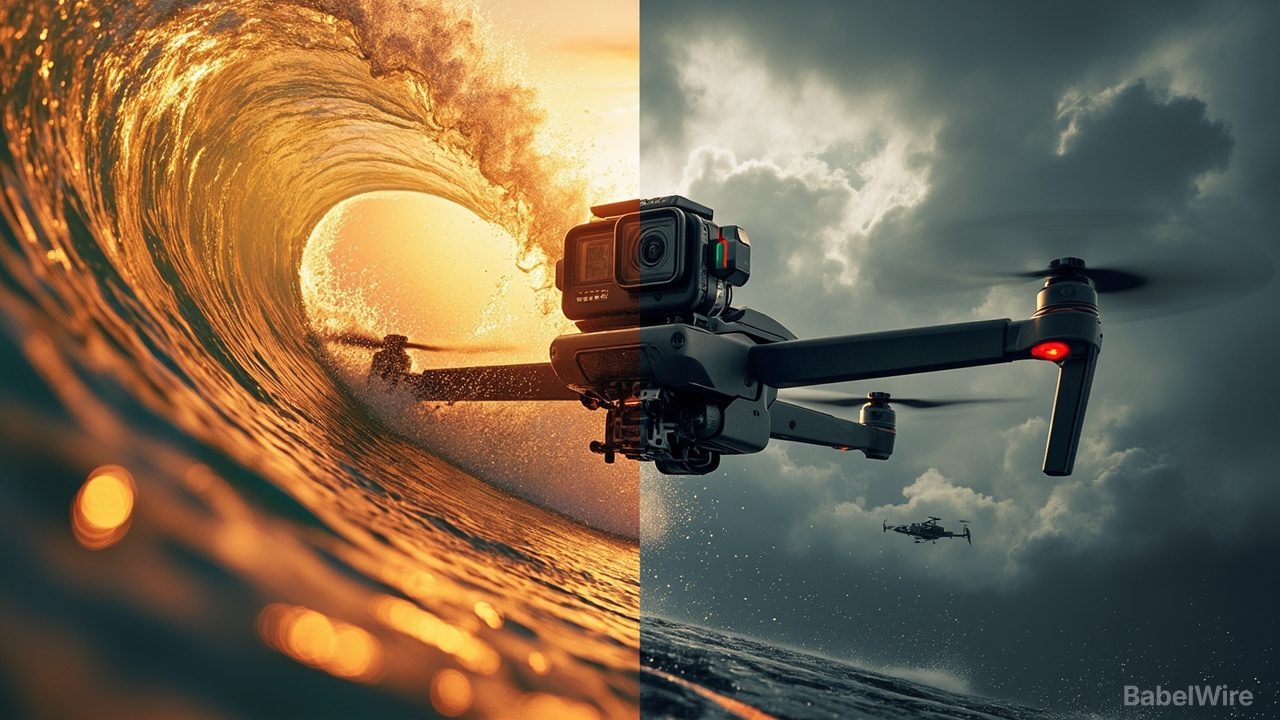
For a brand that stood for adventure and extreme sports for decades — cameras on helmets, surfboards and parachutes — this is a sharp pivot. The official announcement speaks of "new markets" and leveraging GoPro's "robust technology." Heise and other outlets read it as follows: the cameras that mountain bikers used to film their descents will increasingly end up in military drones, autonomous vehicles and surveillance systems. GoPro itself names defense, government, robotics and aerospace, plus AI infrastructure, as its future focus.
Commercially, the move makes sense: GoPro struggled for years with falling sales as smartphones kept improving their video quality and the dedicated action-camera market shrank. A well-funded customer like the military is tempting. GoPro brings its camera technology, brand and manufacturing know-how to the partnership; Starman contributes optical systems and access to government and defense contracts. GoPro had also been carrying roughly $92 million in debt, which the transaction is expected to address.
For the GoPro community, the news stings: a brand once synonymous with freedom and adventure is now courting defense customers. Whether future GoPro cameras will still be sold at retail or production shifts toward government and military contracts remains to be seen. Early reactions in photography forums and on social media are largely critical.
Sources
- heise.deGoPro wird Rüstungskamera – die Fotonews der Woche KW 36 – heise online / c't Fotografie
- reuters.comStruggling GoPro sells majority stake to optical maker in $285 million deal – Reuters
- techcrunch.comGoPro to be acquired for $285M, will remain a public company – TechCrunch
- dpreview.comGoPro says its future is 'defense, government, robotics and aerospace' after $285 million merger – DPReview