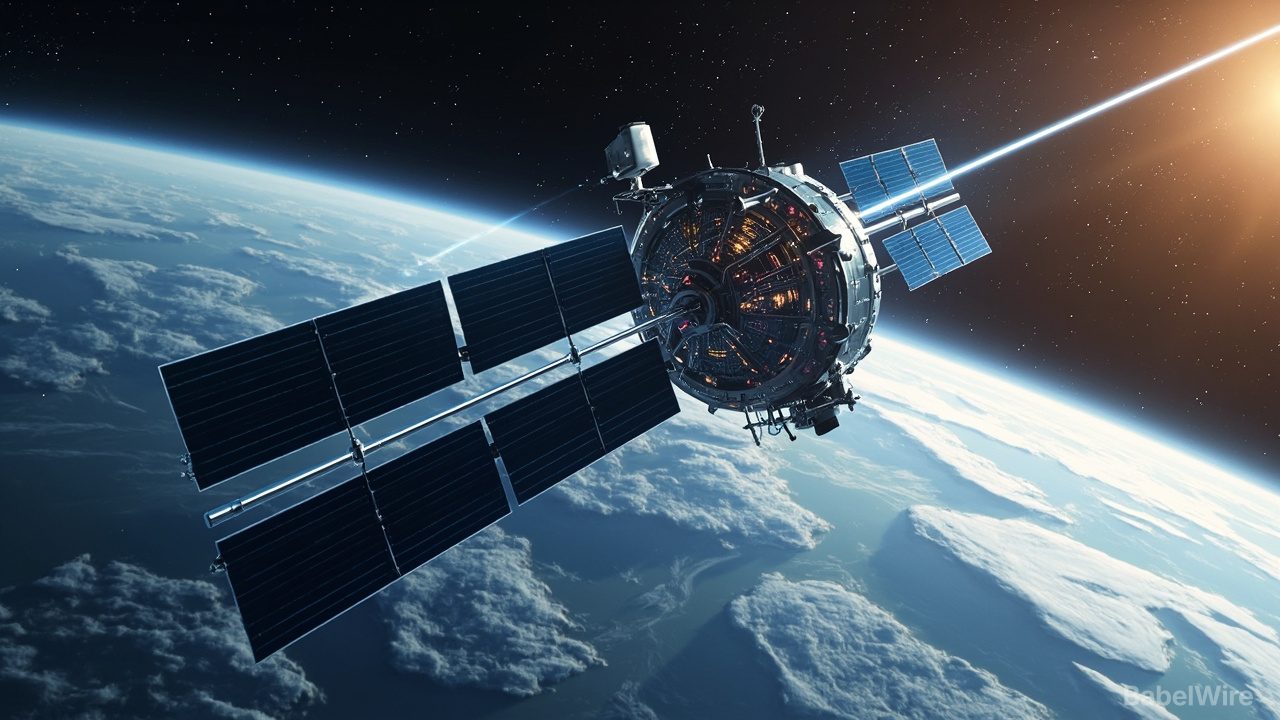
Google has put a refrigerator-sized satellite carrying its own AI chips into orbit, the first hardware test of a research programme the company calls Project Suncatcher: an attempt to build AI data centres in space, powered by near-constant sunlight.
The prototype carries four Tensor Processing Units (TPUs) — the machine-learning silicon Google already runs in its terrestrial data centres. According to NPR, the chips will run a version of Google's open-weight Gemma model for 15 minutes at a time because of heat-management limits, answering simple queries while the mission measures how the hardware copes with "the physical stress of spaceflight and the radiation and thermal extremes of space."
The satellite rode a SpaceX rideshare to a sun-synchronous orbit, where its solar panels are almost never shaded — removing the need for heavy batteries. Google built it with the aerospace and imagery company Planet, which will commission the spacecraft; the mission is designed to operate for a year.
The pitch is energy. "The sun puts out almost all of the power in our solar system," said Travis Beals, senior director and lead of Project Suncatcher. "In some sense, this project is about tapping into the best way to use solar power to run AI compute." It also sidesteps a growing problem on the ground: local opposition to power-hungry data centres. Google's capital expenditure this year is expected to reach $180–190 billion.
The challenges are formidable. In the vacuum of space there is no air or water to carry heat away, and Google calls cooling "a crucial research challenge"; the radiators that wick heat from the chips are among the heaviest components on the spacecraft. Repairs are another: a faulty chip is easy to swap in a data centre and very hard to reach in orbit.
Beals is candid about the economics. "I don't see this being something where it's cheaper to do this in the next five years," he said, adding that space and Earth-based computing will coexist for a long time. Google plans to launch two more satellites next year to test laser links between them. It is not alone in the race: Starcloud flew an Nvidia H100 in orbit last November, and SpaceX has said it expects to begin deploying orbital AI compute satellites as early as 2028.