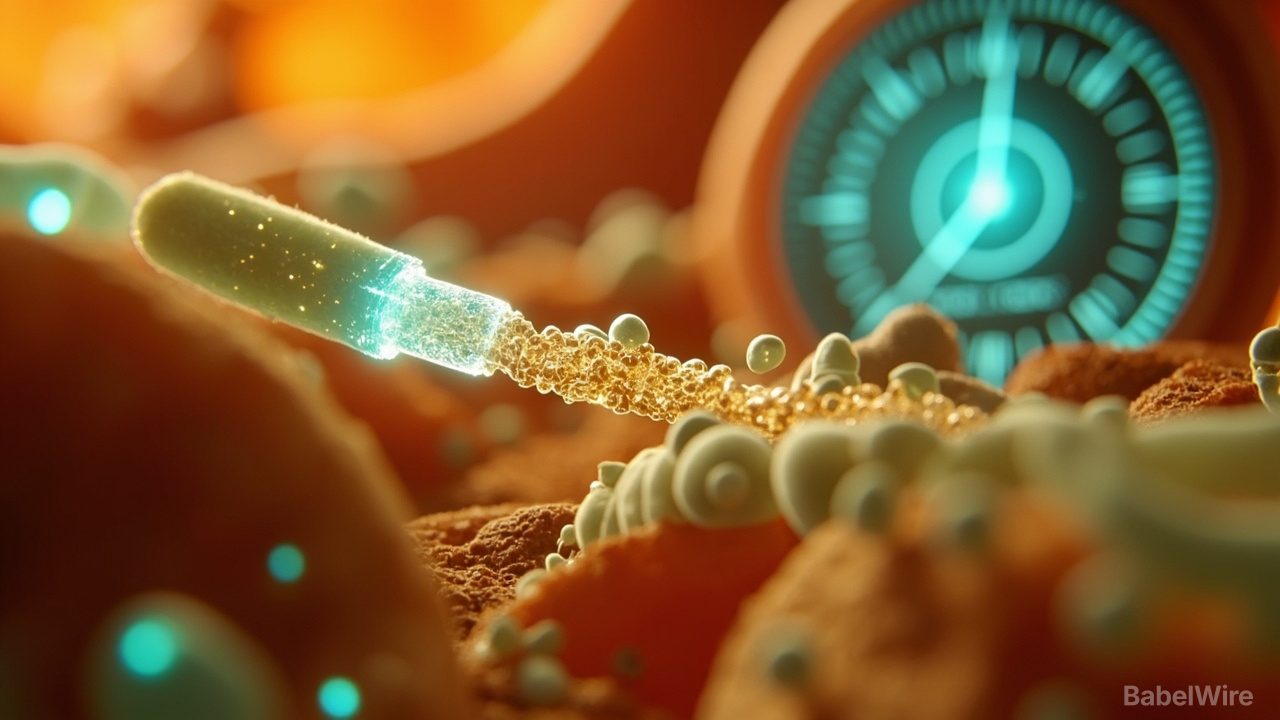
Diabetes treatment has long meant injections, pumps or implants that track blood sugar from outside the gut. A team of researchers now describes a different approach in Nature: probiotic bacteria, swallowed like a supplement, that sense glucose inside the intestine and automatically produce glucose-lowering molecules when levels climb.
The engineered microbes carry a synthetic gene circuit built around HexR, a glucose-responsive regulator found in bacteria. Wired to a designed promoter, HexR acts as a biological sensor: above a defined glucose threshold the circuit switches on therapeutic genes, and when the signal falls, production eases off — a 'sense-and-respond' feedback system rather than a fixed-dose pill.
The researchers tested the probiotics in several diabetic animal models, including mice and non-human primates (monkeys). Oral administration improved glycaemic control in both, and longer-term dosing also produced clear improvements in lipid profiles and attenuated several diabetic complications — evidence that the circuit kept working inside the living intestine, not just in laboratory cultures.
Because the bacteria are taken by mouth and persist in the gut only temporarily, the approach sidesteps some safety concerns of transplanted-cell therapies, such as immune reactions or uncontrolled growth. Open questions remain — how reliably the microbes colonize, whether their circuits stay stable, and whether engineered DNA could spread to other organisms — and human trials will be needed to confirm the effect. Still, the authors position the work as a step toward programmable living medicines that monitor the body's chemistry in real time, without implants or continuous external control.