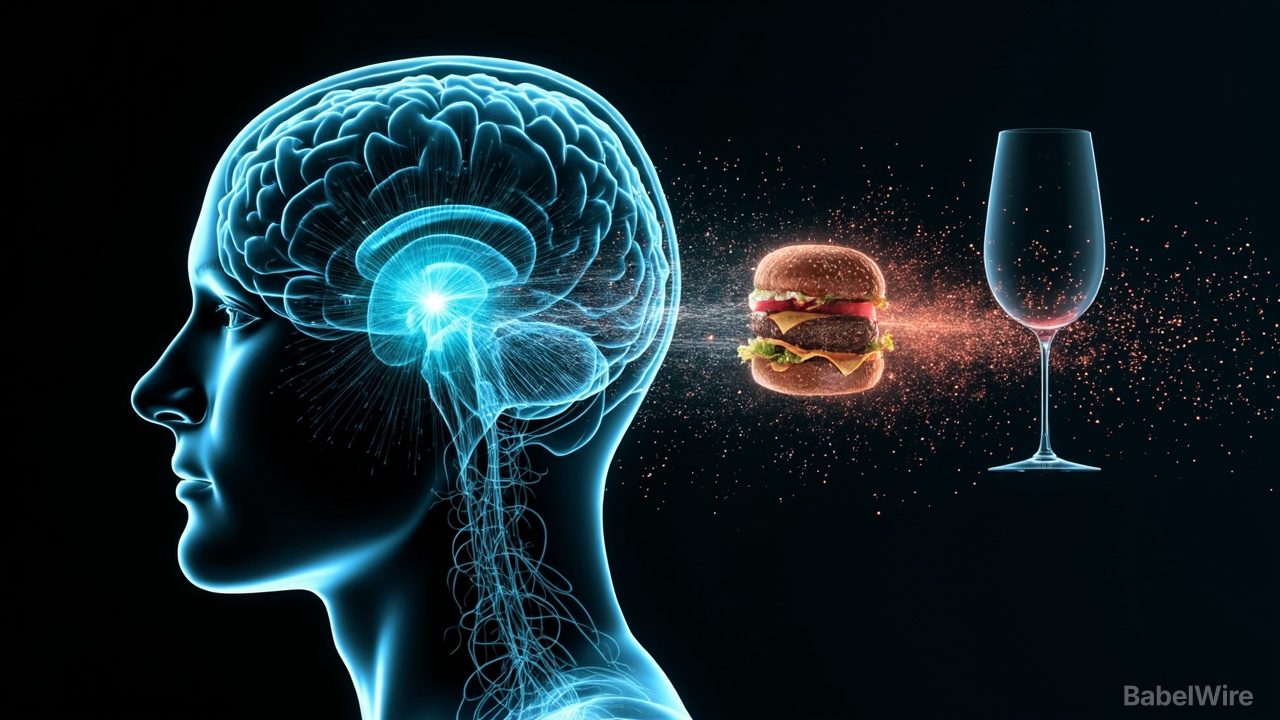
Drugs like Ozempic and Wegovy — developed for type 2 diabetes and famous for their weight-loss effects — have a lesser-known side: they blunt cravings for alcohol and other addictive substances. New research is increasingly tracing that effect to a specific brain region that links thinking about a reward with feeling compelled to pursue it: the lateral septum.
In humans, GLP-1 agonists are documented to reduce alcohol consumption. In animal studies, the same drugs reduce the use of cocaine, amphetamines, opiates and nicotine. That raises the question of where exactly in the brain they act — the classic reward regions (the ventral tegmental area and nucleus accumbens, which produce dopamine) have almost no GLP-1 receptors.
The lateral septum, by contrast, is loaded with them. It receives 'where and when am I' information from the hippocampus and, through its own place cells that respond strongly to rewards, adds 'what is good in this place.' From there it communicates with the dopamine-producing machinery — putting it in a prime position to act as a control point between thinking about a reward and feeling driven to pursue it.
Several studies in 2026 reinforce the picture. In a paper in the journal Neuron, Y. Tian and colleagues showed that activating GLP-1-receptor-bearing neurons in the dorsal lateral septum decreases alcohol consumption and alcohol-evoked dopamine release in the nucleus accumbens of mice; liraglutide also cut alcohol intake through these receptors. Earlier work had already shown that GLP-1 activation directly in the lateral septum reduces food consumption in mice.
Scientists now increasingly describe the lateral septum as a potential 'craving center' — a region that could explain why the same class of drug helps with problems as different as obesity and alcohol dependence. The findings could open new approaches to treating addiction, and deepen understanding of how reward and habit are wired into the brain.
Sources
- sciencedaily.comOzempic may have revealed the brain's hidden 'craving center' (ScienceDaily via The Conversation)
- sciencedirect.comA septal inhibitory circuit constrains alcohol reward and relapse (Neuron)
- medicalxpress.comWeight-loss drugs like Ozempic could work for addiction — here's what the evidence shows (Medical Xpress)