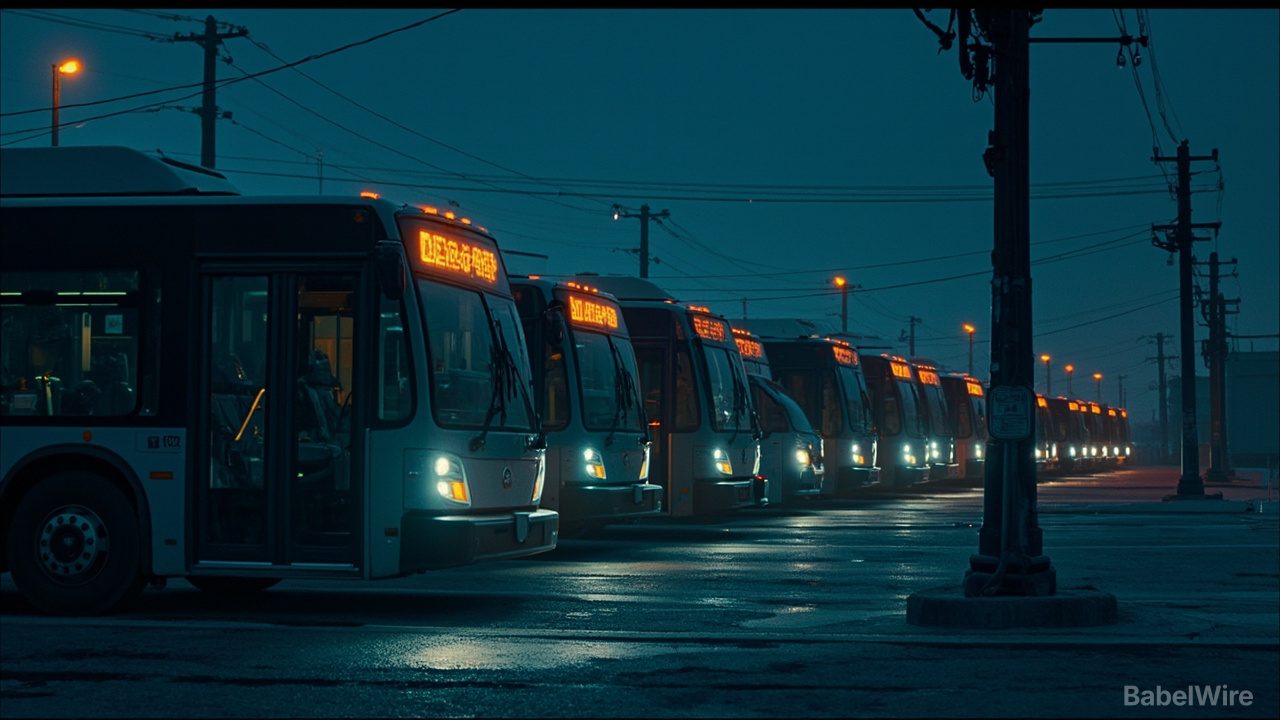
Germany plans to cut its support for electric buses by about two-thirds, a reduction the industry says would put roughly 1,000 jobs at risk, according to Golem. The funding covers not only the vehicles themselves but the depot charging infrastructure that makes them usable, and both sides of that spending are on the chopping block.
The timing is awkward for a country that has made the electrification of public transport a visible part of its climate strategy. Electric buses are one of the few parts of the transport transition that work reliably at scale: quieter, cleaner in city centres and cheaper to run once the depot has been built out. The catch is that the economics depend heavily on the up-front subsidy; without it, the higher purchase price of a battery-electric bus next to a diesel one rarely closes on total cost of ownership alone within a municipal budget cycle.
The jobs at risk sit across the supply chain — bus manufacturers, battery and drivetrain suppliers, and the depot-charging companies that grew up around the programme. A two-thirds cut is the kind of signal that makes firms pause orders and slow hiring before the money actually stops.
There is a familiar pattern here. Germany has repeatedly introduced and then trimmed subsidy schemes for electric mobility as budgets tightened, and each swing is felt most by the mid-sized suppliers that cannot simply absorb the gap. For cities midway through converting a fleet, an abrupt change also raises the cost of the vehicles and chargers already committed.
Supporters of the cut argue that the money is needed elsewhere and that battery costs keep falling, so the case for perpetual subsidy weakens. Opponents counter that e-buses are still more expensive up front and that cutting now stalls a transition that is hardest to restart. What is not in dispute is the direction of the near-term numbers: fewer subsidised buses, fewer orders, and a supply chain that has to decide how much capacity to keep.