A team led by chemists at the University of Wisconsin–Madison has developed a catalyst that ejects electrons directly into solution, bypassing a decades-old rule that governs which molecules get reduced in chemical reactions. Reported in Nature, the approach could unlock coupling reactions previously considered impossible.
Single-electron transfer is one of chemistry's most useful tools: it can activate molecules that otherwise resist reacting, allowing them to join together into the complex compounds behind lifesaving drugs, advanced materials and laboratory models of biological systems. But for decades, a basic rule restricted which reactions chemists could design: when two molecules compete to receive an electron, the electron ordinarily moves to the molecule that is easier to reduce.
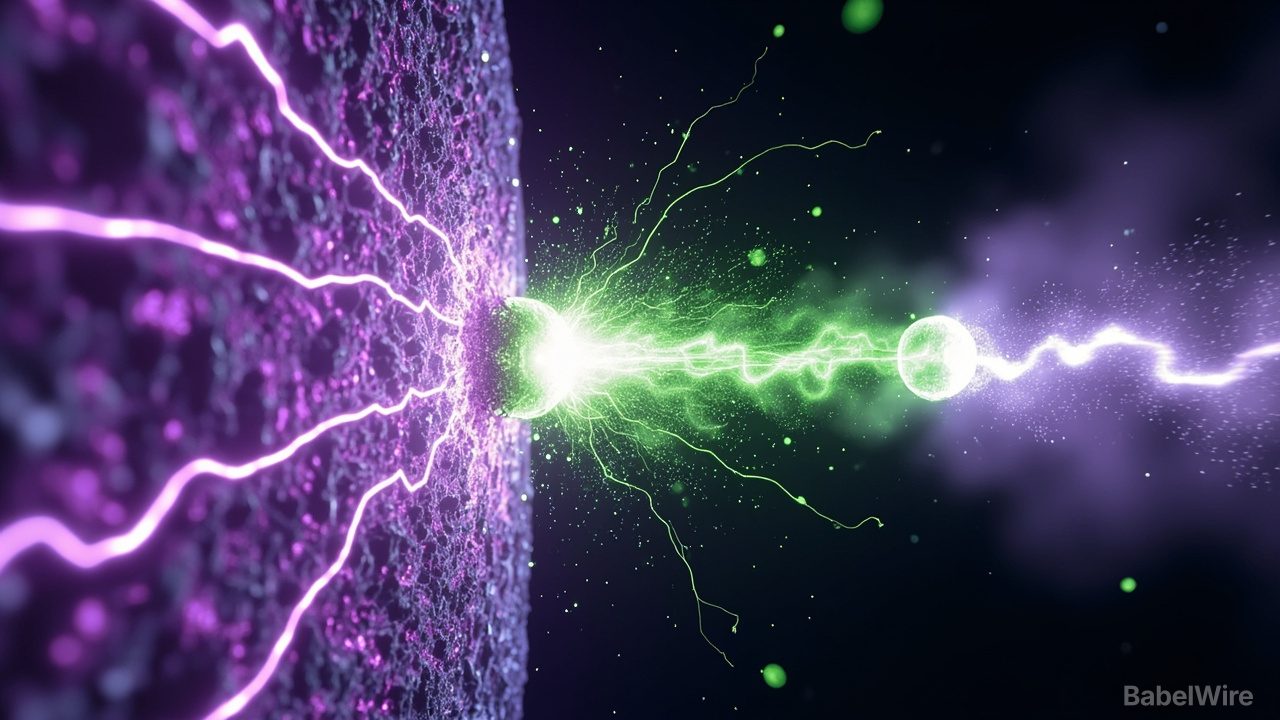
"Our catalyst works a bit differently because it actually just ejects the electron directly into solvent," said Zachary Wickens, a professor in the UW–Madison Department of Chemistry who led the work. "This gives you, more or less, the strongest reductant and the most aggressive source of electrons you could possibly have, since a free electron would rather be in basically any molecule than just on its own in solution."
Once released, the electron rapidly enters the first molecule it encounters, so the choice no longer depends mainly on which molecule best stabilizes the added electron. The decisive selectivity instead emerges later, during the steps that follow electron transfer. Computational work by Robert Paton's group at Colorado State University and spectroscopy at the University of Colorado Boulder showed that the desired reactant can escape reversal and continue toward the product, while the partner that is easier to reduce is effectively recycled back to its starting material.
Wickens and his colleagues spent five years developing the catalyst family behind the approach, which was supported in part by the NSF-funded Center for Sustainable Photoredox Catalysis (SuPRCat). "This is not just another synthetic method; it's a new way to design redox reactions," Wickens said.
The paper, "Selectivity Emerges from Indiscriminate Photoreduction," was published in Nature on July 15 with co-authors from UW–Madison, Colorado State University and the University of Colorado Boulder.