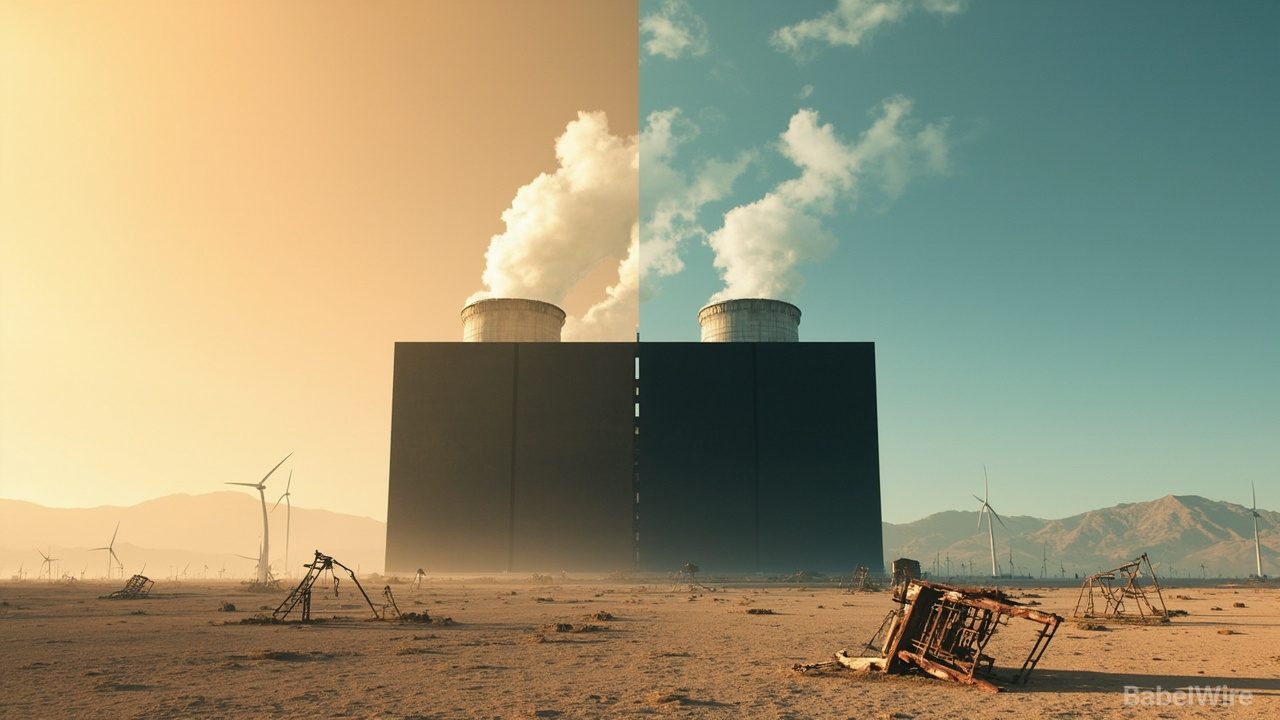
For years, energy policy was mostly a queue of retirement announcements. In 2026 the reverse holds: a report covered by The Verge this week concludes that the fossil-fuel comeback is not looming but already here — and that data centres are paying for a large part of it.
The mechanics are simple and uncomfortable. Data centres need firm capacity that is available around the clock, not the average output of a solar farm. They need it in a specific place, on a specific date, and at a scale that has shifted load forecasts in many service territories by double-digit percentages within two years. What can be built on that timeline is usually a gas plant: permitting and construction take a few years rather than the decade a nuclear project requires, and the grid connection is often already there because a plant used to stand on the site.
For the operators this is a supply-chain question, not a doctrine. They have committed to deliver compute on dates, and the penalty for missing a date is larger than the price difference between clean and fossil power. The 24/7 carbon-free-energy targets many of them announced measure an annual average, and an annual average does not capture a gas-shaped hole at three in the morning.
The result is a new generation of fossil infrastructure with a service life of thirty to forty years, justified by a demand forecast taken during a buildout. That is where the risk sits. If model efficiency improves faster than demand grows — or if inference demand migrates to cheaper regions — the capacity remains and ratepayers keep covering it. The converse is equally true: if the buildout continues at this pace, this decade's emissions are already locked in, whatever grids and governments decide later.
There are counterweights. Gas plants can in principle run on hydrogen, though in practice rarely and expensively so far. Nuclear power purchase agreements are being signed, most recently for small modular reactors at a former coal site in Indiana. And some vendors are pitching data centres that shift load to help the grid instead of demanding new generation. These are real approaches, but all of them scale more slowly than demand is rising.
The honest summary is this: the industry's climate pitch was that data centres would finance the energy transition. For now they are financing the opposite direction.