**Ford has rehired 350 veteran engineers — many of them former employees returning, others brought in from suppliers — after discovering that its AI-powered quality control systems could not match the intuition and pattern-recognition of experienced human eyes.**
The admission is striking from one of the world's largest manufacturers, which has invested billions in automation and AI-driven production lines.
"Mistakenly we thought that by just introducing artificial intelligence and ingesting the design requirements that we had, that that would produce a high-quality product," Charles Poon, Ford's vice president of vehicle hardware engineering, told Bloomberg.
Ford COO Kumar Galhotra explained that the company had been "relying more and more on automated quality systems" with disappointing results. The solution: bring back technical specialists who "hunt for failure points before a part ever reaches the plant floor."
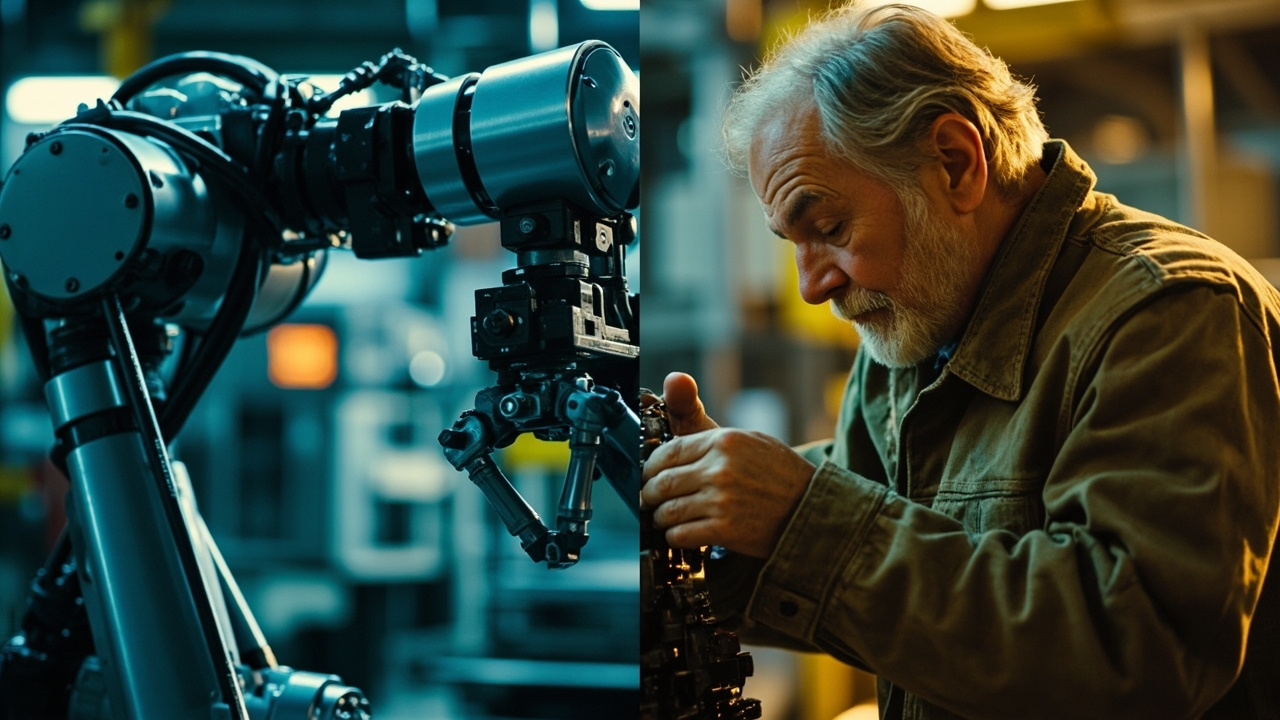
**The 'gray beards' are not replacing AI — they are retraining it.**
Rather than abandoning AI entirely, Ford is using the veteran engineers to train younger staff and, crucially, to reprogram the AI tools themselves. The experienced engineers — referred to internally as "gray beards" — bring decades of tacit knowledge about failure modes that no training dataset had captured.
**The results are already measurable.**
CEO Jim Farley said the rehiring has lowered warranty and recall costs, "contributing to literally hundreds and hundreds of millions of dollars of a tailwind for Ford on cost." The automaker also claimed the top spot among mainstream brands in the JD Power Initial Quality Survey released this week.
A bellwether for the AI-in-manufacturing thesis:
Ford's experience offers a nuanced counterpoint to the narrative that AI will simply replace human expertise in manufacturing. The company's lesson is not that AI is useless, but that the most valuable AI systems are those trained on deep human expertise — and that expertise cannot be replaced by models alone.
As manufacturing AI adoption accelerates across the auto industry, Ford's admission that its automated systems fell short — and that the fix was human, not technological — is a reality check for the sector.