Why do we dream what we dream?
Why do some dreams feel so vivid that they seem almost real, while others unfold as confusing fragments? New research from the IMT School for Advanced Studies Lucca suggests the answer depends on a combination of personality, sleep quality, mental habits, and major events unfolding in the outside world.
The study, published in _Communications Psychology_, examined more than 3,700 descriptions of dreams and waking experiences from 287 people between the ages of 18 and 70. For two weeks, participants recorded their dreams and daily experiences while researchers collected data on sleeping habits, personality, cognitive abilities, and psychological characteristics.
AI decodes the dreaming mind
To analyze such a large number of written reports, the researchers used natural language processing (NLP), a form of artificial intelligence that examines patterns, relationships, and meaning in language. The technology allowed the team to measure the semantic structure of reports — how ideas, words, and concepts connect within language.
The results showed that dream content was neither completely random nor inherently chaotic. Instead, dreams reflected a complex mixture of personal characteristics, including a tendency to mind-wander, an interest in dreams, and the quality of a person's sleep.
Dreams don't simply replay the day
When the researchers compared waking life descriptions with dream reports, they found the brain does not reproduce daily experiences exactly. Instead, familiar details were transformed. A workplace, hospital, or classroom might appear in a dream, but often combined with unrelated places or shifting viewpoints. Different parts of a person's life could merge into a single vivid scene.
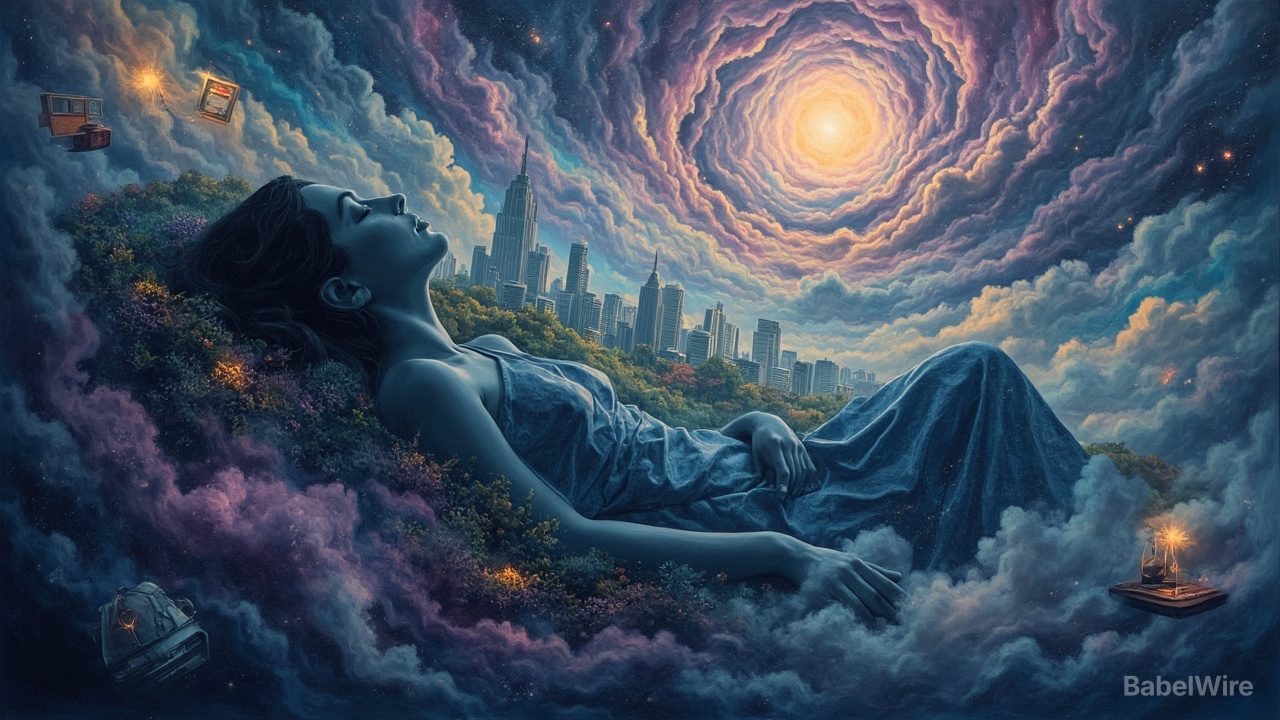
These findings suggest that dreaming is not a simple replay system. The sleeping mind appears to reorganize pieces of reality, combining memories with imagination, expectations, and possible future experiences.
Personality shapes dream vividness
The way dreams were transformed differed from person to person. People prone to mind-wandering while awake tended to report dreams that changed quickly and felt fragmented. Participants who valued dreams and believed they had personal meaning described richer and more immersive experiences with stronger perceptual detail.
The pandemic left a mark on dreams
The researchers also examined dream reports collected during the COVID-19 lockdown. During lockdown, dreams contained stronger emotions and more references to restrictions, barriers, and confinement. As months passed, those patterns became less pronounced, suggesting dreams evolve alongside psychological adjustment.
"Our findings show that dreams are not just a reflection of past experiences, but a dynamic process shaped by who we are and what we live through," said Valentina Elce, lead author of the paper.
The study demonstrates how AI could transform dream research, allowing scientists to analyze much larger collections of dream reports in a consistent, repeatable way — opening new opportunities for studying consciousness, memory, emotional processing, and mental health.