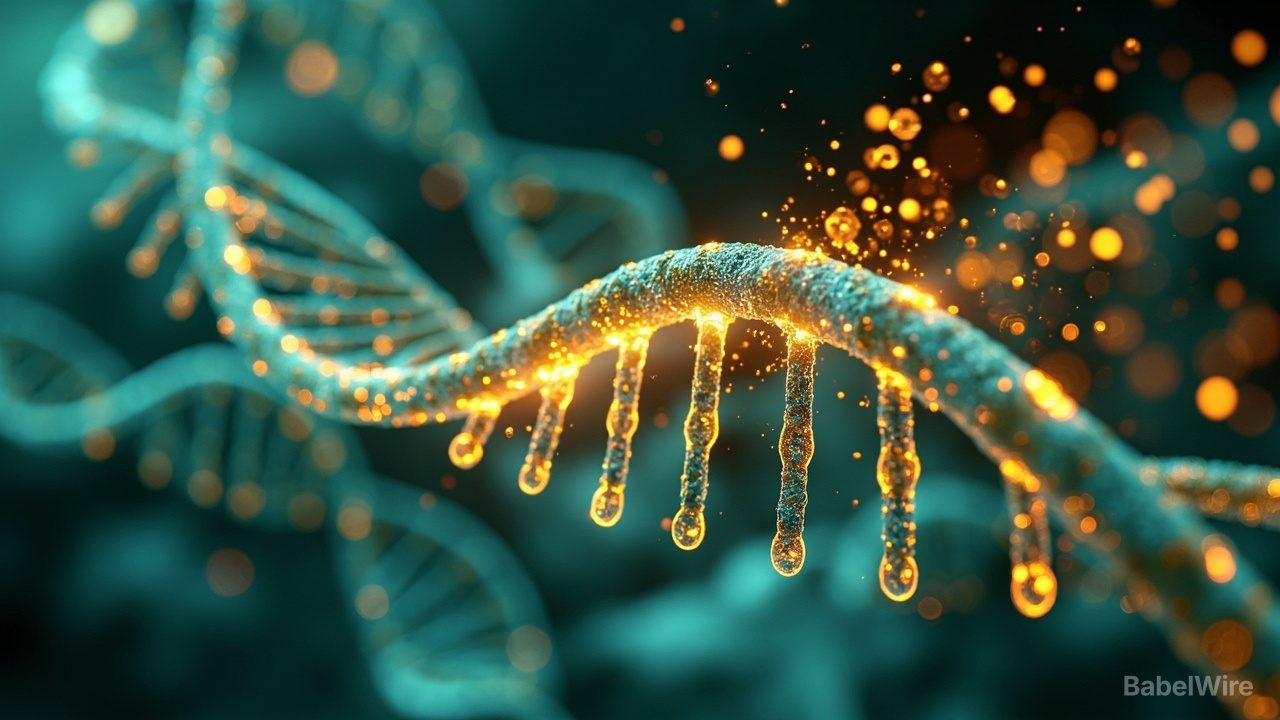
Every cell in your body sustains up to 100,000 DNA lesions a day — from UV light, toxins and the reactive molecules of ordinary metabolism. Most are repaired, but the damage that slips through accumulates with age and is now considered one of the main drivers of ageing, fueling chronic inflammation, cellular senescence and age-related disease.
A new Nature news feature published Aug 4 reports that researchers are, for the first time, optimistic that boosting DNA repair could slow ageing. Long-lived species provide clues: bowhead whales live more than 200 years and carry 1,000 times more cells than humans, yet cancer rarely develops. Vera Gorbunova's team at the University of Rochester found that whale cells make unusually accurate double-strand break repairs, and that a whale protein called CIRBP increases two types of double-strand break repair when expressed in human cells.
A "master regulator" may make it possible to enhance repair systems in unison: the DREAM complex, which represses many DNA-repair genes in ordinary cells. When Björn Schumacher's team at the University of Cologne switched it off in human cells and in a mouse model of premature ageing, DNA-repair gene expression rose and DNA damage fell. "For the first time, we could really boost the overall capacity to repair," Schumacher says.
Genetics offers another path: some human centenarians carry a superior variant of the SIRT6 gene, and a group of compounds called fucoidans — naturally occurring in brown seaweed — activate the SIRT6 protein. In mouse studies, fucoidan supplements improved DNA repair, reduced senescence and extended healthspan and lifespan.
Now the first human test is underway. Geroscientist Andrea Maier, director of the National University of Singapore's Academy for Healthy Longevity, is leading a study giving fucoidans to men aged 50 to 80, measuring cellular markers of ageing and clinical outcomes. Researchers caution the path is not simple: an estimated 10% of the genome plays a role in genome maintenance, and boosting one pathway can throw the delicate balance of the rest out of whack.