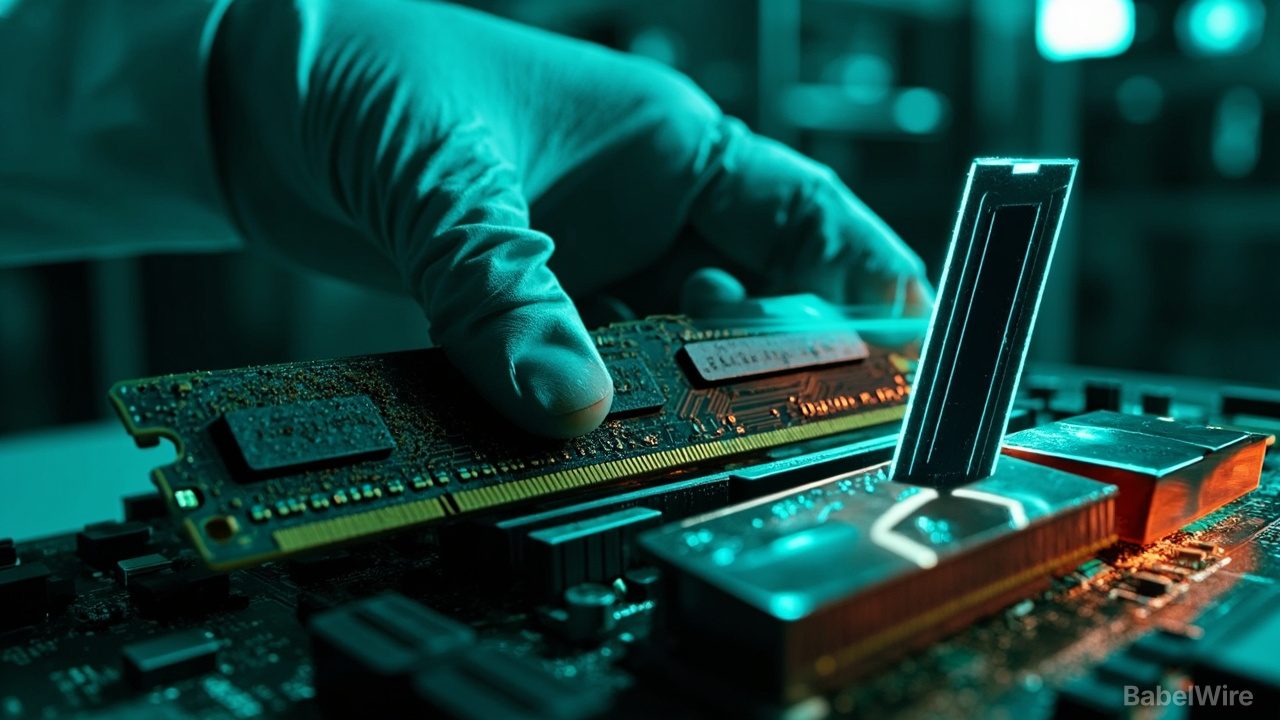
The memory shortage has produced a hardware reversal that would have sounded absurd two years ago: Intel and AMD are preparing new processors for decade-old DDR4 memory.
On Friday, Gigabyte said two of its motherboard lines will support "upcoming" processors built on Intel's LGA 1700 socket. LGA 1700 debuted in 2021 with 12th-generation Alder Lake and was notable for accepting both DDR4 and the then-new DDR5. Intel moved to a DDR5-only approach in 2024. According to Gigabyte, the dual-format support is being revived, with the new chips "expected to launch in early 2027." Intel did not immediately respond to a request for comment.
AMD's version of the same retreat is already shipping. In August, Gigabyte announced a new series of AM4 motherboards — AM4 is AMD's DDR4 platform — alongside a 10th-anniversary relaunch of the Ryzen 7 5800X3D, a CPU that has been a favourite among budget builders precisely because it keeps an old socket competitive.
DDR4 first reached the market in 2014. Under normal conditions, buying new silicon to keep using a memory standard that old would be a poor investment. The current market is not normal: demand from AI data centres has driven DRAM and NAND prices up sharply, pushing component costs onto consumer systems. The knock-on effects now include rising SSD prices and, according to analyst firms cited this week, a roughly 20 percent drop in PC shipments in the third quarter as buyers balk at the cost of an upgrade.
The strategic logic for both chipmakers is the same: offer customers a new CPU that does not force them to buy a matching new memory kit. For anyone holding a DDR4 system, the practical consequence is that the upgrade path they expected to be closed is being prised back open — a picture to be confirmed when the LGA 1700 parts actually appear and independent benchmarks land, rather than by a motherboard compatibility list.