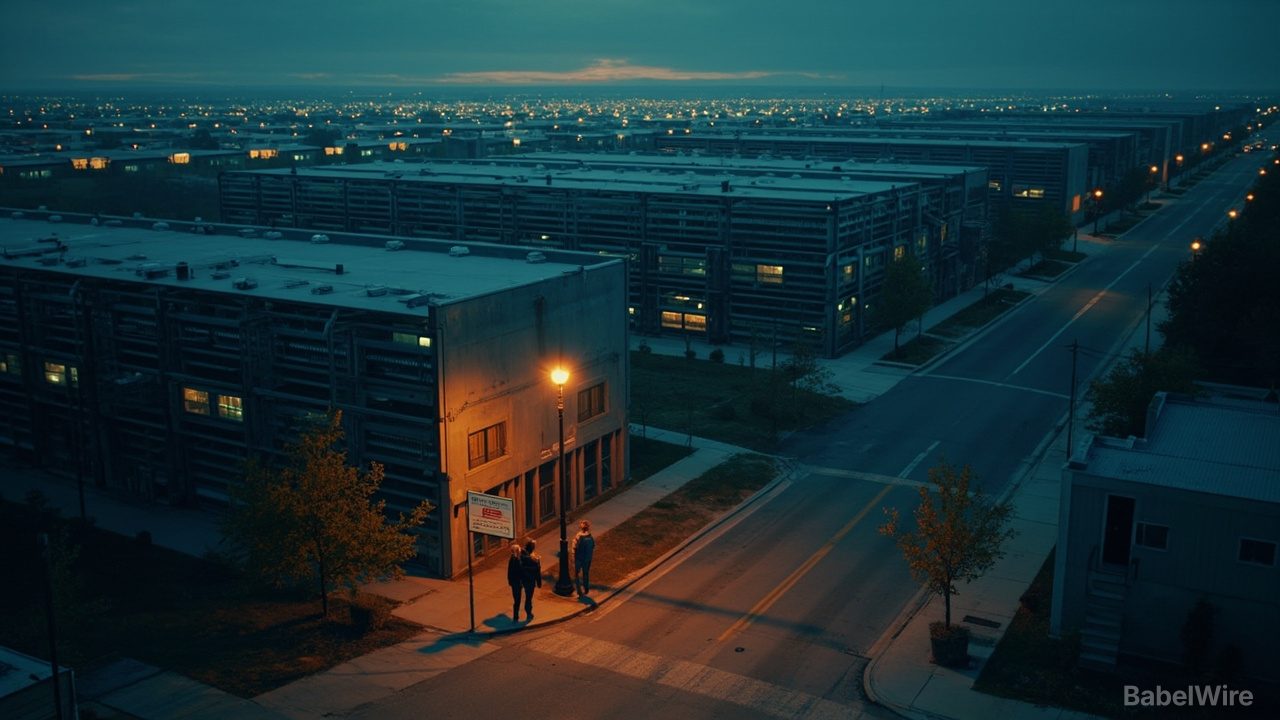
On 3 November, in 38 local jurisdictions across the United States, voters will consider at least 41 ballot measures that would delay, prohibit or impose new requirements on data centres. That is the count Reuters published on Thursday, and it is the first time the AI buildout has been put to a direct popular vote at this scale.
The measures are the visible edge of a shift that has been building for a year. Polling compiled by VoteHub from Heatmap, Embold Research and others shows support for a data centre near where respondents live falling from 43% in 2025 to 21% in 2026; across national polls, average opposition has climbed from roughly 42% to 68%. The swing is not partisan in the usual way: Republicans moved from +14 net support to -43 in a single year, and rural voters are the most opposed group.
What people say worries them is money. Asked which impact concerns them most, 37% picked higher electricity bills and 21% picked strain on the grid; only 13% chose water use. In Heatmap's surveys, the share of Americans who said new data centres help drive up power prices rose from 28% to 53% in nine months. The issue has been absorbed into the cost of living — which is what voters say elections are about.
Geography sharpens the politics. Ten states hold 70% of operating and planned capacity. Texas alone holds a quarter of all planned capacity, though it is among the least opposed states in polling; Virginia, with the most facilities, registers the highest opposition at 77%. Half of all capacity sits in just 20 congressional districts, 17 of which voted for Trump in 2024 — a distribution that makes data centres a local fight in places that are not swing districts, and a state-level fight in places that are.
That is where the Senate comes in. Texas and Ohio are both top-four states for project count and both have competitive Senate races; the Democratic candidate in Ohio has made data-centre criticism central. Three of the most competitive governor's races — Texas, Ohio, Georgia — are in the top five buildout states, and the Democratic candidates in all three have called for moratoriums or an end to what one calls "costly data center madness."
Money is following votes, if modestly. Through early September, 636 campaigns ran Meta and YouTube ads attacking data centres; ten ran ads defending them, none from Democrats. AdImpact puts spending on ads mentioning data centres at about $86.5m from July to early October, against more than $10bn in total midterm spending — real, but not decisive on its own.
The immediate precedent is local. In June, Utah's Senate president and two Box Elder County commissioners lost their primaries after backing a large hyperscaler project. That result is why 41 measures exist: the cost of opposing a data centre has fallen, and the cost of supporting one has risen.
Two caveats belong here. First, most of the planned capacity sits in non-competitive districts, so the national effect may be smaller than the noise suggests. Second, ballot measures can be symbolic or binding depending on jurisdiction, and many will face litigation. Neither caveat changes the signal: for a decade, data centres were a zoning formality. They are now an election issue with a price tag attached, in the exact states where the AI industry plans to build.
Sources
- reuters.comReuters: AI data center boom faces backlash at US ballot box
- votehub.comVoteHub: The Data Center Midterm
- thinkglobalhealth.orgThink Global Health: Can Data Center Deals Offset Potential Health Harms?
- the-independent.comThe Independent: US voters to decide on fate of data centers as AI boom strains grids