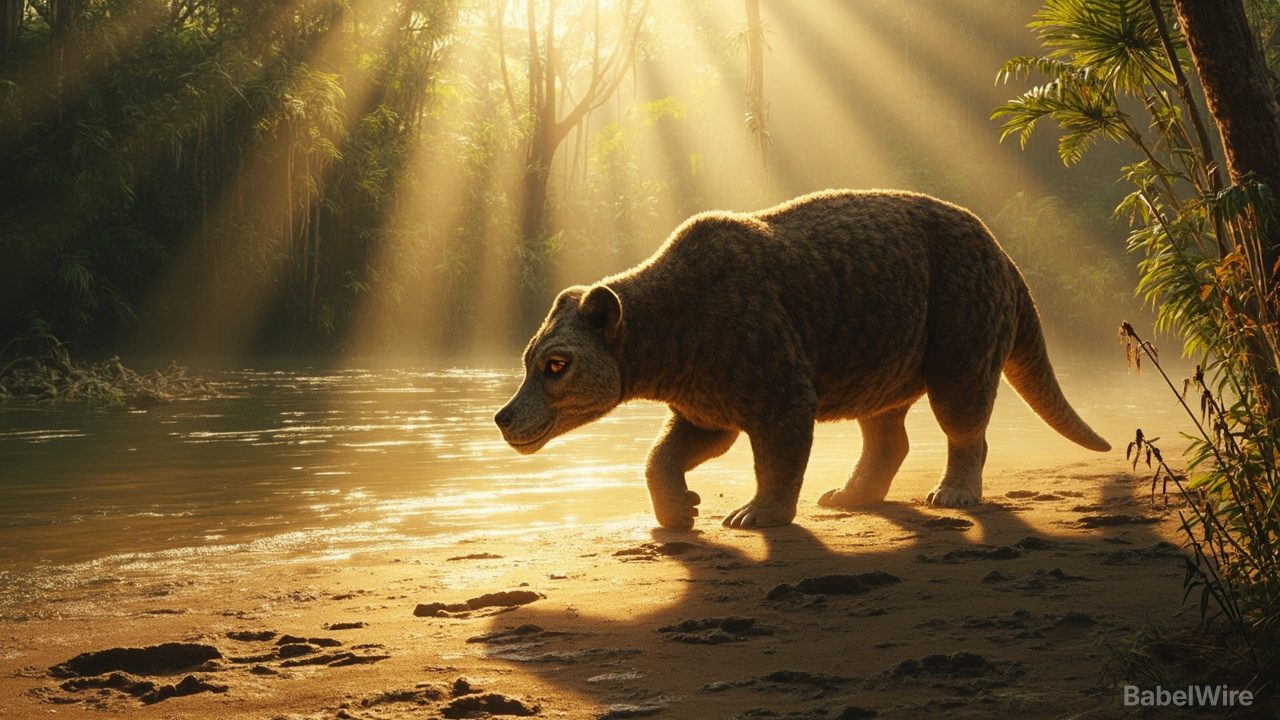
Fossil footprints discovered in southern Brazil suggest that a mammal as large as a mountain lion roamed the Earth during the Cretaceous period alongside dinosaurs, according to a new study published in the journal Science.
The trackways, found in the Botucatu Formation in Parana Basin, include remarkably large mammal-like prints that researchers estimate came from an animal up to 1.55 meters long and weighing 12 to 14 kilograms. If confirmed, it would be the largest mammal known from the entire Cretaceous period, far exceeding the rodent-sized mammals that scientists have traditionally believed dominated that era.
The discovery challenges a longstanding paleontological assumption that Mesozoic mammals were uniformly small and lived entirely in the shadow of dinosaurs. Previous knowledge of Cretaceous mammal sizes came almost entirely from teeth and jaw fragments, which provided no indication of overall body size.
The footprints were found at a site that appears to have been the edge of a wetland environment approximately 100 million years ago. The same rock slab contained at least 70 tracks from eight different species, including multiple dinosaur species and smaller mammals, suggesting a diverse ecosystem where mammals and dinosaurs coexisted.
Researchers noted that the parallel trackway patterns of some of the smaller carnivorous dinosaur prints suggest they were hunting or foraging as a group, sweeping across the area. The mammal tracks show unusual paired configurations, suggesting the animals occasionally sat on their haunches, similar to modern squirrels.
The find adds to a growing body of evidence that Mesozoic mammals were far more diverse and ecologically significant than previously thought, occupying a wider range of body sizes and ecological niches alongside their dinosaur contemporaries.