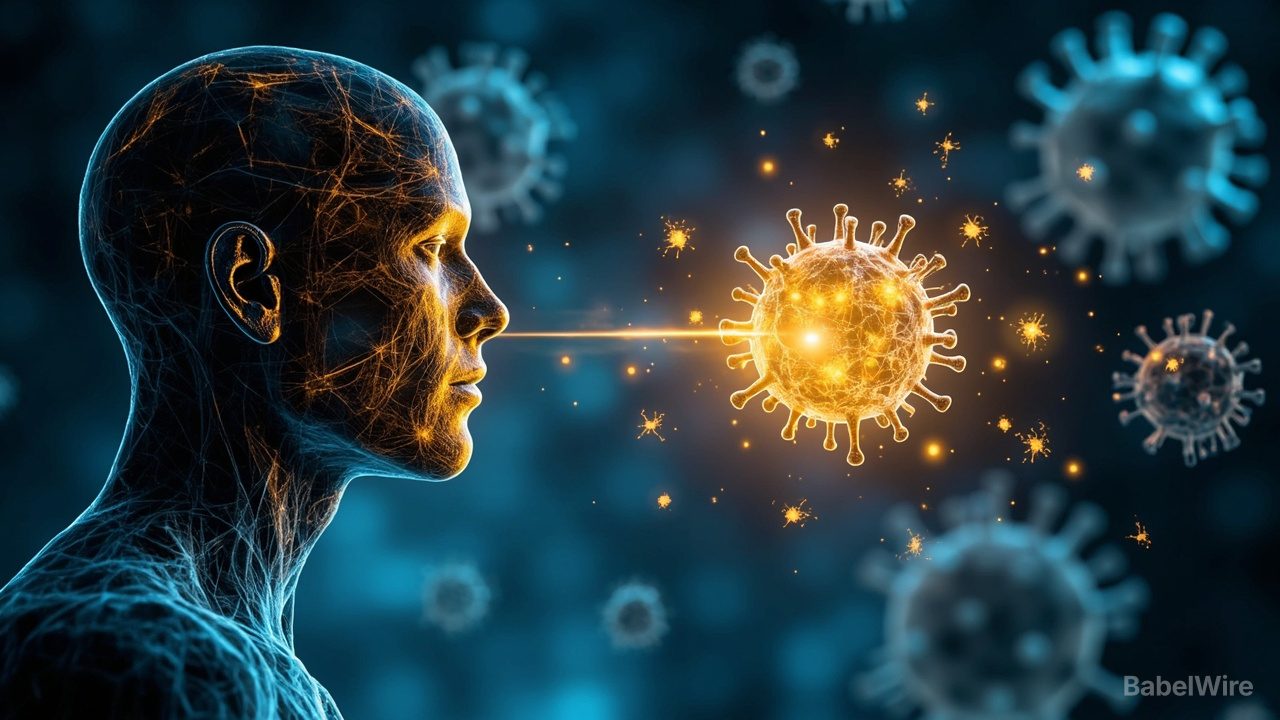
The human body is home to a menagerie of dormant viruses. A landmark study shows COVID-19 can wake many of them up.
Researchers led by the University of Texas at Austin tracked 1,154 people hospitalized with severe COVID-19 during the 12 months after their admission, scanning gene-transcript data from blood and nasal samples for signs of active viruses. Published in Nature, the study found that nearly half of patients experienced reactivation of at least one virus they were already carrying — even among people with otherwise normal immune systems.
The reactivated viruses appeared at different points in the illness: Epstein-Barr virus (EBV) was often detected at hospitalization, while cytomegalovirus (CMV) spiked a few weeks later. Anelloviruses, a widespread and usually harmless group, were also common. Reactivation of any of these viruses was associated with more severe COVID-19 in the early weeks.
Unlike earlier, smaller studies, the team found no direct link between EBV and the fatigue and brain fog of long COVID. But they did find an association between anellovirus reactivation and long-term fatigue, and evidence that these viruses may contribute to immune dysregulation. Co-author Esther Melamed says her team now hopes to test in a clinical trial whether drugs that block viral reawakening can prevent or ease long COVID — a question other researchers are also probing, including a small Mount Sinai trial of the HIV drug Truvada.
Sources
- science.orgCOVID-19 can wake up dormant viruses in the body, large study confirms (Science)
- nature.comVirus reactivation in acute and long COVID-19 (Nature)
- dellmed.utexas.eduUT-led study finds COVID-19 can awaken hidden viruses throughout the body (Dell Med, UT Austin)
- medicalxpress.comSevere COVID-19 reactivates dormant viruses, study finds (Medical Xpress)