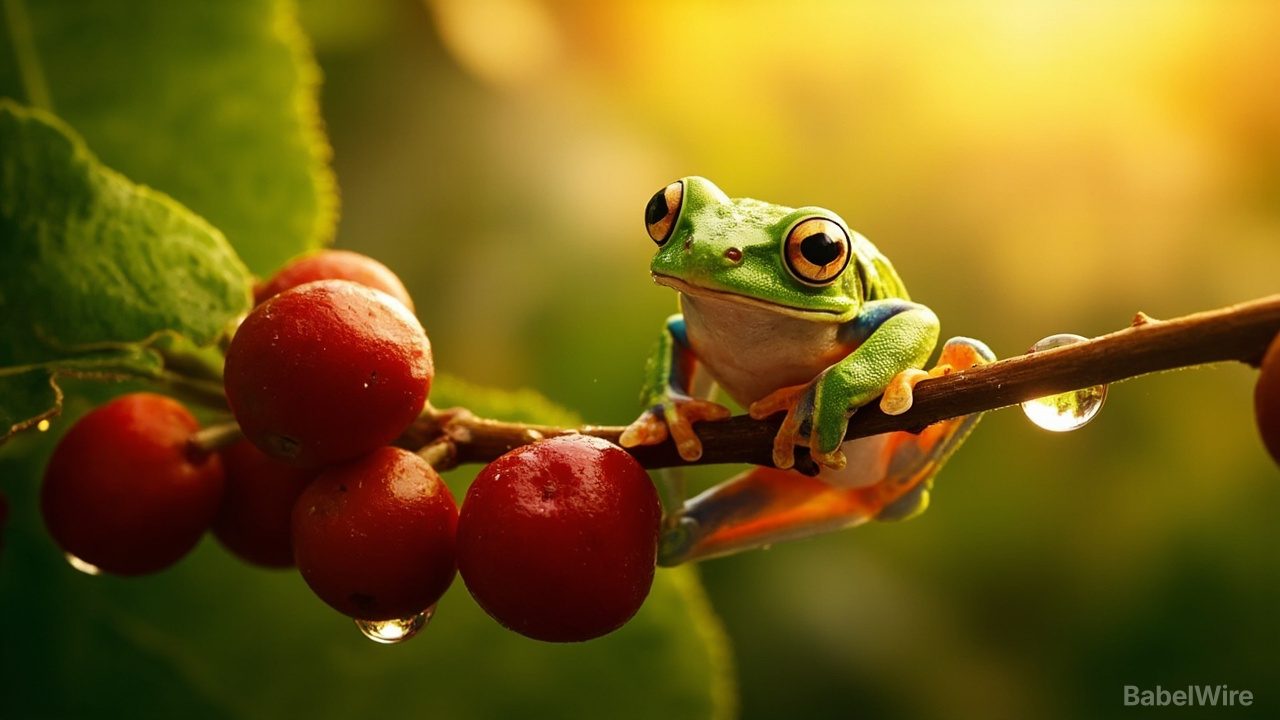
A tiny new frog has hopped into the scientific record from an unlikely habitat: the coffee groves of Costa Rica's central Pacific region.
The new species of tree frog — greenish, nocturnal and measuring less than four centimetres — was found in San Lorenzo de Tarrazú, where researchers observed the dark green-spotted amphibians feeding on insects among coffee bushes. Locally it has earned the nickname the 'spring frog.' The discovery was reported by AFP, with the description led by herpetologist Chaves-Acuña and colleagues.
Coffee plantations are not the first habitat that comes to mind for biodiversity discoveries, but agroforestry systems like shaded coffee can support remarkable wildlife — and this frog appears to have made the groves its home. Its nocturnal habits and small size likely helped it stay hidden until now.
The finding also carries a warning: pesticide use on coffee plantations is a direct threat to the new species. Coffee is one of Costa Rica's most important exports, and intensively managed farms rely heavily on chemical inputs that can be lethal to amphibians, which absorb water and chemicals through their permeable skin. Scientists say the frog's dependence on working coffee groves makes its future tied to how the crop is grown.
For now, the 'coffee frog' joins the long list of species found in Central America's biodiversity hotspots — a reminder that new discoveries can still turn up in the most human-shaped landscapes, and that protecting them means protecting the farms themselves.