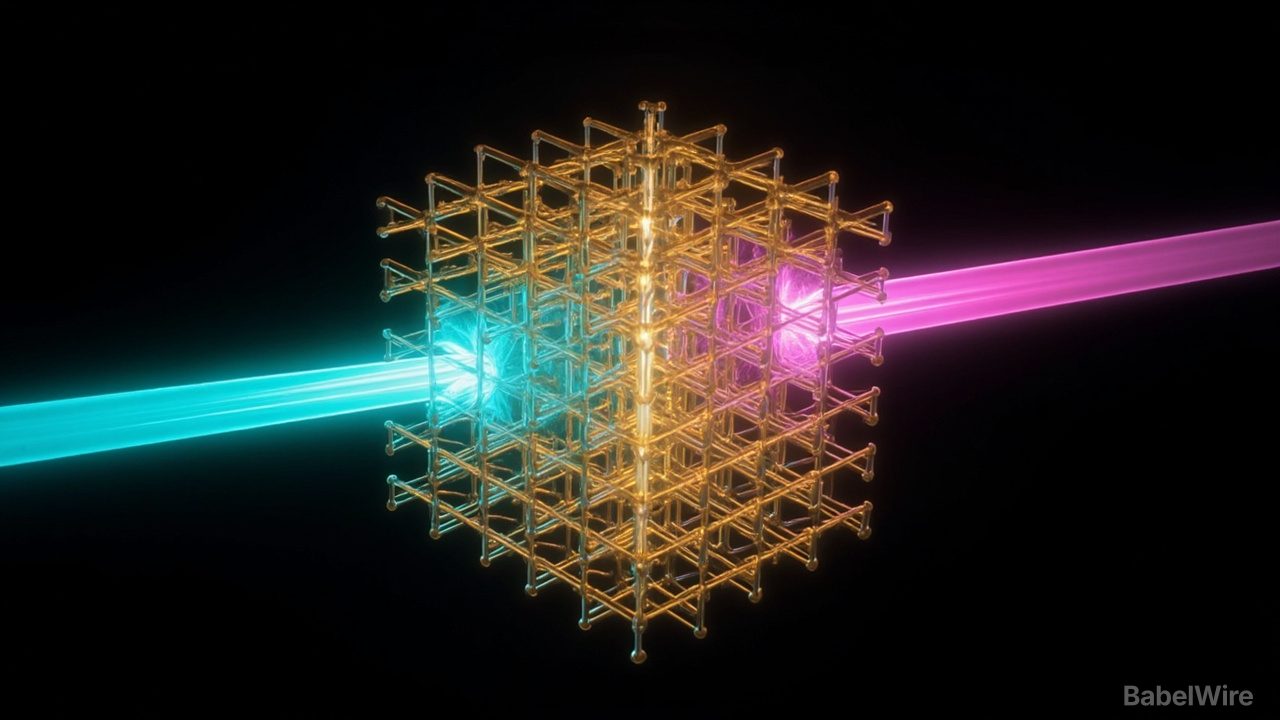
Engineers at Purdue University have turned a notoriously brittle cobalt-aluminum (CoAl) compound into a material that is both extremely strong and able to bend without breaking — up to 10 times stronger than high-strength structural steel.
The team, led by materials engineering professor Xinghang Zhang, published its results in Science Advances. By introducing high-density dislocations during magnetron sputtering deposition and designing 'frameworks of amorphous interfaces' — flexible internal boundaries that partially crystallize during deformation and spawn new dislocations — the researchers produced a CoAl nanolaminate with a yield strength of 6 GPa, roughly six to ten times that of high-strength structural steel, while sustaining 15% plastic strain at room temperature.
Intermetallics like CoAl are prized for their strength, high melting points and resistance to creep, but their brittleness has limited their use. The new approach could enable tougher turbine blades, faster-spinning aeroengines, and more robust energy and defense systems.
Molecular dynamics simulations by colleagues at the University of Houston confirmed that the amorphous interfaces crystallize during deformation and that dislocations migrate from layer interfaces into the CoAl layers. The team now plans to scale the concept to bulk CoAl nanocomposites and test it on other intermetallics, aiming to establish general applicability.