About two in every 100 newborns worldwide are born with a congenital heart defect. Why some hearts fail to form properly has remained one of medicine's most stubborn questions — but a team at the University of Copenhagen says part of the answer may lie in a previously unknown communication system perched on the surface of the cell.
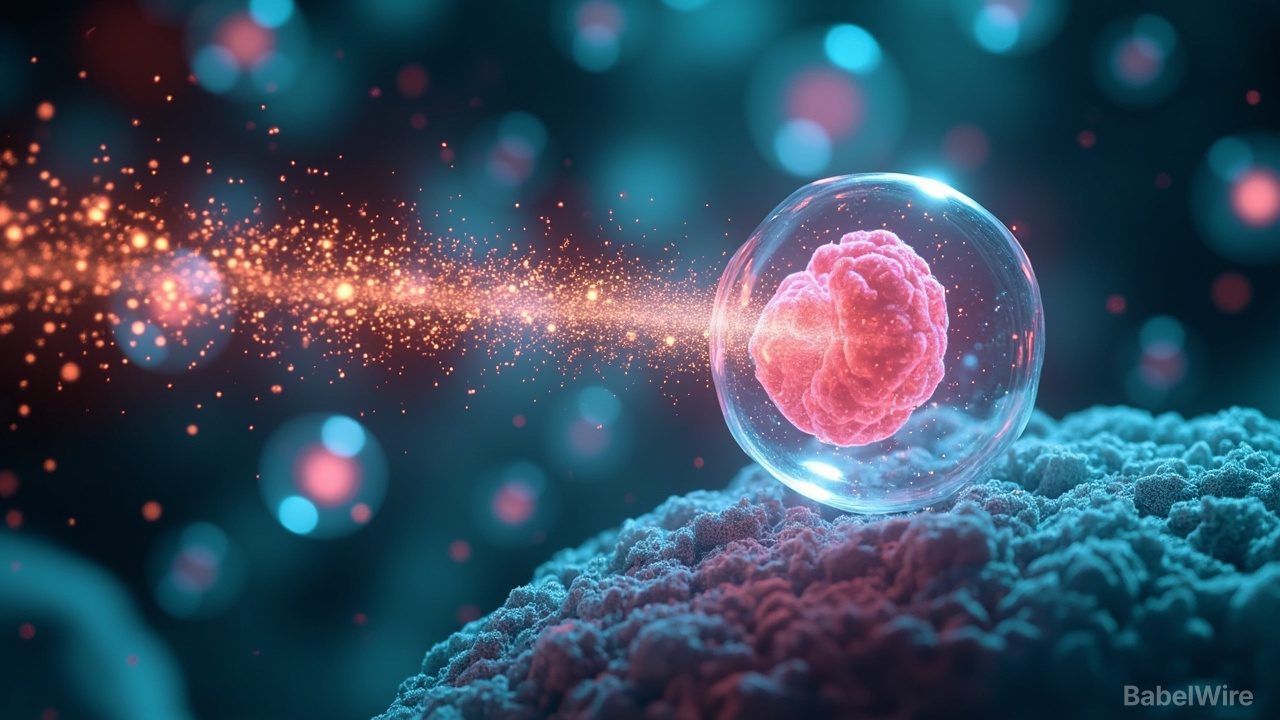
The mechanism operates in the primary cilium, a microscopic antenna protruding from most cells in the body. The cilium reads signaling molecules from the environment and helps the cell decide whether to divide, move or die. In a new study published in PLOS Biology, researchers show that three proteins — TAK1, TAB2 and PKA-Cα — form a signaling hub inside this antenna that plays a significant role in heart formation.
"These proteins act as molecular instructions that tell stem cells when and how to develop into heart muscle cells," says Søren Tvorup Christensen, professor of cell biology. "However, genetic alterations can disrupt this communication, causing 'antenna defects', which may lead to congenital heart defects."
To build the case, the team combined three lines of evidence: genetic data from several thousand patients with congenital heart defects, looking for rare mutations that appear more often in patients than in healthy people; experiments in which the same mutations were engineered into zebrafish, producing defective heart development; and lab studies of human cells and mouse stem cells showing how the signaling pathway works at the molecular level.
"We investigate the mechanism from many different angles and using many different methods, all of which support what we observe in patients," says Lars Allan Larsen, professor at the Department of Cellular and Molecular Medicine. "Therefore, we are reasonably confident that this mechanism also exists in humans."
The discovery may also explain a long-standing puzzle: patients with syndromic congenital heart disease often have defects in other organs — the brain, kidneys or skeleton. The researchers say a failing ciliary mechanism could be the unifying explanation, and that the finding could eventually help doctors identify patients earlier and develop targeted treatments for the broader family of cilia-related diseases.
Sources
- icmm.ku.dkUniversity of Copenhagen (ICMM): Researchers uncover hidden mechanism behind congenital heart disease
- medicalxpress.comMedical Xpress: Researchers uncover hidden mechanism behind congenital heart disease
- scitechdaily.comSciTechDaily: Scientists Discover a Hidden Cell Signal That May Explain Congenital Heart Defects