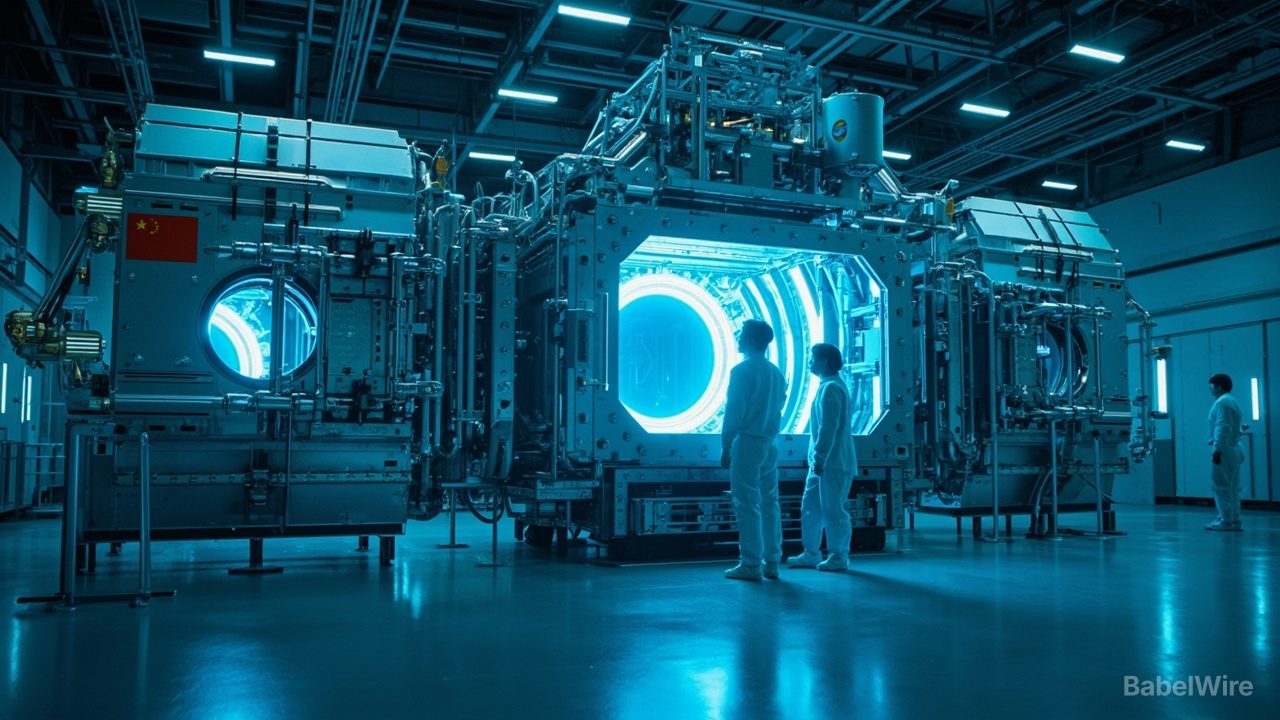
China has begun mass producing domestically developed immersion deep-ultraviolet (DUV) lithography machines, a technology crucial to advanced chipmaking, a person familiar with the matter told Reuters — marking a key step forward in Beijing's drive to reduce its reliance on foreign technologies.
The production effort is being led by Shanghai Aishengna Electronic Technology Group, a little-known Chinese state-owned company that incorporated teams from top Chinese lithography startups, including Yuliangsheng — an affiliate of Huawei-backed equipment maker SiCarrier — and Shanghai Micro Electronics Equipment (SMEE).
Established in August 2023 with 7 billion yuan ($1 billion) in registered capital, Aishengna is backed solely by two state-owned shareholders: Shanghai Electric Holding and a subsidiary of Shanghai International Trust. The company plans to produce about five DUV machines this year and roughly 20 in 2027, according to The Information.
Immersion DUV machines use a layer of water between the projection lens and a silicon wafer to print smaller circuit patterns than conventional dry systems. They are used to produce a broad range of chips and can be pushed to manufacture more advanced semiconductors through multiple patterning.
The Chinese-made DUV machines are expected to be delivered this year to leading Chinese chipmakers including SMIC, Hua Hong Semiconductor and memory-chip maker ChangXin Memory Technologies (CXMT).
Analysts caution it will not pose an immediate commercial threat to Dutch market leader ASML. JP Morgan noted that producing a handful of immersion DUV tools is not the same as producing tools for high-volume manufacturing where yield, overlay, throughput and reliability matter. Still, successful deployment gives Chinese chipmakers an alternative if Western governments further restrict exports.
ASML shares initially dropped 8% on the news before recovering to a 1.6% decline. China accounts for roughly 16% of ASML's net sales in the first half of the year.