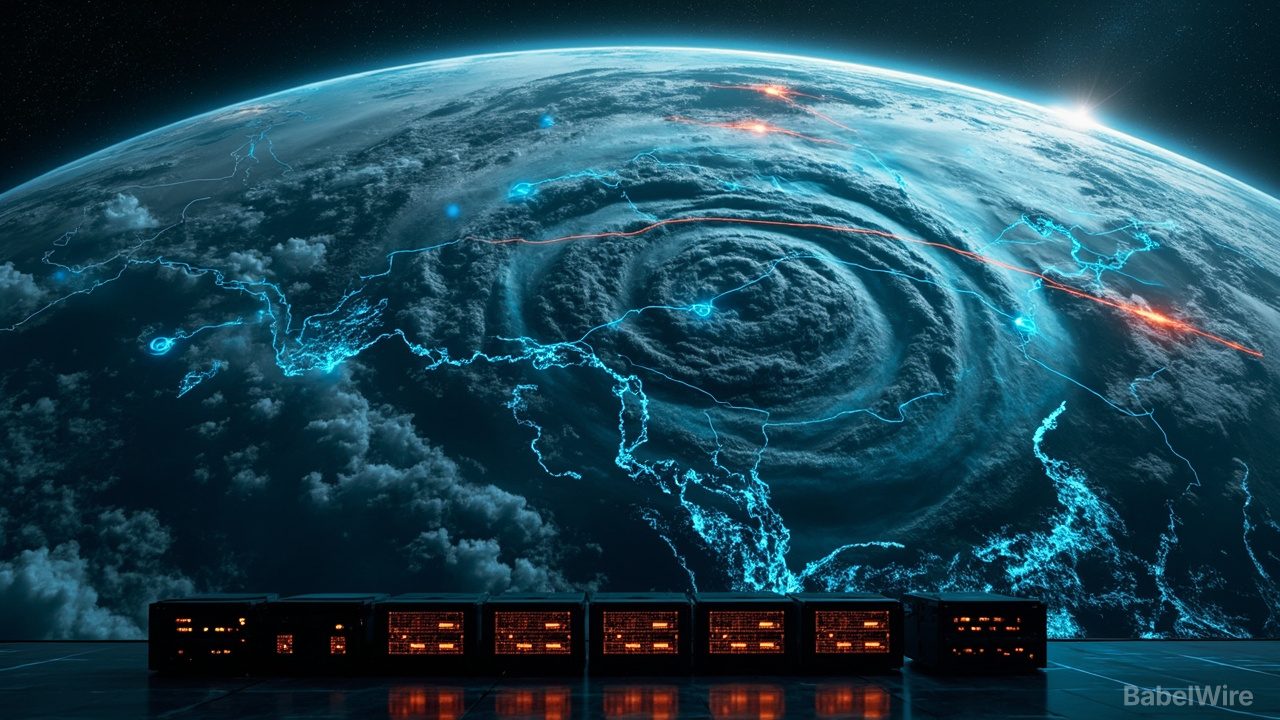
East Asia's typhoon season has become a live test bed for a new generation of weather prediction. As Typhoon Dolphin churned toward mainland China in early August, meteorologists tracked it with a mix of traditional physics-based supercomputer models and artificial intelligence systems that learn from decades of observational data.
The Chinese systems in that mix — Fengwu from the Shanghai AI Laboratory, Huawei's Pangu, and Fuxi from Fudan University — deliver forecasts in a fraction of the time of conventional models while matching or exceeding them on many accuracy measures, according to experts and researchers cited by Reuters.
Fengwu showed its edge during the typhoon: five days before Dolphin's landfall, it determined where and when the storm would hit mainland China to within 30 kilometers (19 miles) and 30 minutes. The system gained attention last year after its creators said it surpassed Google's GraphCast across roughly 80% of evaluated meteorological variables while extending effective global medium-range forecasts beyond 10 days.
AI forecasters are not expected to replace physics-based models outright. They still trail conventional systems on storm intensity, and long-range climate claims need years of trust-building, as Techwind CTO Sun Zhi — whose company commercializes Fengwu — acknowledged: "They need to know it's reliable."
The rise of AI forecasting has opened a new competitive field spanning tech firms, academic institutions, and national meteorological bodies, with China emerging as a key player. International rivals include Google's GraphCast and GenCast, Nvidia-backed FourCastNet, and the European Centre for Medium-Range Weather Forecasts' AIFS platform. For now, the most likely future is a hybrid: supercomputers and neural networks working side by side, with AI providing faster, cheaper guidance for evacuations, flood preparation, and farmers' decisions.