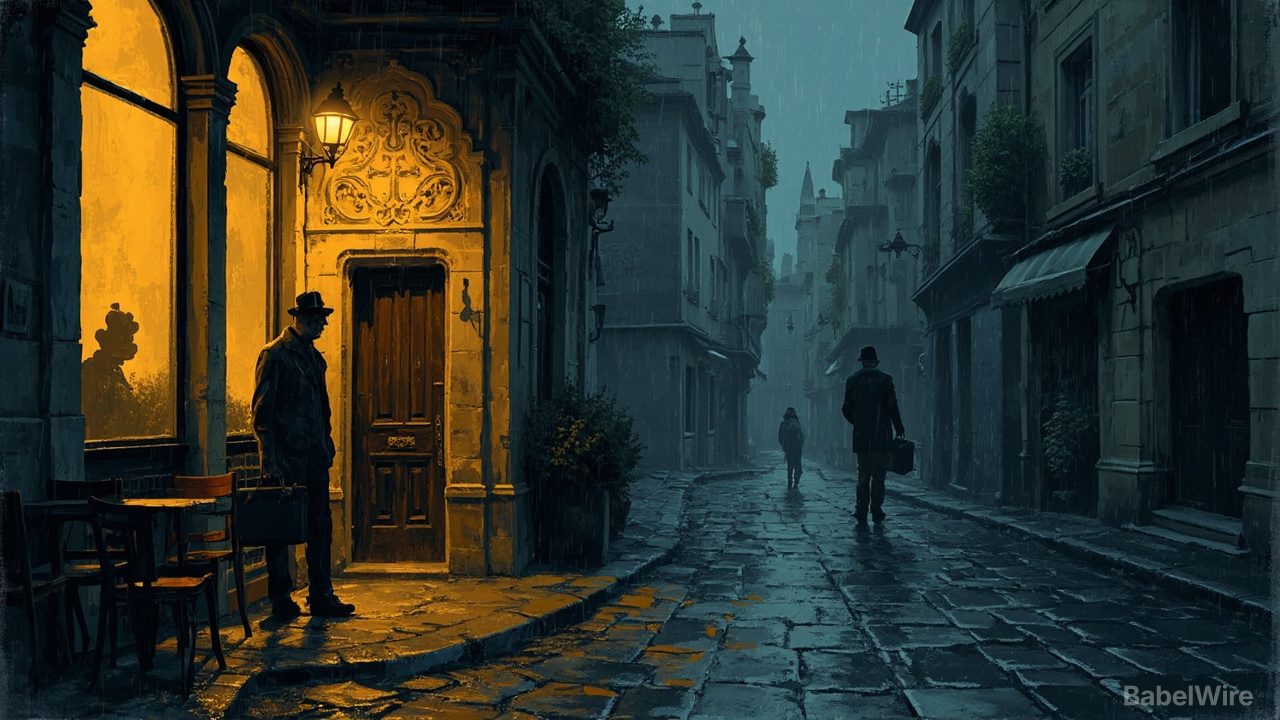
Broken Sword: The Shadow of the Templars opens with a small, very French catastrophe: an American tourist, George Stobbart, sitting outside a Paris café, a clown with an accordion walking past, and then an explosion. Thirty years on, German-speaking players still know it by the title it shipped under locally — Baphomets Fluch — and Golem marked the anniversary with a piece on seeing Paris and hunting Templars.
Revolution Software, the British studio founded by Charles Cecil with Tony Warriner, Noirin Carmody and David Sykes, built it as a point-and-click adventure in the mid-1990s, when the genre was being written off as technically obsolete next to 3D action games. Its answer was not technology. It was a hand-drawn Paris of cafés and alleyways, a photojournalist named Nicole Collard, a stolen briefcase, and a conspiracy that ran through Syria, Ireland and a Scottish villa — a plot delivered with the timing of a thriller rather than the puns that had become the genre's default register.
The series never stopped. The Smoking Mirror followed in 1997, then the 3D era of The Sleeping Dragon and The Angel of Death, then a 2013 Kickstarter that cleared its goal and produced The Serpent's Curse. In 2024 Revolution released Shadow of the Templars: Reforged, a remaster of the original with redrawn art and a rebuilt interface — the standard modern instrument for keeping a thirty-year-old adventure installable on hardware that no longer has a CD drive.
The anniversary is not really about nostalgia. Adventure games are the clearest case of a genre whose value sits almost entirely in writing and art, and whose archives survive only when someone actively republishes them. A 1996 game that a 2026 player can still buy is the product of a rights holder that kept believing in the asset, not of an industry that preserves things by default.
What the retrospective makes visible is how much of that era's craft was localisation-aware in ways modern releases often forget. The German edition was not a subtitle pass but a production in its own right — its own cast, its own jokes, its own title — which is why an anniversary headline in 2026 carries Baphomets Fluch rather than the English name. Three decades later, that is still the argument for the re-release rather than the birthday: a good story survives its platform only if somebody pays to port it.