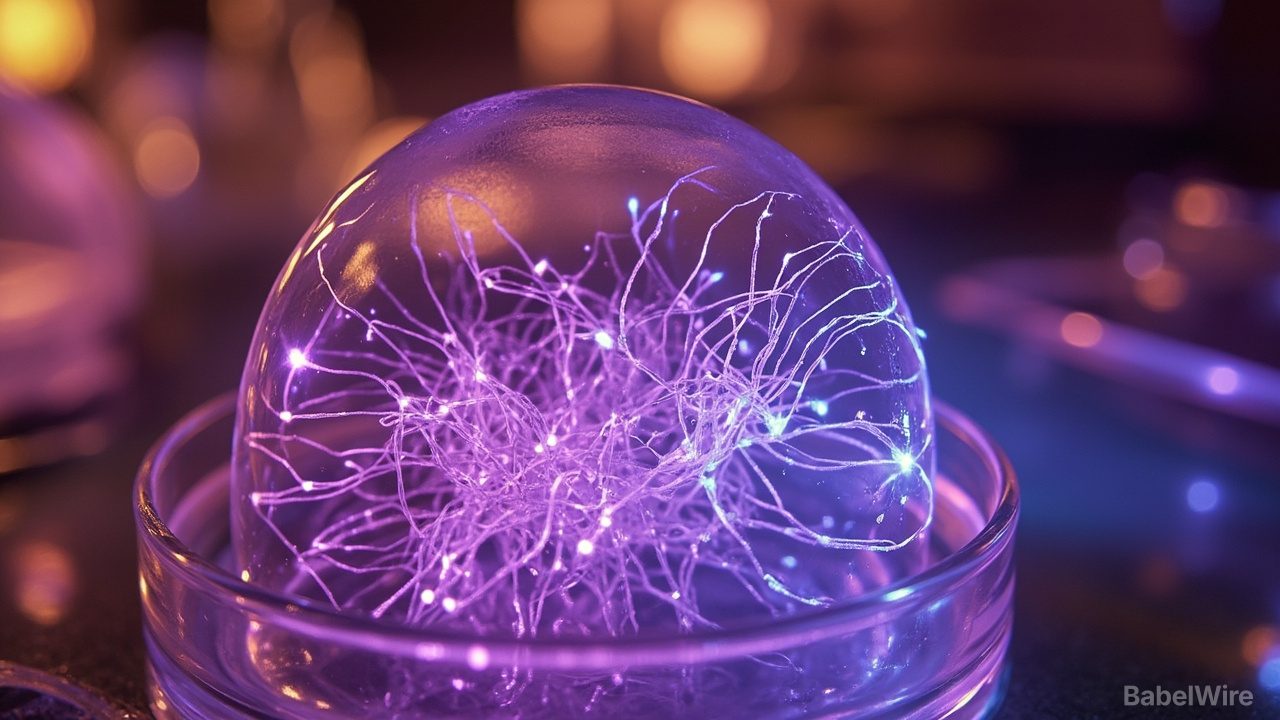
Scientists at Harvard have kept brain organoids — tiny, lab-grown balls of neural tissue roughly the size of an eraser — alive for more than five years, and what they found inside has stunned the neuroscience community. The organoids continued to develop and mature over that extended period, exhibiting molecular and genetic signatures remarkably similar to those of developing human brains.
The research, led by developmental neurobiologist Paola Arlotta at Harvard, represents the longest any brain organoid has been maintained in culture. Previous studies had kept organoids alive for months or, in some cases, a couple of years. Extending that timeline to five years opened a window into developmental processes that unfold over timescales previously impossible to observe in the lab.
Brain organoids are three-dimensional structures grown from human stem cells that self-organize into layers of neural tissue resembling the developing cortex. They have become one of the most promising tools in neuroscience, offering researchers a way to study human brain development and disease without direct access to living human brains. But their utility has been limited by the fact that most organoids begin to deteriorate after a few months in culture.
Arlotta's team took a different approach, carefully maintaining their organoids over years rather than discarding them when growth slowed. When a junior scientist in the lab, Irene Faravelli, finally analyzed the oldest specimens, the results were remarkable. Rather than showing signs of degradation, the organoids had continued to mature, developing increasingly complex cellular architectures that paralleled stages of human brain development.
The organoids exhibited changes in gene expression, cell-type composition, and neural connectivity that tracked with what happens in a growing human brain. This suggests that the developmental programs encoded in human cells can continue to execute over remarkably long timescales when given the right conditions.
The implications for disease research are significant. Many neurological conditions — including autism spectrum disorder, schizophrenia, and certain forms of intellectual disability — are thought to arise from disruptions during specific windows of brain development. Until now, researchers have had only a brief observational window to study these processes in organoids. Extending that window to years could allow scientists to observe how developmental disruptions unfold over the timescales relevant to these conditions.
The findings also raise profound questions about the nature of these lab-grown neural structures. As organoids become more complex and longer-lived, the neuroscience community will need to grapple with ethical questions about the potential for consciousness or sentience in lab-grown brain tissue — a debate that is already intensifying as the technology advances.
The research underscores a broader trend in neuroscience: the development of model systems that can recapitulate human biology with increasing fidelity. As these models improve, they promise to accelerate our understanding of the brain — and the diseases that afflict it.