The Mystery of the Little Red Dots
The James Webb Space Telescope was built to capture faint light from the first billion years after the Big Bang — and almost immediately, astronomers noticed something strange: tiny, pixel-sized dots of red light that glowed as brightly as entire galaxies, appearing in nearly every image. By 2023, they had a name for them: 'little red dots.'
Initially researchers thought they were galaxies, then settled on the idea that they were supermassive black holes with bright accretion disks. But in March 2025, two teams — led by Anna de Graaff at the Max Planck Institute and Rohan Naidu at the University of Hawai'i — unveiled two dots unlike all the rest. Their spectra showed a sharp Balmer break and a smooth, star-like red curve, features of hot hydrogen gas rather than a typical black hole.
A New Kind of Object
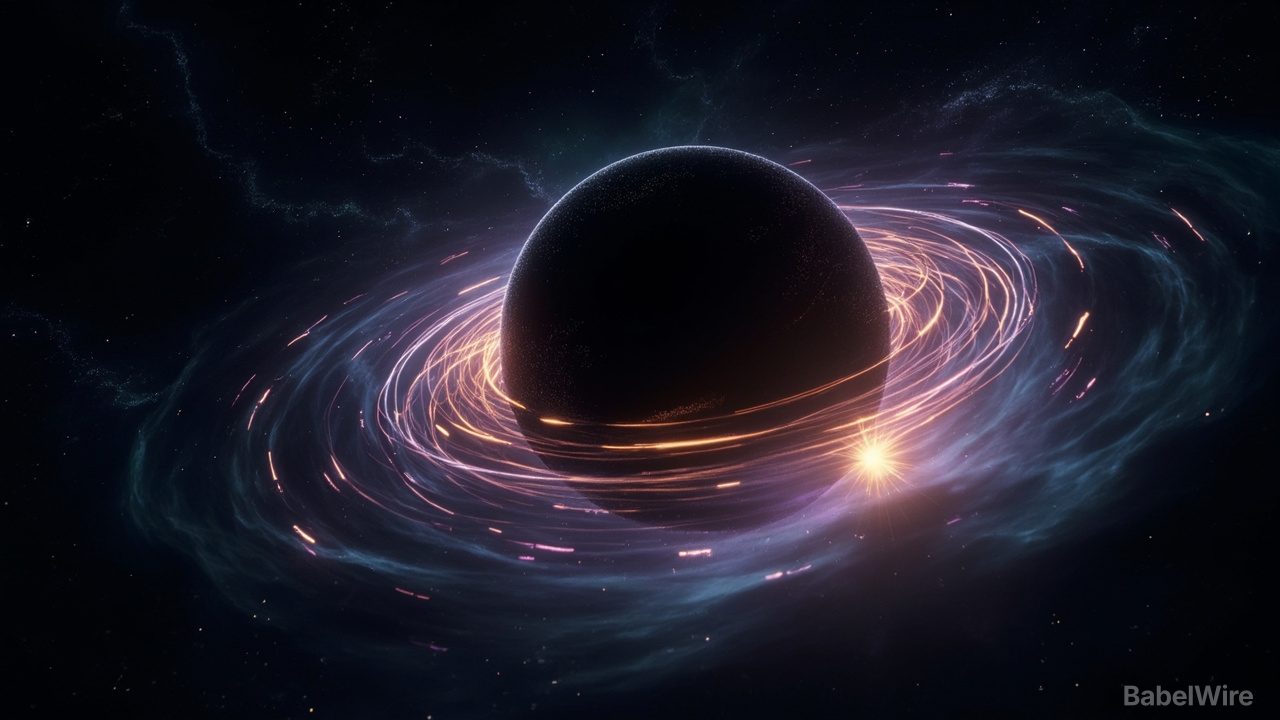
The teams proposed that these objects are 'black hole stars' — enormous hydrogen shells with a black hole buried deep inside. The black hole would act as the star's engine, heating surrounding gas and pushing energy outward to prevent the shell from collapsing. From the outside, the star would shine as brightly as an exposed black hole, but its Balmer break and uniform ~5,000 kelvin surface temperature would make it look entirely different.
If placed at the center of our solar system, a black hole star would extend roughly a dozen times farther than Pluto's orbit. The outer layers would boil unstably, ejecting mass while gas falling back in feeds the central engine.
The Debate
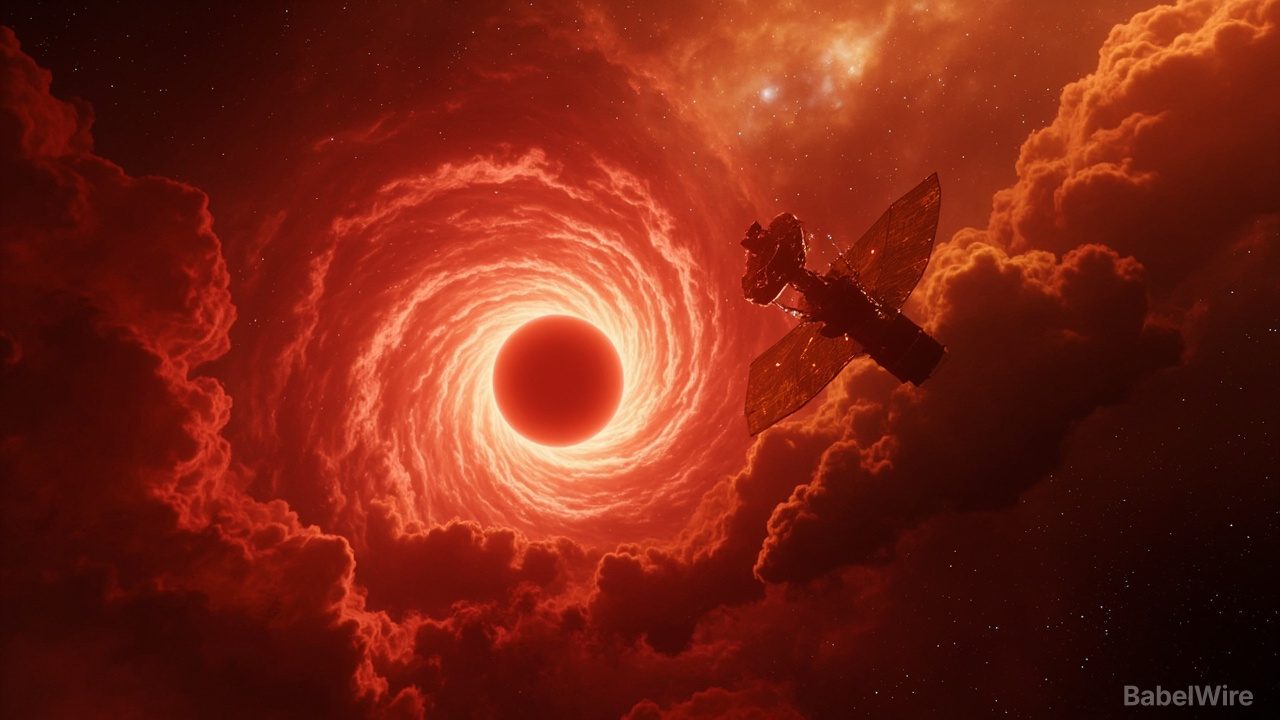
Not everyone is convinced. Cambridge astrophysicist Roberto Maiolino argues that traditional supermassive black holes surrounded by thick doughnuts of gas and dust can produce the same observations. He says the redness could simply be the viewing angle, and he too appeals to Occam's razor.
But a growing body of evidence favors the black hole star interpretation. In August 2026, Dale Kocevski of Colby College and collaborators found that little red dots vanish in later cosmic epochs — exactly what you would expect if they are a temporary phase in black hole growth. And in September 2026, Naidu, de Graaff, and Anna-Christina Eilers estimated that the hidden black holes inside these objects are far less massive than standard exposed ones, suggesting Webb is catching supermassive black holes incubating inside their birth cocoons.
Quasi-Stars Revisited
The theory connects to an older idea: the quasi-star, proposed by Mitchell Begelman, Marta Volonteri, and Martin Rees in 2006. Begelman realized that the little red dots matched what quasi-stars should look like. His 2025 collaboration with Jason Dexter showed that quasi-stars could assemble in a few million years and then look exactly like the dots Webb observes. In 2026, Mauro Giavalisco and collaborators expanded the model, finding it fit the spectra even better.
The field remains divided. 'I have a sneaking suspicion that we're both right,' Kocevski said — some dots may be true black hole stars, others ordinary black holes. Future observations should settle it: if black hole stars are a growth phase, they should become rarer as the universe ages.