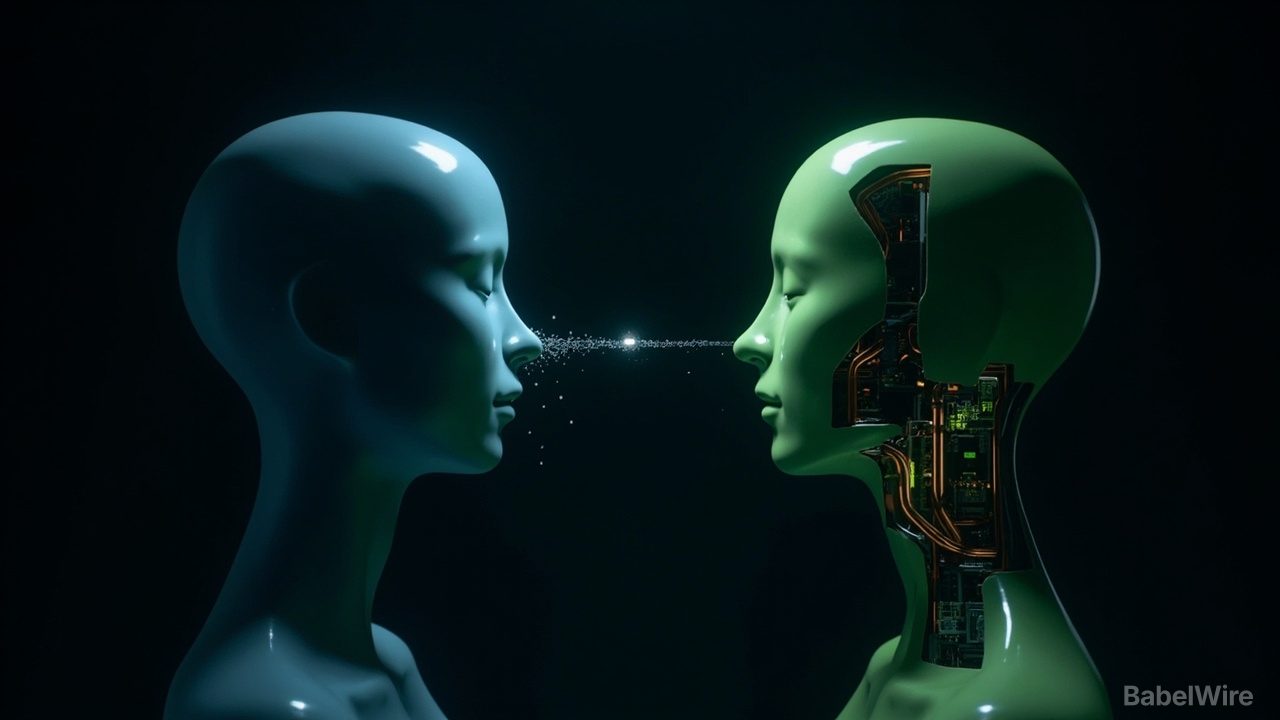
Universities change their course catalogues constantly, usually quietly. When a university in Beijing does it by naming artificial intelligence as the reason for cutting photography and translation programmes, as the German outlet Golem reports, the reasoning is the story: the institution is not hedging about why the disciplines are going.
The two fields were not chosen at random. Machine translation was the first domain where large neural models clearly matched or exceeded useful professional output for a large share of routine work, and it has spent years compressing the market for entry-level translation. Text-to-image generation did something similar, faster and more visibly, to the stock and commercial photography that used to be a staple of a photographer's income. In both cases the pipeline that once ran from a degree programme to a junior job has narrowed sharply.
Chinese higher education has been reallocating in the same direction the rest of the country's industrial policy points. The government has made AI a strategic priority, universities are expanding AI, engineering and semiconductor programmes, and institutions under pressure to justify their budgets are scrutinising departments whose graduates struggle to find work. Cutting two AI-exposed programmes and reinvesting the places in AI is, in that frame, a rational reallocation rather than a philosophical statement.
It is also a reallocation with long consequences, and not only for the students who will never enrol. Photography and translation are not merely job-training pipelines; they are practices with their own craft, ethics and critical apparatus, and the disciplines that teach people to interrogate images and language are the same ones that equip a society to understand what generated media is doing to it. Removing them from a curriculum while the technology that displaced them spreads is a decision about who will be able to explain that technology later.
Which university in Beijing is involved, how many places are affected, and whether the programmes are being merged, repurposed or simply closed is not established in the report assembled here, and the details are worth confirming against the original Chinese sources.
What is not ambiguous is the signal. For years, predictions that AI would reshape university curricula were treated as speculation about the distant future. A programme closure that cites AI is that future arriving as an administrative decision — and it will not be the last.