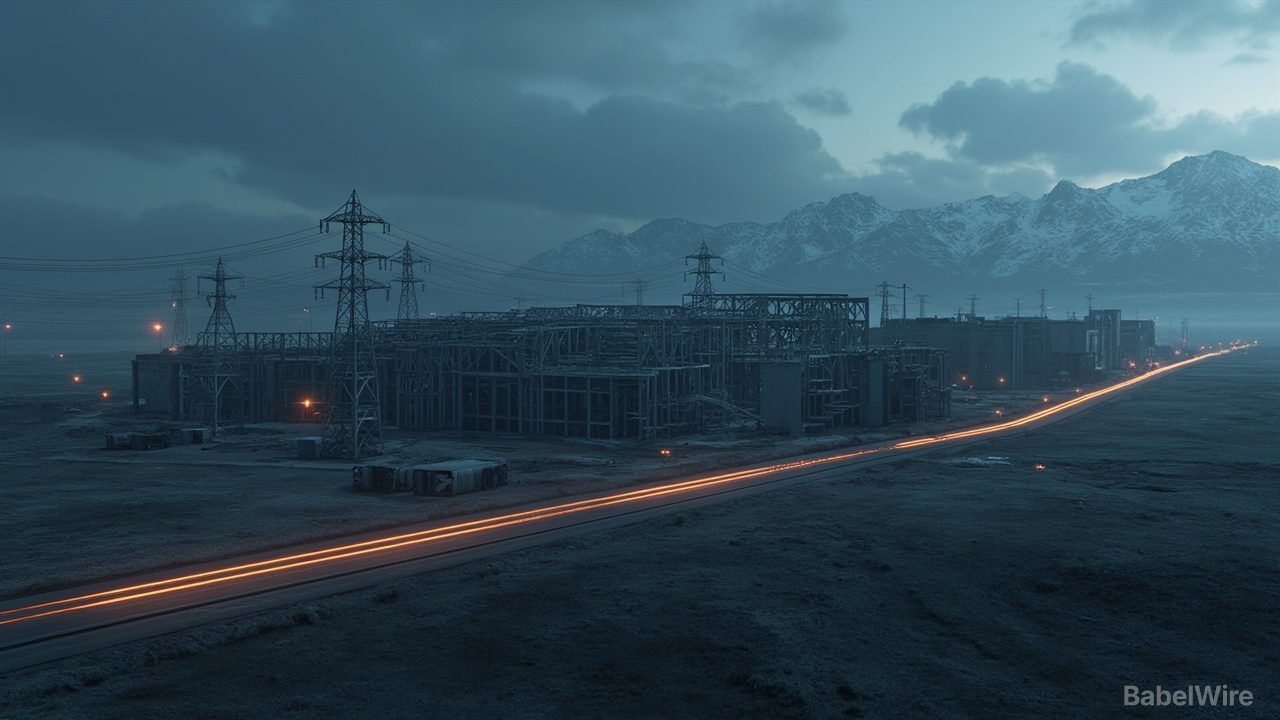
Google confirmed on Friday that it has taken over an unfinished data center project in southeastern Wyoming from Crusoe — the same site Crusoe had originally tried, and failed, to land Google as a customer for.
The price was not disclosed. Google puts its commitment at the Laramie County site at $17 billion and calls it its first data center in Wyoming. Crusoe announced the project last year with Tallgrass, a Blackstone-backed infrastructure company, starting at 1.8 gigawatts with a long-term ambition of up to 10.
The details of Google's plan show how far powering these campuses has moved from the simple grid connection. The centrepiece is a 702-megawatt fuel cell installation from Bloom Energy, converting natural gas electrochemically, with carbon capture and storage routed to Tallgrass's nearby Eastern Wyoming Sequestration Hub. Google calls it the largest planned development of its kind; it brings the company's total contracted CCS capacity to nearly a gigawatt. Gas generators from Tallgrass and Black Hills Energy add supply, and a front-end engineering study will test whether combined-cycle turbines can be fitted with capture too. The campus will be air-cooled to spare local water.
For Crusoe, the sale is less a retreat than a correction of role. The company, founded in 2018 as a flare-gas crypto miner and valued at $30.9 billion in September alongside a $3.9 billion round, makes money leasing data center space to customers who bring their own GPUs, renting out its own, and selling inference. It says more than 6 gigawatts of capacity remain under contract.
The portfolio behind that number is large: the Abilene, Texas campus is being built in phases for Oracle and OpenAI, a separate 900-megawatt campus next door is for Microsoft with a first building expected mid-2027, Meta is a customer, and Bloomberg reported a $13 billion five-year cloud deal with the trading firm Jane Street. Crusoe is also still building a data center for Google near Amarillo, Texas.
Wyoming is therefore a lesson in the gap between announcement and construction. Equipment is scarce, grid connections are scarce, and local opposition is growing. Promising 10 gigawatts requires more than a parcel of land.
For the state the arithmetic is sober: hundreds of millions of dollars in property taxes for the county and School District 1, thousands of construction jobs — and a power system being rebuilt around a new order of load. Whether the campus strengthens Cheyenne or leaves it straining under growth depends on questions no single company answers: grid costs, water, roads, housing.