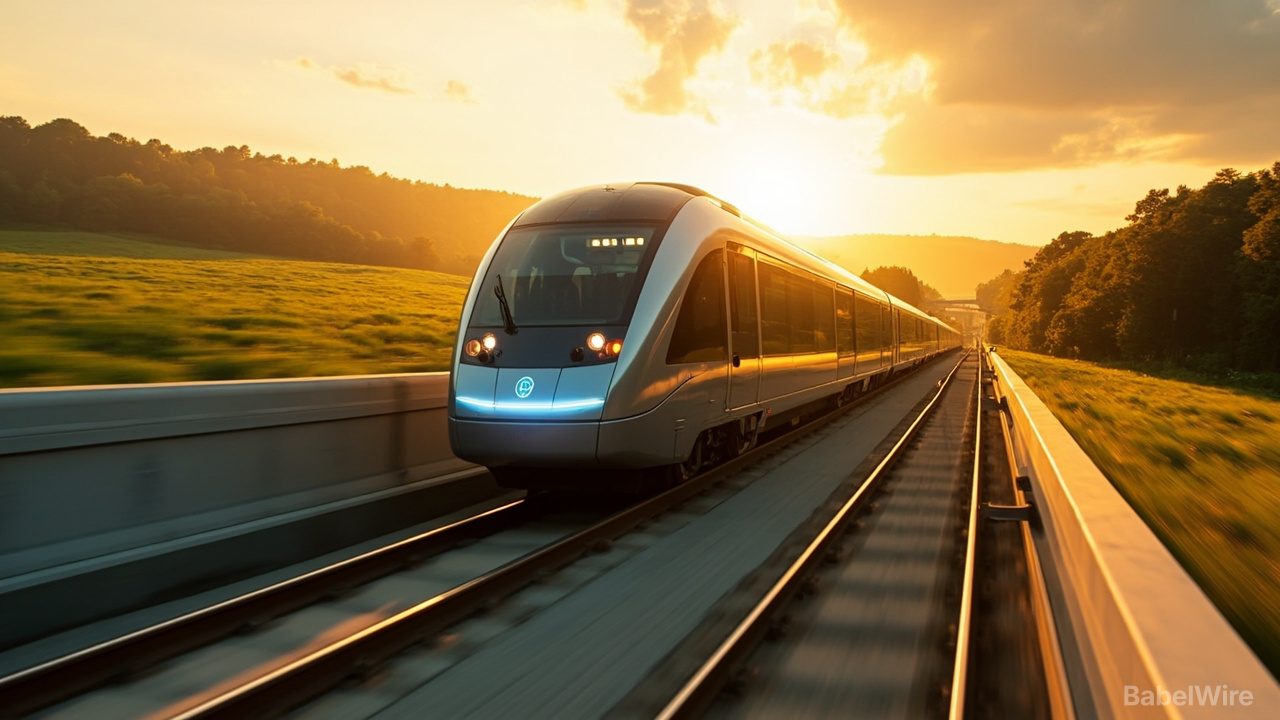
Germanys Automated Train project has achieved a significant milestone: a successful demonstration of fully driverless train operations on open rail infrastructure. The project, backed by 43 million euro in federal funding from the Ministry for Economic Affairs and Energy (BMWE), brought together partners including Deutsche Bahn, Siemens Mobility, Codewerk, Red Hat, and the Technical University of Dresden.
At the Havellandische Eisenbahn facility, two train types were demonstrated: a Siemens Mobility Mireo regional train and an Alstom BR430 S-Bahn vehicle from Stuttgart. Siemens Mobility showed its Mireo performing full unattended train operations (UTO) -- the train autonomously prepares itself for service on a start command, verifying all safety-critical functions before moving, then drives itself from the depot to the starting station, continuously monitoring its environment and reacting to obstacles. The demonstration also included the train returning to the depot autonomously.
Both trains were equipped with sensor systems at the vehicle front for environment and obstacle detection. While the hardware was largely identical between the two vehicles, they ran different software for environment perception -- a deliberate comparison of competing approaches.
A critical enabler is ETCS (European Train Control System), which ensures trains respect speed limits and stop signals automatically. Germanys ETCS rollout has been slow, but the project demonstrates that fully automated driving in an open rail network is now technically feasible.
Johannes Steiniger, Parliamentary State Secretary at BMWE, said the project shows the future of mobility. Driverless train operations offer possibilities to keep rail routes reliably served and trains deployed more flexibly, especially during times of skilled worker shortages.
The Automated Train project began in 2023 and represents one of the largest publicly funded autonomous rail initiatives in Europe. The technology could help address the ongoing labor shortage in rail operations, where staffing constraints have forced route reductions in several German regions.