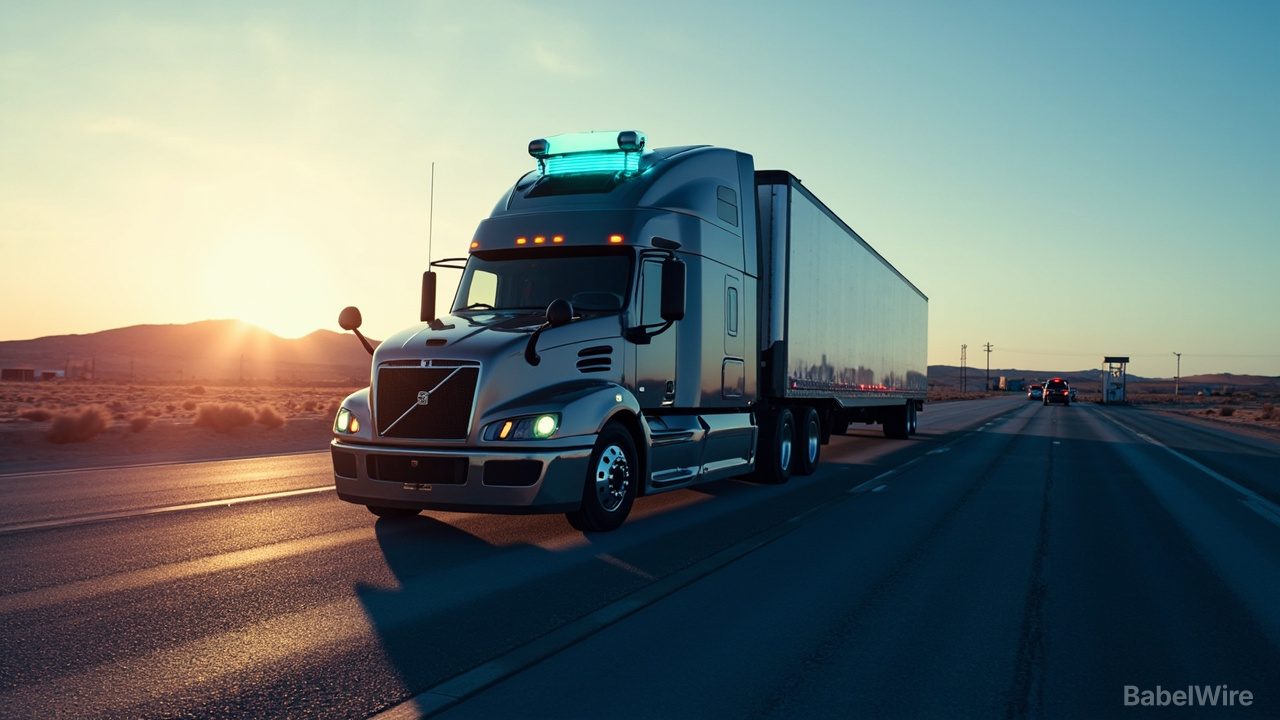
Aurora Innovation used its first analyst and investor day, on September 23, to put numbers on a very large promise: more than 30,000 driverless trucks in operation by 2030.
That would be a steep climb. Aurora has roughly 20 driverless trucks on the road, about 10 of them running without a human aboard, and has crossed roughly 500,000 driverless miles. It expects to end 2026 with 200 trucks in commercial operation under transport-as-a-service agreements, and to pass 1,000 in 2027. The 2030 plan assumes a driver-as-a-service model in which Aurora sells miles rather than trucks to freight carriers, and projects more than $5 billion in revenue at gross margins above 60 percent, edging toward 70 percent over the longer term. Management has pointed to profitability around 2028.
The pitch to carriers is straightforward. With trucking capacity tight and driver costs rising, a service that never sleeps and does not call in sick is easier to justify at scale than as a pilot. Aurora says it is doubling customers this year, and that Hirschbach intends to own and operate 500 trucks under the programme. But the economics are still being tested in public - at least one major partner, Werner, has said the cost gap only closes with volume.
The timing of the investor day put Aurora squarely in the industry's current phase, in which autonomous-vehicle firms pick lanes. Wayve went to the consumer brand through a Mercedes-Benz production deal; Waymo is concentrating its fleet in Texas and California; Aurora is staying on freight, where routes are duller, margins thinner and the case for removing the driver clearest.
Whether 30,000 trucks arrive by 2030 depends less on the software, which has now driven enough miles to be taken seriously, than on the plumbing: fuelling and charging networks, terminal capacity, maintenance, and regulators comfortable with a driverless heavy truck on a public highway at scale.
Sources
- ir.aurora.techAurora: 2030 vision to scale to 30,000 driverless trucks (Analyst and Investor Day)
- freightwaves.comFreightWaves: Aurora plans 30,000 driverless trucks as carriers weigh cost
- automotiveworld.comAutomotive World: Aurora targets 30,000 driverless trucks on roads by 2030
- bizjournals.comPittsburgh Business Times: Aurora Innovation plans 30,000 driverless trucks by 2030
- marketscreener.comMarketScreener: Aurora expects to end 2026 with 200 driverless trucks