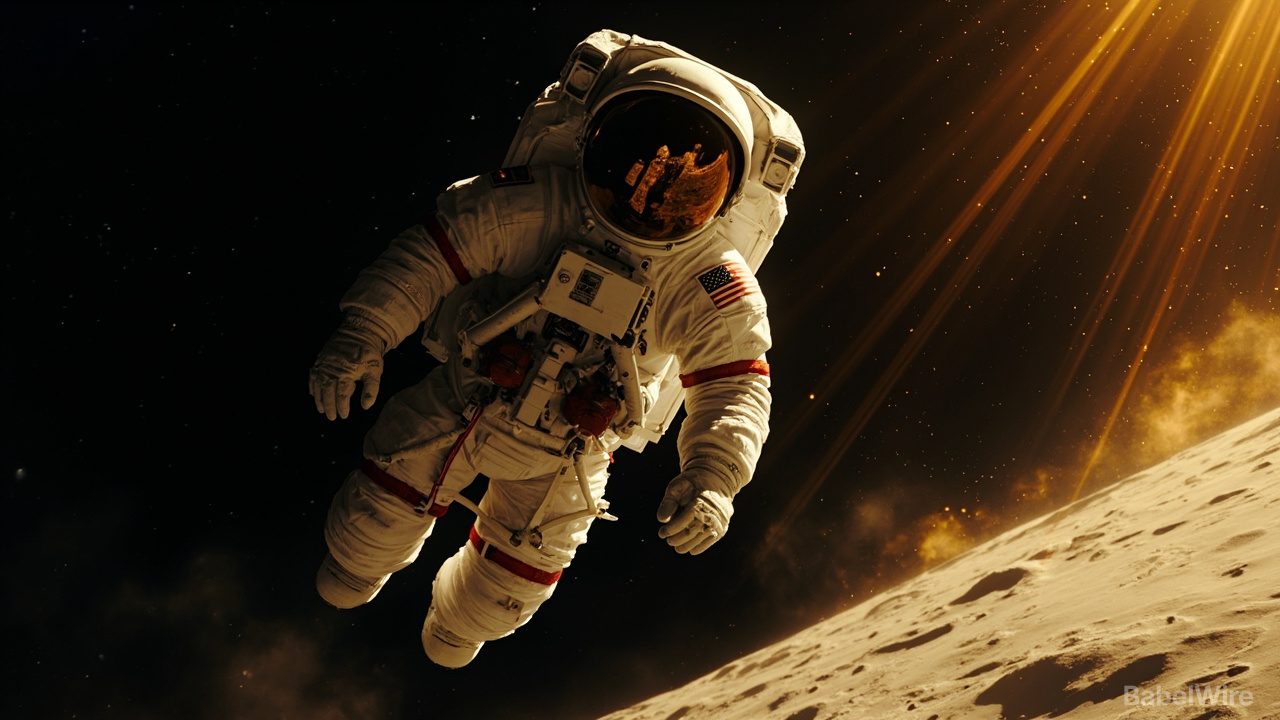
A specialized radiation vest tested during NASA's uncrewed Artemis I mission around the Moon could slash an astronaut's radiation dose by roughly 60% during a major solar storm, according to a study published in Nature on August 20, 2026.
The 26-kilogram garment was flown aboard Artemis I in 2022, which sent an Orion spacecraft around the Moon without crew. During the mission, the vest was exposed to the same radiation environment that future Artemis astronauts will face. Researchers compared readings from inside the vest to unprotected measurements, finding it could substantially reduce exposure during events as intense as the historic 1972 solar particle event.
Solar storms — sudden bursts of energetic particles from the Sun — are among the most dangerous radiation hazards for astronauts beyond Earth's protective magnetosphere. A sufficiently large event could cause acute radiation sickness, making effective shielding critical for missions to the Moon and eventually Mars.
The vest uses a combination of hydrogen-rich materials that are effective at blocking the high-energy protons that make up the bulk of solar particle radiation. While it would not eliminate radiation entirely, researchers say the 60% reduction could mean the difference between a manageable dose and one that forces mission abort.
The findings strengthen the case for incorporating radiation protection into spacesuit design for NASA's upcoming Artemis III crewed lunar landing, currently scheduled for 2027.