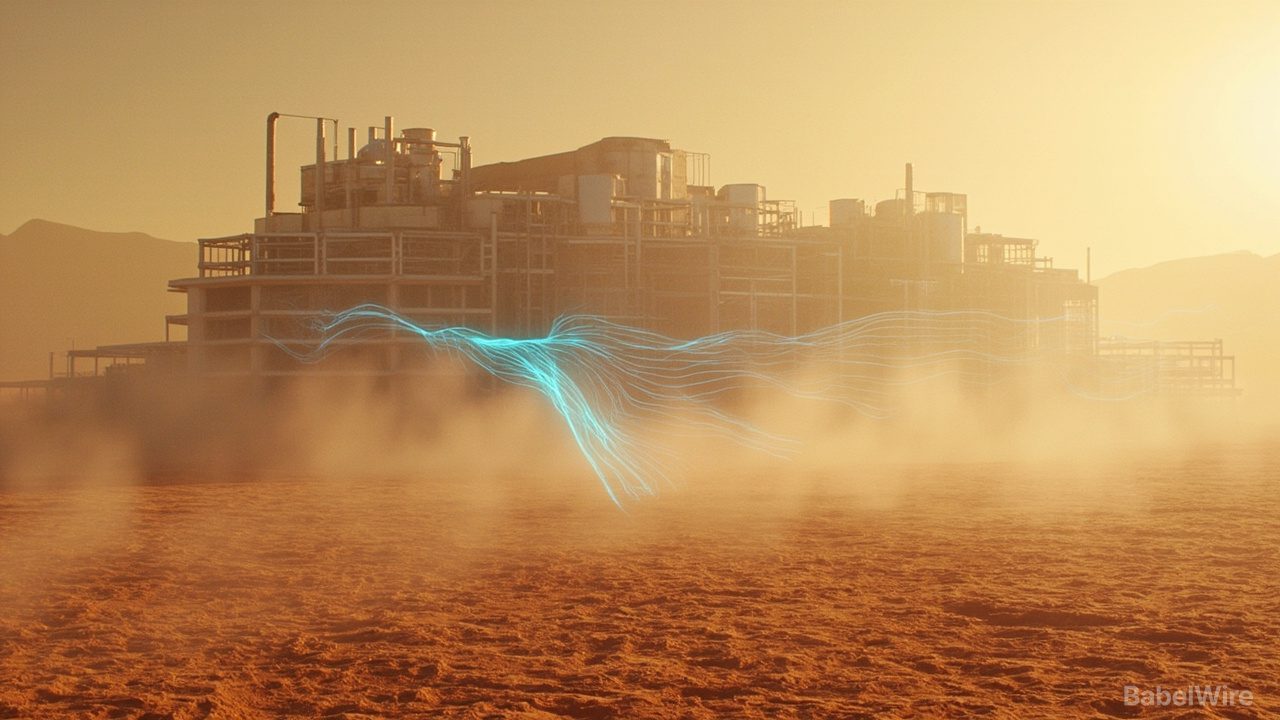
America's chip-manufacturing heartland is about to have to manage with far less water. After more than a quarter-century of 'unprecedented' drought in the Colorado River Basin, the states failed to agree on how to share the shrinking river, so the US Department of the Interior finalized its own plan in August. It prescribes steep cuts for the downriver states — Arizona, Nevada and California. Arizona stands to lose the most: at least 760,000 acre-feet of water a year starting in 2027. An acre-foot is enough to supply about three homes in the Phoenix area for a year; the City of Phoenix uses about 300,000 acre-feet annually.
The river provides more than a third of the state's water. Arizona has been a manufacturing hub since the start of the semiconductor industry, and it is now where TSMC and Intel are expanding massive factories to make advanced chips for AI — a water-intensive effort.
The numbers are stark. Agriculture still consumes more than 70 percent of the state's water; industry, including chip manufacturing, accounts for just 6 percent.
Fabs use 'ultra-pure' water to clean surfaces and etch sensitive chips, and producing a smaller amount of ultra-pure water through deionization and reverse osmosis takes more municipal water: a typical facility might use 10 million gallons of ultra-pure water a day, which could require up to 16 million gallons of municipal water.
TSMC's first fab in Arizona uses roughly 4.75 million gallons of water a day, the company has said — approximately the usage of more than 14,000 homes, or 2 percent of Phoenix's housing. That amount grows with each new fab. TSMC recycles 65 percent of the water it uses in Arizona and says that figure should exceed 90 percent once it finishes a water reclamation plant. Intel, armed with a $7.86 billion government grant, plans to spend $32 billion on two new factories and an expansion in Arizona; its Chandler facilities withdrew more than 2.7 billion gallons of freshwater in 2025.
'There's not enough water for everything we want to do with it'
Kathryn Sorensen, research director at the Kyl Center for Water Policy at Arizona State University, says scarcity forces a reckoning over which uses of water bring the most value to a community: 'There's not enough water for everything we want to do with it. So what do we have enough water for? What are the uses we most value? Is it cotton or is it microchips?'
Maricopa County, home to Intel and TSMC's chip fabs, is not as reliant on the Colorado River as other counties; its primary resource is groundwater. But surface water from the Colorado and Salt rivers still makes up close to 40 percent of the county's supply. Local leaders insist the region is prepared, citing underground water stores and other surface sources to make up the shortfall. Sorensen nevertheless expects utility bills to climb: the transition to alternative resources entails new infrastructure such as wells and pipes, likely the most significant driver of higher water prices.
Phoenix is unusual in that it sets the same water rates for companies as for households, while cities often charge industrial customers less to attract business. 'The cost of water will increase for TSMC,' Sorensen says. 'Everyone pays the same rate for water in the city of Phoenix, whether you're a mom-and-pop store, a family of eight, or TSMC.'
TSMC and Intel declined interviews for the story but have publicly committed to minimizing freshwater consumption. 'A stable supply of water is critical to chip production,' TSMC deputy spokesperson Nina Kao said in a statement, adding that Phoenix's long-term water plan, with varied supply sources and preparations for reduced supplies, was one reason the city was chosen for the company's US expansion.
Apprehensions are still mounting. Jennifer Martin-McLeod, a program manager for the Grand Canyon chapter of the Sierra Club, describes the pace of investment as hard to grasp: 'To try to say "everybody take a breath and think through what we're doing" is difficult when you have that steamroller of money coming at your state to try to make it all happen overnight.' In her view, the impact of next year's cuts will be felt most by ordinary residents. 'For me, that's going to mean serious lifestyle changes. But to an enormous chip manufacturer, that's maybe just part of the cost of doing business.'
Over the long term, Sorensen notes, a shortage of Colorado River water will deplete groundwater in Central Arizona, as most cities cope by drawing more from local aquifers. 'It's something they can sustain, but it is only sustained at a cost to future generations,' she says.