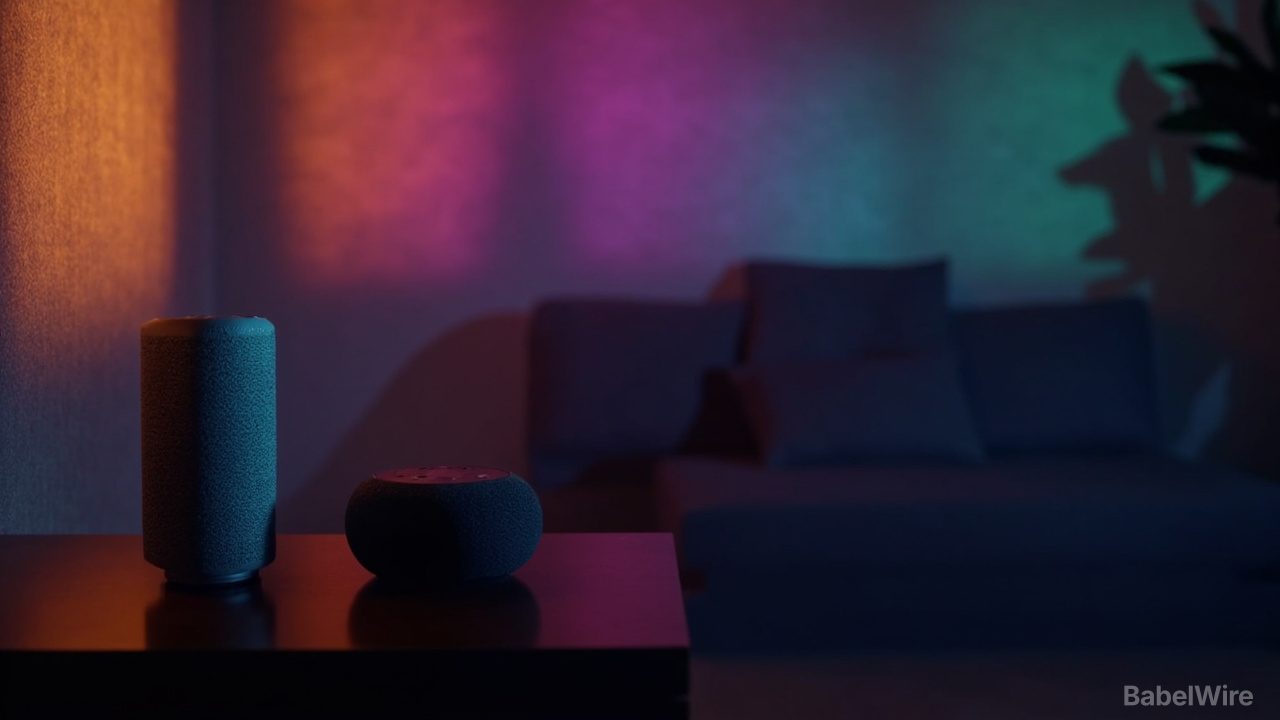
Heise reports that Sound Glow, Apple's new light-sync feature, is coming to older HomePods as well — not only to whatever hardware ships with it first.
Light sync is an established category: Philips' Hue Sync Box, Nanoleaf, Govee, and a shelf of lesser boxes all do versions of it. They share one wart — something has to listen to the audio and translate it into colour, usually a bridge, a camera, or an HDMI pass-through. A speaker that already has the audio, carries a microphone array, and stands in a fixed place in the room makes the extra box unnecessary. That is the advantage of a vendor that owns both the room and the sound.
The interesting word is "older". Backwards compatibility in a smart-home feature is a strategic statement: it tells the installed base that the HomePod they already bought is a sensor and an output for the next feature, not a device waiting to be replaced. Apple's smart-home story has been a slow burn carried by software updates and a hub meant to reoccupy the living room. The cheapest way to grow a platform is to make existing hardware do more; the most expensive is to strand it.
Left open by the short report: which models, on what schedule, and which lighting ecosystems it drives. Whether Sound Glow works through HomeKit and Matter lights or requires specific partners decides whether it is a platform feature or a demo. Latency decides whether it looks like the music is playing the room or the room is running behind it — in light sync, delay is not a technical detail, it is the product.
The feature itself is small. Its direction is not: the speaker is becoming the room's audio sensor, and light is the cheapest way to make sound visible without building a display.