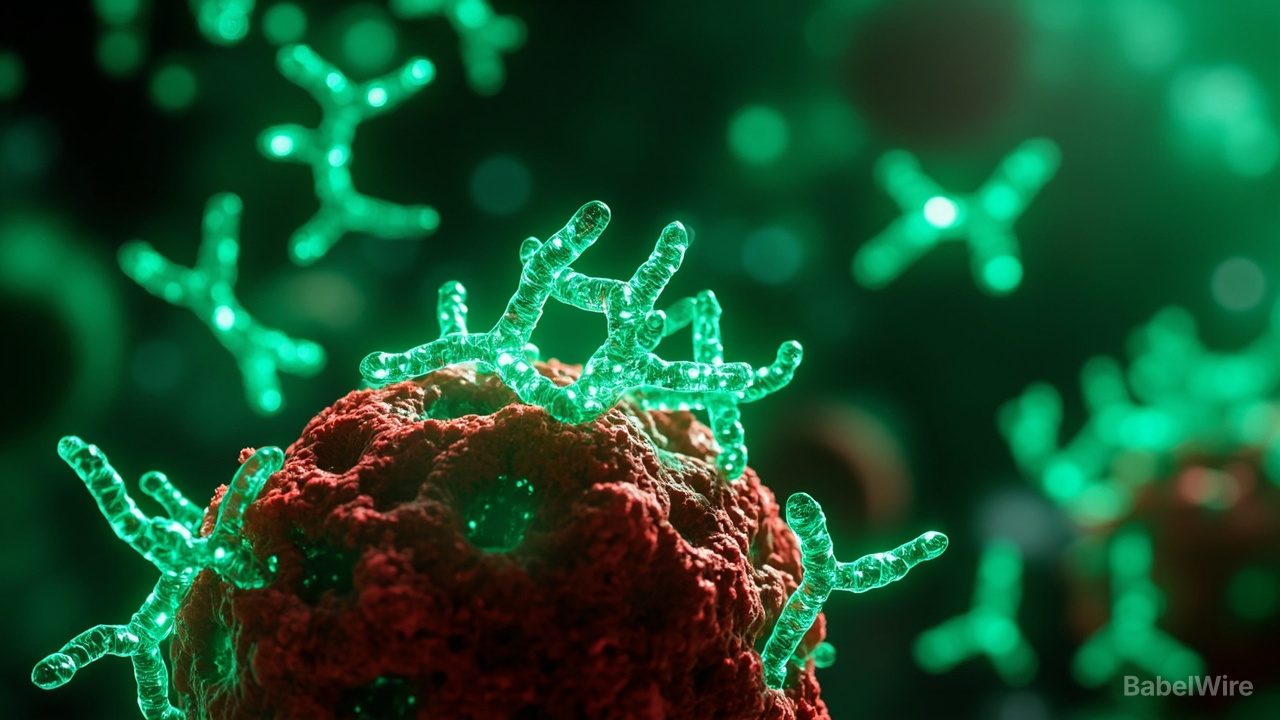
A New Weapon Against Metastatic Prostate Cancer
Researchers at Umeå University in Sweden, in collaboration with partner institutions, have developed an experimental fully human antibody that stopped aggressive prostate cancer from growing and spreading in preclinical studies. The findings were published in the journal Signal Transduction and Targeted Therapy.
"The new drug has been developed to prevent metastasis, and we are very pleased and proud that we have been able to identify the mechanisms that drive cancer cell growth, invasiveness, and metastatic spread," said Maréne Landström, Professor of Pathology at Umeå University who led the study.
How It Works
The antibody targets oncogenic TβRI (Transforming Growth Factor-β Receptor I) signaling — a pathway that aggressive cancer cells hijack to fuel their growth, invade surrounding tissue, and spread to distant organs. By blocking this specific signaling mechanism, the antibody effectively cuts off the cancer's ability to grow and metastasize without the broad cellular toxicity associated with conventional chemotherapy.
Prostate cancer is among the most frequently diagnosed cancers in men worldwide. While many prostate tumors grow slowly and never become life-threatening, in some patients the disease becomes aggressive and spreads beyond the prostate, most often to the lymph nodes and bones. Current treatment options for this advanced stage remain limited.
Built From Human Proteins
Because the antibody is made entirely from human proteins, it has properties that make it particularly suitable for development as a therapeutic drug. The researchers suggest that this human origin may also carry a lower risk of side effects compared to therapies derived from non-human sources — though this will need to be confirmed in clinical trials.
The Road Ahead
The study represents an important milestone, but the researchers emphasize that several stages remain before the treatment can benefit patients. "This is a promising step forward, but several important stages remain before the treatment can benefit patients. We still need to conduct additional safety studies, and the treatment must be approved by regulatory authorities in Europe or the United States," Landström said.
The team now plans to investigate whether the same treatment strategy could work against other solid tumors, potentially broadening the impact of the discovery beyond prostate cancer alone.
The Broader Context
The antibody development was supported by the SciLifeLab Drug Discovery and Development Platform, Umeå Biotech Incubator, and MetaCurUm Biotech AB. The discovery arrives in a remarkable week for cancer research. Earlier this month, researchers at the same Swedish institutions published findings on a redesigned cancer immunotherapy showing striking early results after decades of disappointment with similar drugs. Together, these advances suggest that the long-promised era of targeted, mechanism-driven cancer therapies is gaining genuine momentum.