AMD has officially launched Helios, its first rack-scale artificial intelligence system designed to compete directly with Nvidia's dominant Grace Blackwell and Vera Rubin platforms. The announcement marks the most significant competitive challenge to Nvidia's near-total control of the AI data center market in years.
Microsoft has signed on as a major customer, joining Meta, OpenAI, and Oracle in committing to deploy the system. Microsoft CEO Satya Nadella said the company is expanding its Azure infrastructure portfolio with Helios to give customers the performance, scale, and choice needed for next-generation AI applications.
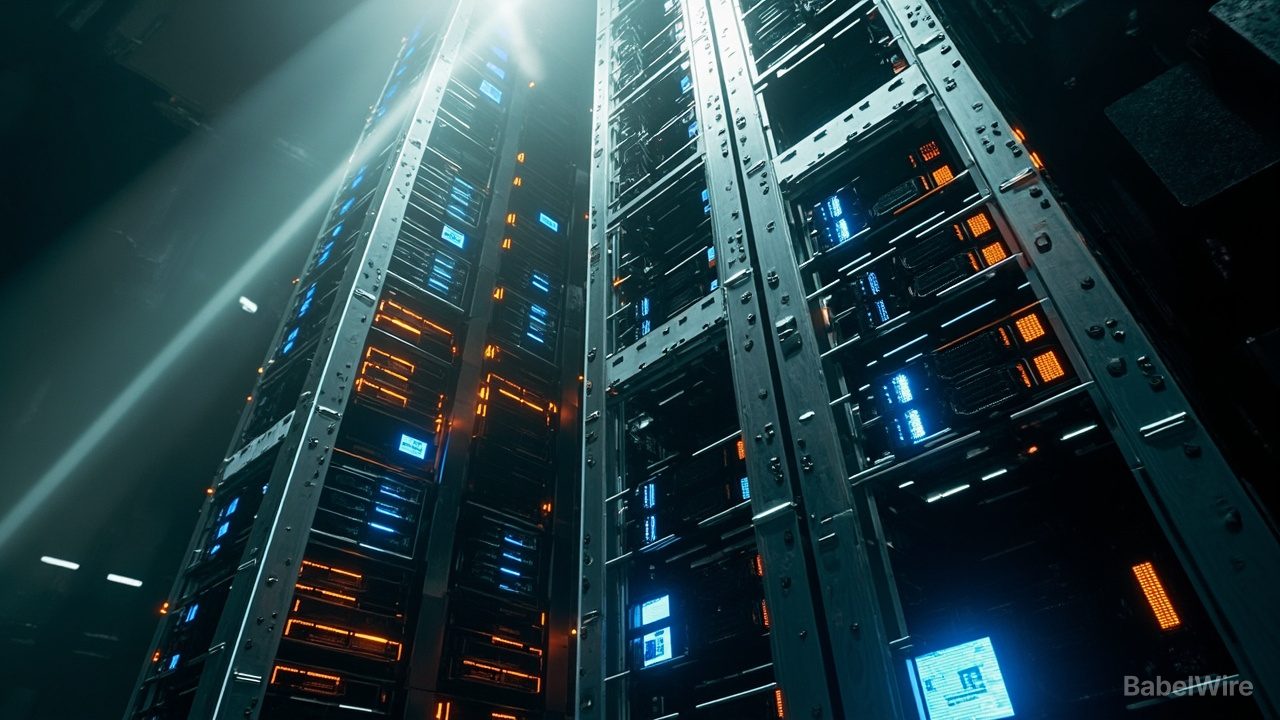
The Helios system integrates four key AMD technologies developed in-house: GPUs, CPUs, networking, and software. Each of its 18 compute trays contains four Instinct GPUs powered by a single EPYC central processing unit. The system is designed to deliver the lowest total cost of ownership and lowest cost per token for inference workloads, according to Forrest Norrod, AMD's data center chief.
Priced at an estimated $5 million to $5.5 million per unit — higher than Nvidia's Vera Rubin at $3.5–4 million — Helios is also wider and heavier at up to 7,000 pounds. But AMD argues the superior memory bandwidth and capabilities deliver better value.
Nvidia currently controls more than 95% of the data center GPU market, with AMD holding just 4.5%. Analysts at the Futurum Group believe Helios could help AMD capture 20–25% of the market, representing hundreds of billions of dollars in revenue. AMD booked $1.9 billion in data center GPU revenue in Q1 2026 and expects tens of billions in annual data center AI revenue starting in 2027, the majority from Helios.
AMD's journey to this moment has been a decade-long comeback story. Under CEO Lisa Su's 12-year leadership, the company rose from major layoffs and shrinking revenue to unveil its first EPYC server CPU in 2017, followed by strategic acquisitions including Xilinx ($50 billion), Pensando, and server maker ZT Systems ($5 billion).
Analysts caution that while AMD's hardware is now on par with Nvidia, the software ecosystem remains a challenge. Nvidia's CUDA platform is deeply entrenched, and AMD's open-source alternative ROCm will need widespread adoption for Helios to truly compete at scale.
Helios systems are expected to enter volume deployment in the second half of 2026, with Meta already planning to deploy 1 gigawatt of capacity on Helios racks later this year.