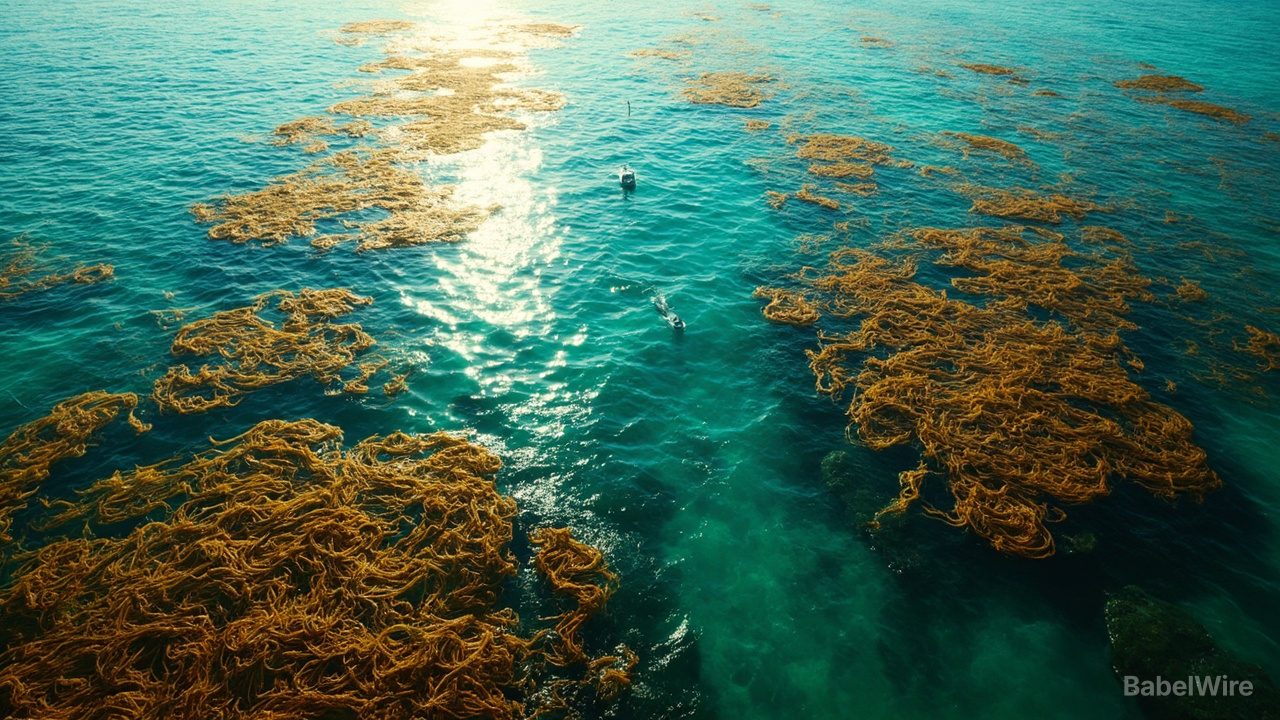
Scientists at the University of South Florida and NOAA have produced the first comprehensive global assessment of floating algae — and it shows the ocean is changing in front of our eyes. An AI model trained to recognize the subtle signatures of algae in satellite imagery processed 1.2 million images taken between 2003 and 2022, covering 13 geographic zones and five categories of algae.
The results, published in Nature Communications, reveal a clear upward trend. Floating microalgae grew at a modest but statistically significant rate of about one percent per year, while macroalgae expanded dramatically in some regions: in the tropical Atlantic and western Pacific, blooms increased by 13.4 percent annually, with the sharpest rise beginning after 2008. The cumulative area covered by microalgal blooms reached 43.8 million square kilometers (16.9 million square miles) — a clear departure from historical patterns.
'Before 2008, there were no major blooms of macroalgae reported except for sargassum in the Sargasso Sea,' said Chuanmin Hu, professor of oceanography at USF and senior author of the study. 'On a global scale, we appear to be witnessing a regime shift from a macroalgae-poor ocean to a macroalgae-rich ocean.' The first large bloom of the green seaweed Ulva appeared in the Yellow Sea in 2008, followed by a major sargassum bloom in the tropical Atlantic in 2011 and another in the East China Sea in 2012.
While floating algae can form vital habitats and nursery grounds for marine species in the open ocean, the picture darkens when huge mats reach the coast. As the algae decay, they can damage marine environments, threaten human and animal health, deter tourism and inflict financial losses on coastal communities. The study links the spread to a combination of warming waters, shifting currents and nutrient runoff, with causes likely varying from region to region. Training the deep-learning model took several months and depended on USF's high-performance computing facility — work the researchers say would be impossible to do manually.
Sources
- sciencedaily.comScienceDaily: AI reveals a massive algae boom across the world's oceans
- lamont.columbia.eduLamont-Doherty Earth Observatory: Harnessing AI, Scientists Discover a Rise in Floating Algae
- usf.eduUSF Marine Science: Scientists harness AI to discover a rise in floating algae
- nature.comNature Communications: Global floating algae blooms are expanding