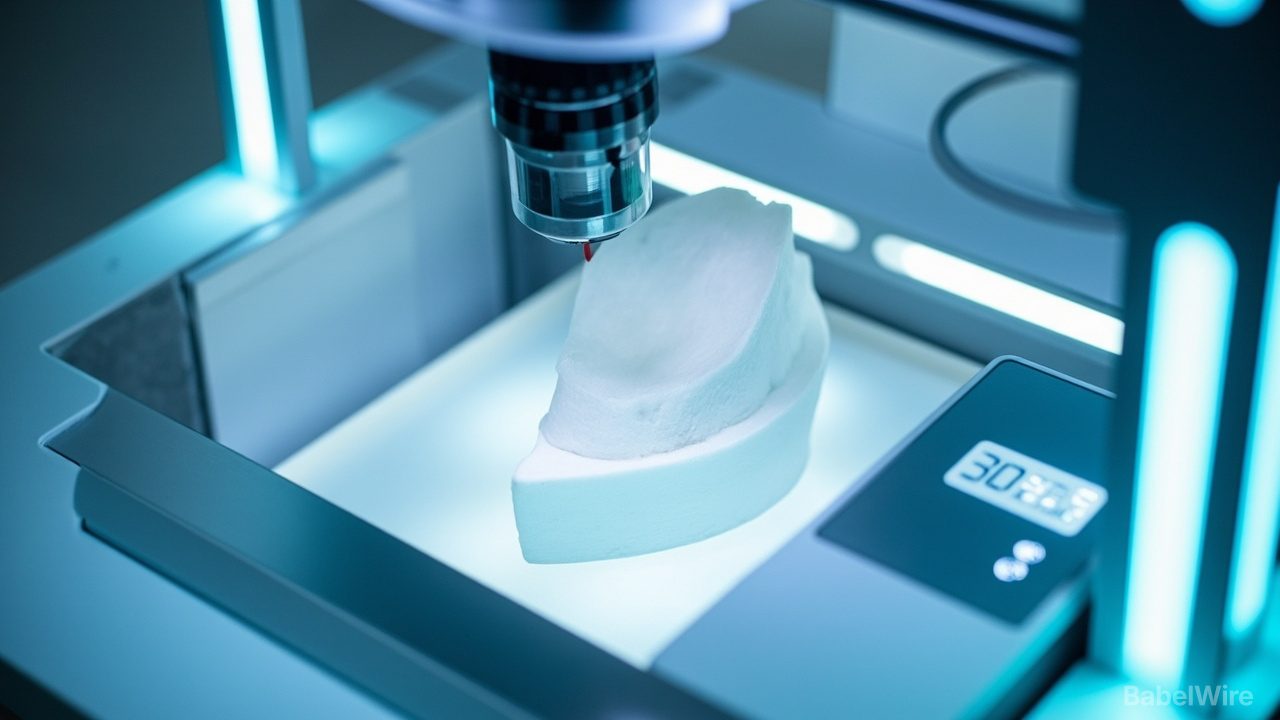
Getting a permanent dental crown could soon take as little as 30 minutes instead of weeks, thanks to a breakthrough from researchers at the University of Texas at Dallas who dramatically reduced the most time-consuming step in 3D-printed zirconia fabrication.
Zirconia is the material of choice for modern dental crowns — strong, durable, and biocompatible. But 3D-printing crowns from zirconia has always faced a bottleneck: the debinding step, where a binding agent is removed from the printed material before final sintering, typically takes between 20 and 100 hours. That timeline made same-day crowns impractical.
The UT Dallas team found a way to slash that debinding time to under 30 minutes. The details, published in Ceramics International, describe a process that dramatically accelerates the removal of the organic binder while maintaining the structural integrity of the printed crown.
Currently, patients who need a permanent crown must typically wait one to three weeks: their dentist takes an impression, sends it to a dental lab, the lab fabricates the crown, and the patient returns for a second appointment to have it fitted. A same-day process would combine scanning, printing, and fitting into a single visit.
The advance is part of a broader trend toward chairside manufacturing in dentistry, where in-office 3D printers and milling machines are increasingly producing permanent restorations. However, zirconia — prized for its strength and aesthetics — has been the most difficult material to bring into the same-day workflow because of its demanding fabrication requirements.\n If the technique proves reliable at scale, it could significantly reduce costs, eliminate the need for temporary crowns, and make high-quality permanent restorations accessible to more patients, including in underserved communities where dental lab access is limited.