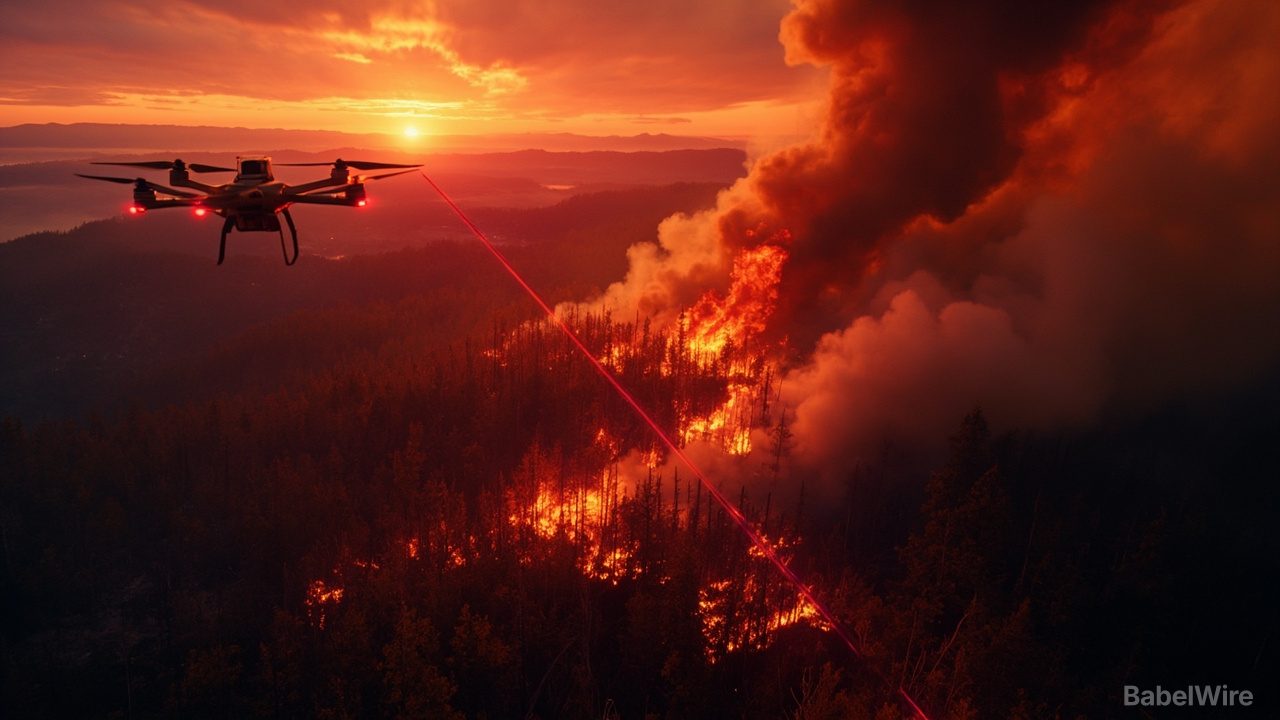
The XPRIZE Wildfire competition, one of the most ambitious prize challenges in climate technology, has announced its winning teams — and the results are a mixed bag that tells a powerful story about the state of wildfire technology.
Detection: Solved?
The winning teams demonstrated the ability to detect wildfires within10 minutes of ignition across vast, remote terrain. Using combinations of AI-powered satellite imagery, ground-based sensor networks, and autonomous drone fleets, these systems achieved detection speeds that far outpace traditional methods. Some teams reported detection latencies as low as3 minutes in controlled tests.
This is a remarkable achievement. Traditional wildfire detection relies on human lookouts,911 calls, and scheduled aerial patrols — methods that can leave fires burning undetected for hours or even days. The XPRIZE winners proved that technology can close this gap dramatically.
The Suppression Gap
But here's the twist: while the winners could find fires with stunning speed and accuracy, they couldn't stop them. The competition's structure rewarded detection capability, but the real-world implication is stark — knowing where a fire is doesn't put it out.
Current suppression technology still relies heavily on ground crews, water-dropping aircraft, and controlled burns. None of these scale to match the detection capabilities the winners demonstrated. A fire spotted in3 minutes still needs someone on the ground within30 minutes to have a chance at containment, and in remote areas, that response time is often measured in hours.
What It Means
The results underscore a growing consensus in the wildfire technology community: detection is a solved problem (or nearly so), and the real investment gap is in suppression and response. Several teams are already pivoting their technologies toward integrated solutions that pair detection with autonomous suppression — drone-based fire retardant drops, AI-optimized resource deployment, and robotic ground units.
The XPRIZE Wildfire competition, backed by Australia's Paul Ramsay Foundation, awarded$10 million in total prizes. The winning teams will now work with wildfire management agencies to deploy their systems in real-world settings across fire-prone regions in Australia, the western United States, and southern Europe.
The message is clear: we can see the fires. Now we need to fight them.