Xiaomi has finished development of HyperOS 4.0 and started shipping it. On Tuesday the company announced on X that eligible users would receive the OTA update gradually from that day. By the end of November more than 30 models are supposed to have it — an unusually fast rollout for a custom Android build.
The first wave is the Xiaomi 17 series and the 15 series, plus tablets, the Redmi Note 17 and Note 15 and the Poco F8, X8 and M8 lines. Mid-November brings the two Xiaomi 15T models, the Pad 7 series, the Poco Pad X1 and M1, and Poco's F9, F7 and X7. December adds the Xiaomi 13, 13T, 14 and 14T and the Mix Flip, along with the Redmi Note 14 series, the Redmi 15 and more Poco devices. Whether the rollout continues into next year, Xiaomi leaves open.
Liquid Glass, from Shenzhen
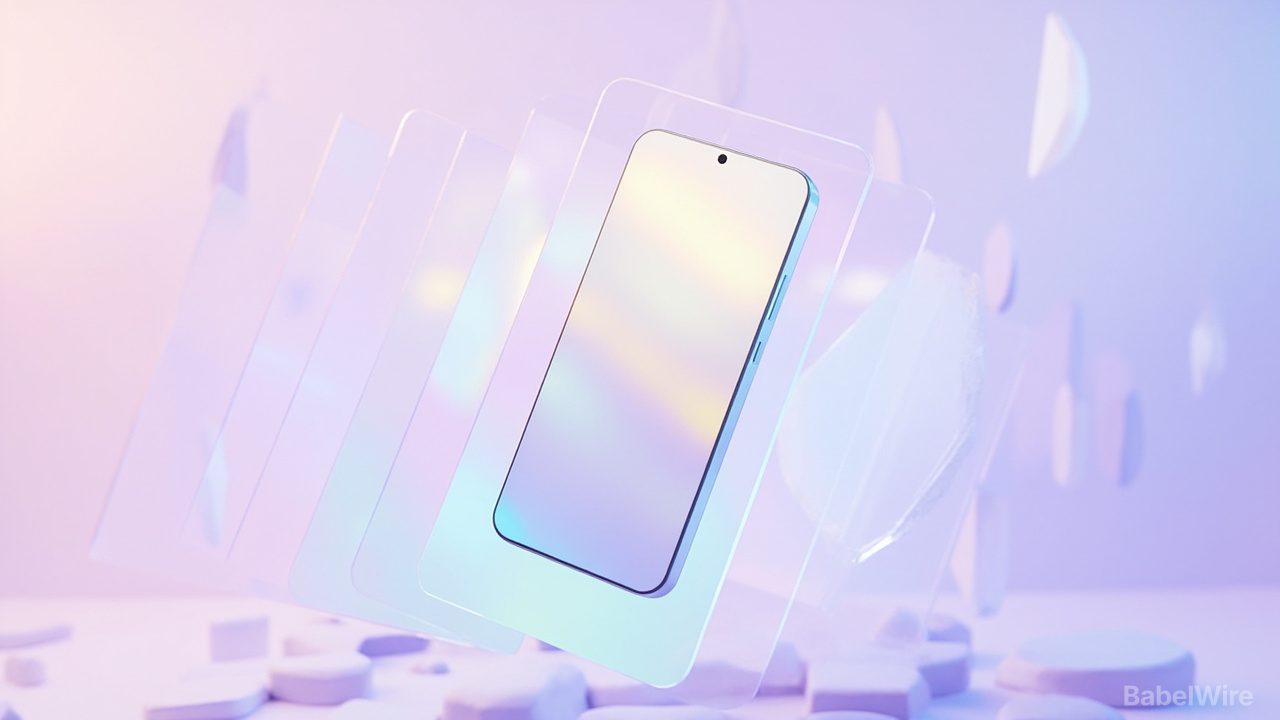
The most conspicuous change is visual: flowing light effects, layered transparency, translucent menus and notification surfaces, and dynamic effects that respond to swipes and taps. There is a redesigned lock screen, a new control centre, stackable widgets and resizable folders. Borrowing from Apple's Liquid Glass is not a first for Xiaomi — iOS design cues and the Dynamic Island clone marketed as HyperIsland have been part of the repertoire for years.
The numbers, as Xiaomi tells them
On speed, the manufacturer cites its own measurements on the Xiaomi 17 Ultra: camera app cold start drops from 1,043.6 to 808.8 milliseconds, and the average frame-drop rate after nine hours of use falls from 1.10 to 0.08 percent. Cold start times and HDR photo processing were optimised, and the load calculation improved. These are vendor figures on one device, not independent tests — but the magnitude is plausible, because much of the work sits in scheduling and memory management rather than in new features.
The real problem is the version number
HyperOS 4.0 does not equal Android 17. While Samsung's One UI 9 is built on Android 17, Xiaomi can ship the same HyperOS release on an older Android base depending on the device — unlikely on flagship models, quite likely on many older ones. For users that means the number on the box no longer says anything about the platform version, and therefore nothing about the security patch level. Anyone who wants to know what their phone runs will have to check two version numbers instead of one.
This is not a Xiaomi-specific problem but one of the entire Android landscape: manufacturer skins decoupled from the base long ago. Xiaomi simply makes it more visible, because the HyperOS brand now carries more weight than the Android version underneath it.
What comes next
The Xiaomi 18 Pro and 18 Pro Max, expected globally in late November, ship with HyperOS 4.0 on Android 17 out of the box. Anyone with an older device should check the official list before updating — and afterwards verify the Android version in the system menu rather than trusting the marketing name.