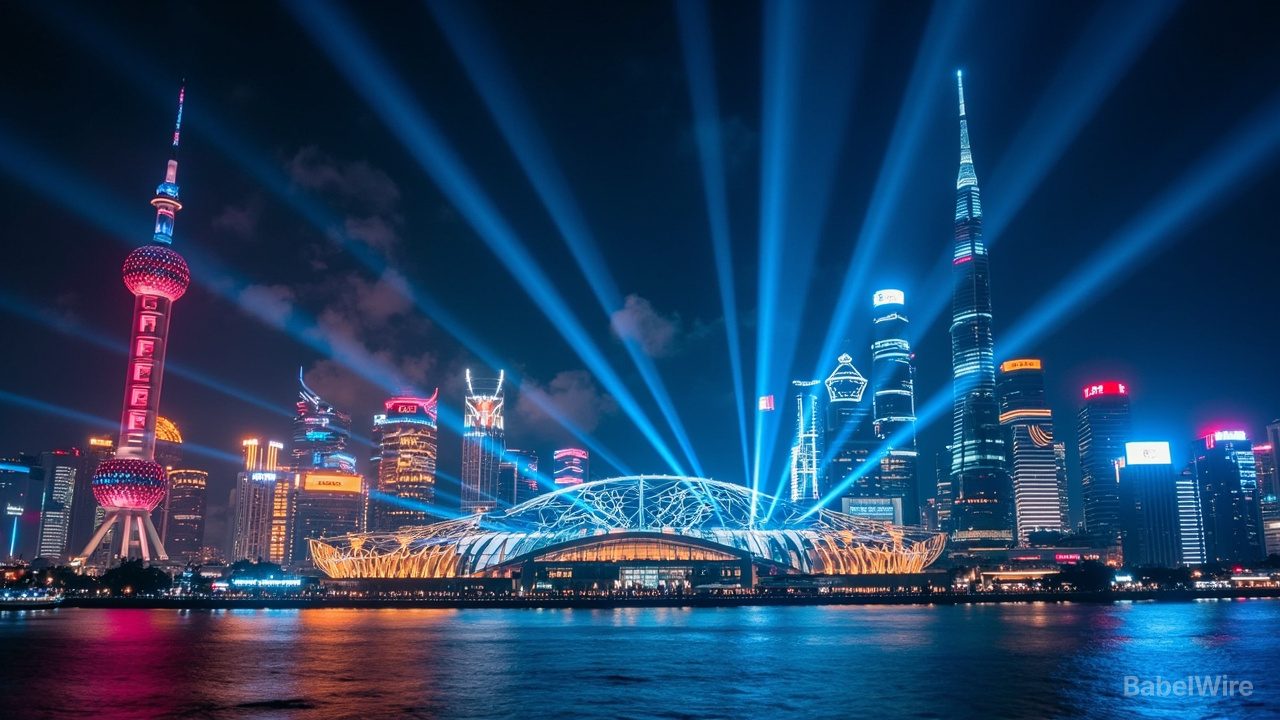
The 2026 World AI Conference (WAIC) concluded in Shanghai on Monday, July 20, after four days of exhibitions, forums, and high-level diplomacy — capped by the launch of a new international AI governance body that signals China's ambitions to shape the global rules for artificial intelligence.
Key highlights
- Xi Jinping delivered his first-ever keynote on AI, signaling the strategic importance Beijing places on the technology - World Artificial Intelligence Cooperation Organization (WAICO) launched with 29 founding countries, including Pakistan, Russia, and Kazakhstan - Over 1,100 exhibitors showcased more than 3,000 products, with over 300 new product launches - More than 140 forums covered topics from foundation models and embodied robotics to AI governance and ethics - Huawei demonstrated its Atlas 950 SuperPoD domestic computing system on the show floor
What WAICO means
The launch of WAICO represents China's most ambitious move yet to create an alternative governance framework for AI — one that does not center on Western institutions. Xi paired the announcement with a strong endorsement of open-source AI and pledges of assistance to developing countries.
A governance organization announced with fanfare must now demonstrate durability. The signals to watch are whether WAICO publishes a founding charter, names leadership, sets a meeting calendar, and attracts members beyond the initial 29 — particularly any European or Global South economies not already aligned with Beijing.
The Western response
The conspicuous absence of any Western response was itself noteworthy. Google DeepMind CEO Demis Hassabis called for an international AI watchdog and a US-led coalition the same week — which reads as an admission that no such body exists while China's now does.
Broader context
The conference reflects an accelerating race between the US and China to define the rules of AI development and deployment. While the US has focused on export controls and chip restrictions, China is pursuing a strategy of institutional building, open-source promotion, and South-South cooperation.
As one WSJ analysis put it, the message was clear: "We're coming for you." The side that shows up with a charter and a headquarters usually shapes the rules — and for the first time, there is a structured alternative to Western-led AI governance.