Friday, November 13, 2026 has come and gone. For anyone reading a 1960 issue of the journal Science, that date carried a specific meaning: it was Doomsday.
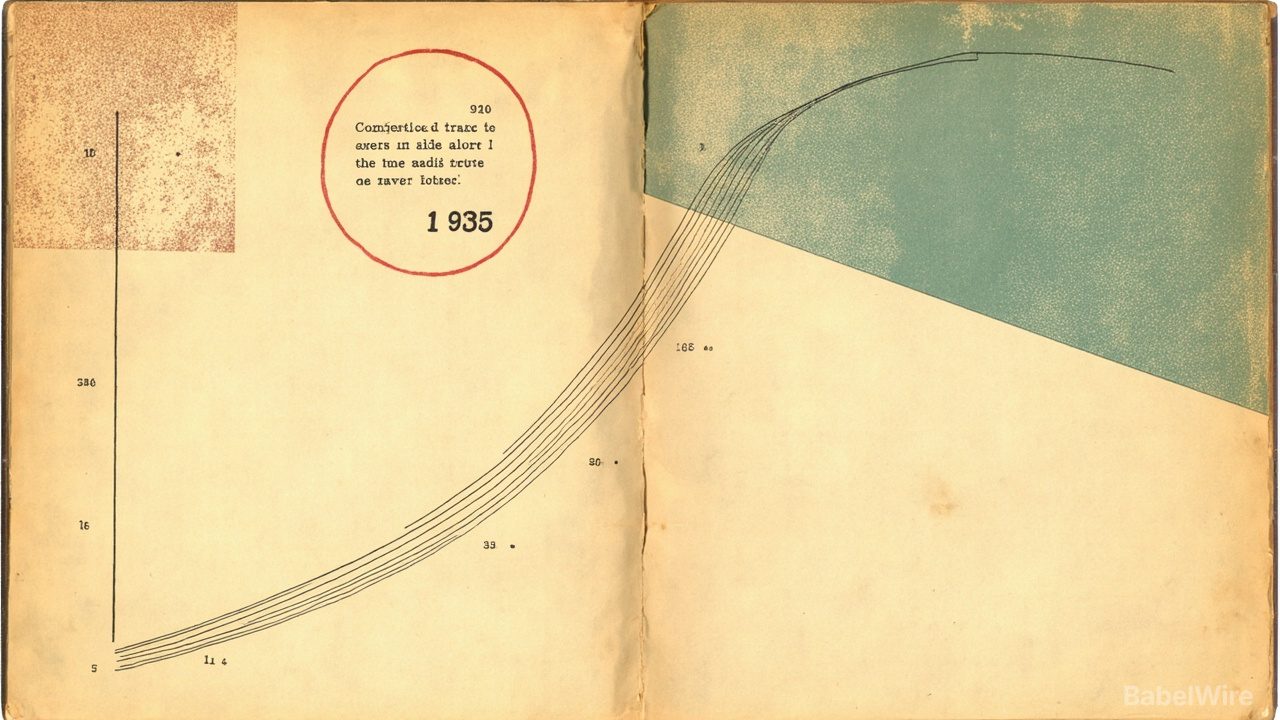
In November 1960, Austrian-American physicist Heinz von Foerster and two colleagues published a paper with the arresting title "Doomsday: Friday, 13 November, A.D. 2026." Von Foerster fitted nearly 2,000 years of world-population estimates to a mathematical curve and found a singularity — effectively an infinite population — in late 2026. The prediction was not about famine, though: "Our great-great-grandchildren will not starve," the authors wrote. "They will be squeezed to death."
The precision of the date, it turns out, was theater. "It happens to fall on November 13th, because November 13 is von Foerster's birthday. It was a joke," Joel Cohen, a mathematical biologist and professor of populations at Rockefeller University, told Newsweek. The fine print, he noted, carried an error bound of plus or minus five and a half years.
Even so, the model held up longer than many would expect. Historian Alan MacEachern of Western University told Newsweek the "Doomsday equation" produced reasonably accurate global population projections through the 1960s, 1970s and 1980s; its accuracy began to falter only around 1993 — roughly halfway to Doomsday.
World population stood at about 3 billion when the paper appeared. It has since passed 8 billion — but the feared runaway growth never materialized. Death rates fell thanks to medicine, sanitation and food production, and then birth rates fell too, an outcome the model did not anticipate. "He didn't allow for the possibility that people might choose to have fewer children," Cohen said. "That's what has happened."
The irony is that the debate has inverted. Where mid-century anxiety centered on too many people, much of today's concern runs the other way — falling birth rates, aging populations and shrinking workforces, the subject of a recent Federal Reserve analysis. Doomsday, it seems, was a date; demography is a curve that bends.