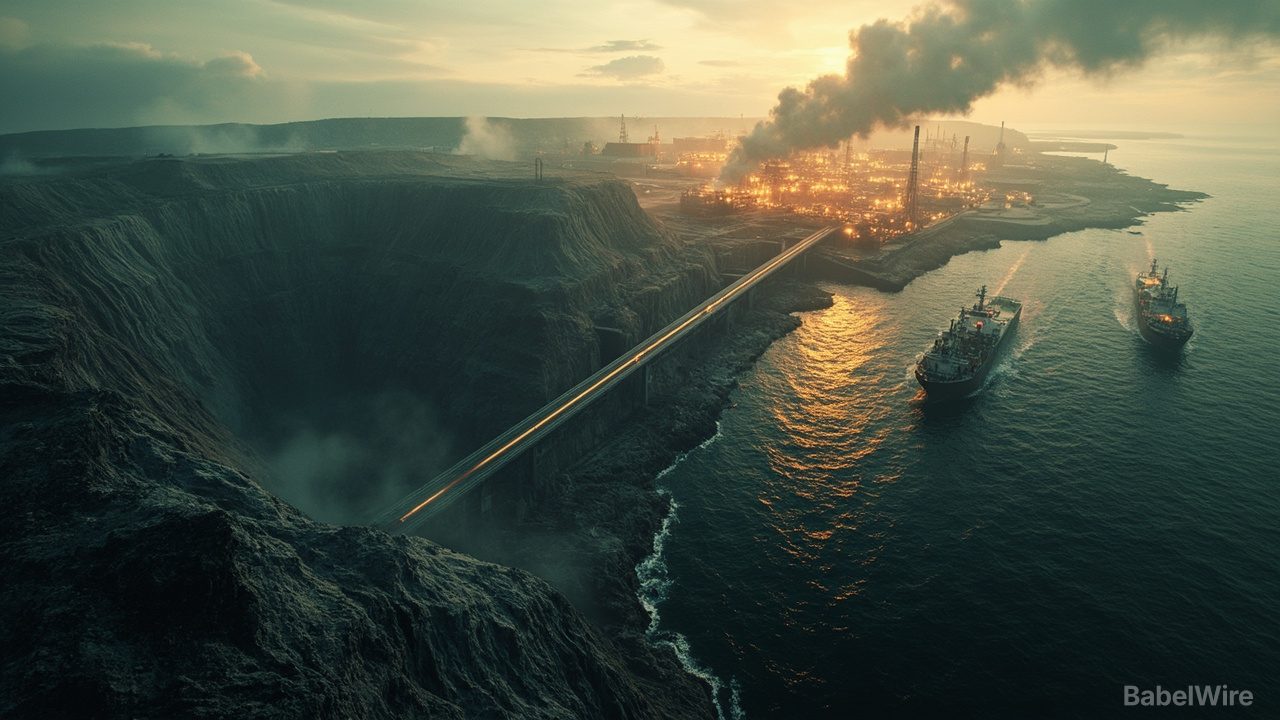
America did not run out of rare earths. It gave up the industry around them.
For years, the Mountain Pass mine in California was the most productive rare earth operation on Earth. What the United States lost was not the hole in the ground but everything between the hole and the magnet: the chemically brutal separation and refining steps that turn mixed ore into individual oxides, the metallurgy that converts those oxides into alloys, and the factories that press them into the neodymium-iron-boron magnets inside motors, wind turbines, headphones and guided missiles.
Beijing's bet, articulated decades ago as the observation that the Middle East has oil and China has rare earths, was to own exactly that middle. Subsidised production, tolerance of the environmental bill and prices no Western operator could match pulled the world's processing capacity into China. When Beijing restricted exports to Japan in 2010, the rest of the world got an early look at the leverage that came with it — and then largely forgot about it once prices fell again.
The West's answer in the 2010s was a cycle of restarts and bankruptcies: mines reopened when prices spiked and collapsed when they crashed, because ore is not a supply chain. Manufacturing moved too. Today a tonne of rock dug out in California or Australia can still cross the Pacific to be separated, alloyed and magnetised before it comes back as a component.
In the 2020s, export controls on rare earths, magnets and adjacent critical minerals moved from threat to routine instrument of statecraft. Governments responded with tools markets had refused to provide: price floors, offtake guarantees and defence-backed investment in separation and magnet plants, plus allied projects across Australia, Japan, Europe and the United States. The consensus among analysts is that the rebuild takes a decade and costs more than the imports ever did — permits take years, process chemists are scarce, and downstream customers are reluctant to pay a premium for a second source. The deeper lesson of the Ars Technica account is quieter than any single decision: industrial capability decays as a long series of choices in which the cheaper import always wins, and rebuilding it means paying for redundancy the market will never buy on its own.