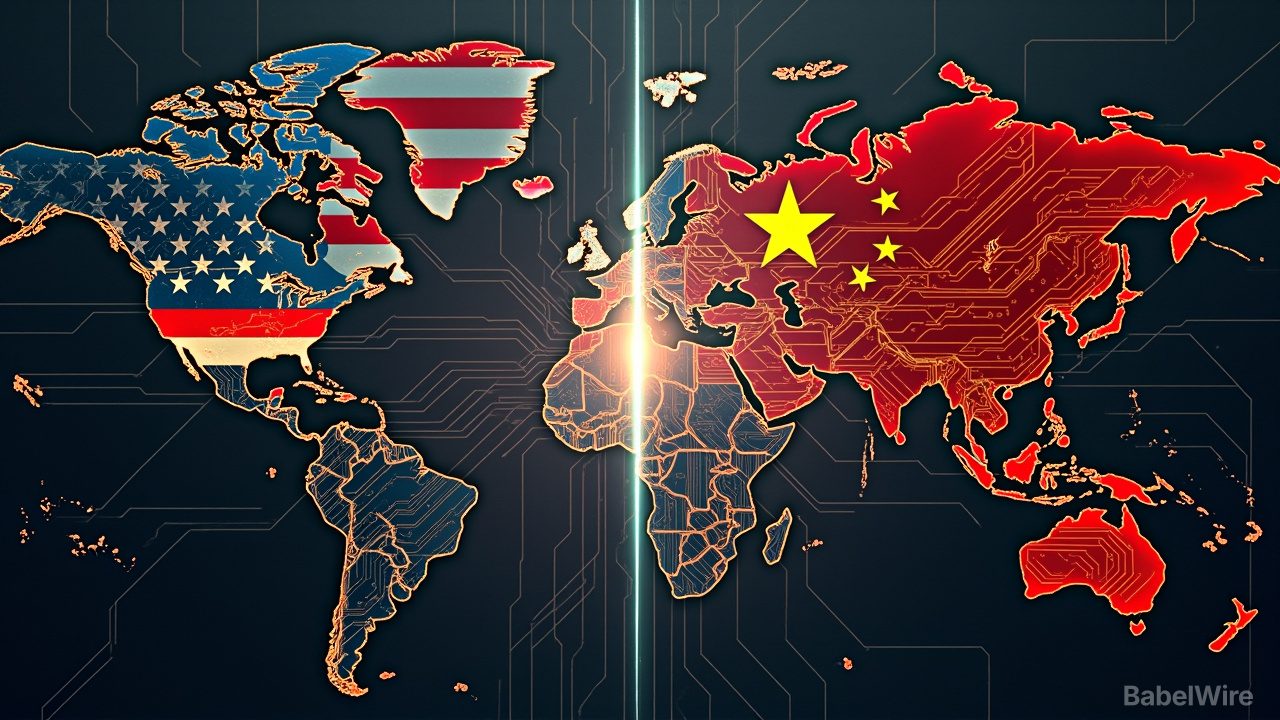
The United States is preparing to tell dozens of countries they must pick sides in the artificial intelligence race with China, warning they will be excluded from a U.S.-led AI coalition if they also sign up to Beijing's competing framework, according to a U.S. official and an internal draft reviewed by Reuters.
The draft letter, prepared by the State Department, is addressed to the 35 signatories of a U.S. "AI Opportunity Statement" signed in June. It includes members of the non-binding Pax Silica framework — launched last year to secure supply chains for AI models, semiconductors and critical minerals — plus other countries that have signaled a desire to align AI cooperation with Washington.
"To be part of everything is to be part of nothing. Signature of the Pax Silica Declaration is not merely a membership subscription, but a commitment," the letter says, urging countries to "choose deliberately" and warning that membership "cannot be held alongside membership in duplicative initiatives whose expectations conflict with our own."
About two dozen countries have joined Pax Silica, including close U.S. allies such as Japan, Australia and South Korea. Kazakhstan stands out as the only country so far known to have joined both the U.S. initiative and the "World Artificial Intelligence Cooperation Organization" that Chinese President Xi Jinping launched in July to promote China's open-weight AI technology — setting off alarm bells in Washington. "It's difficult to see how a country can credibly position themselves as trusted partners in one technology ecosystem while simultaneously signing up for an initiative designed by China to advance a competing vision for AI," a U.S. official told Reuters.
The race between Washington and Beijing has reached a pivotal moment: Chinese open-weight models have made rapid gains against proprietary systems from U.S. companies such as OpenAI and Anthropic, and Beijing is weighing restrictions on overseas access to some of its leading AI models. By pressing countries to choose sides, the U.S. hopes to starve China of resources in a race to build the most sophisticated AI, which could be used for military or economic dominance. Reuters could not determine when the letter would be sent or whether it might be amended first; the State Department said it would not comment on "purportedly leaked internal documents."